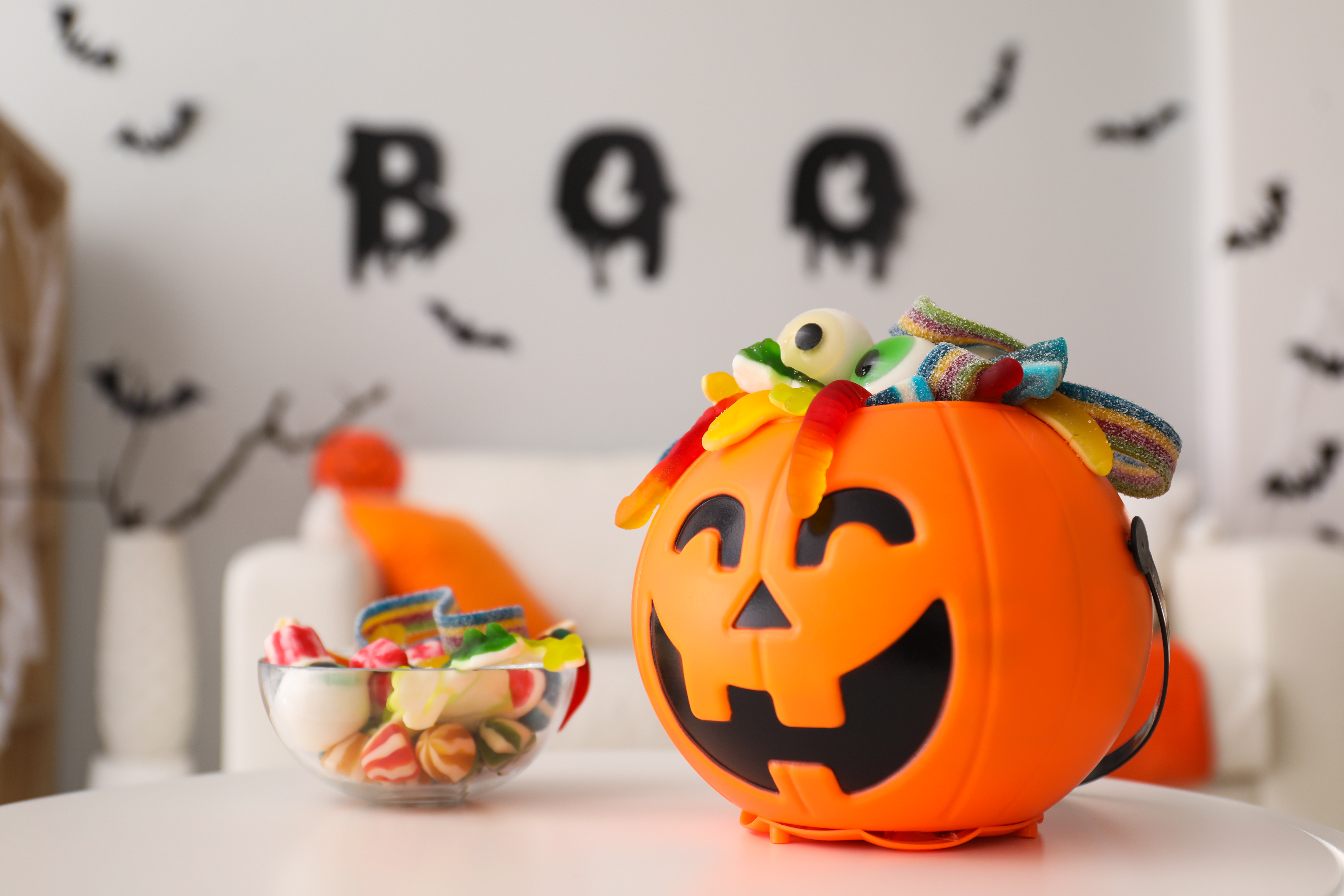
Every culture has its own version of the perfect sweet. The kind that shows up at every family gathering, every festival, every celebration. The kind you miss most when you are far from home. Discovering the diverse sweets around the world is a delightful experience.
Here are the sweets our communities love most – one from each of the places OrbitRemit calls home.
Polvoron – Philippines
The crumbly, melt-in-your-mouth Filipino shortbread made from toasted flour, powdered milk, butter and sugar. Polvoron is wrapped in colourful cellophane twists and comes in dozens of flavours – ube, pili nut, pinipig, cookies and cream. It is the kind of sweet that falls apart the moment you unwrap it, which is part of the charm. Every Filipino household has a tin of polvoron somewhere, and every Filipino abroad misses it more than they expected to.

Pineapple Lumps – New Zealand
Chewy pineapple-flavoured centres coated in dark chocolate – a New Zealand classic that has been made since the 1950s. Pineapple Lumps are tangy, sweet and slightly artificial in the best possible way. New Zealanders living abroad seek them out. New Zealanders at home eat them by the bag. If you have never tried one, find a New Zealand expat – they will almost certainly have some.

Jalebi – India
Bright orange spirals of fermented batter, deep-fried and soaked in sugar syrup until they are crisp on the outside and syrupy within. Jalebi is eaten hot, straight from the pan, often with rabri (thickened sweetened milk) or simply on its own. It is Diwali, it is winter mornings, it is every Indian festive occasion distilled into one sticky, glorious shape. Not practical for sharing. Worth every bit of the mess.

Candy Corn – United States
The most divisive sweet in America – and one of the most recognisable. Candy Corn is a tri-coloured sugar candy shaped like a kernel of corn, made from sugar, corn syrup and wax, with a waxy texture and an intensely sweet flavour that people either love completely or avoid entirely. It has been made in roughly the same form since the 1880s and appears in enormous quantities every autumn. Americans will tell you it is an acquired taste. They are not wrong. It is also, somehow, one of the most nostalgic things you can eat.

Roshogolla – Bangladesh
Soft, spongy balls of chenna (fresh cheese curd) cooked in light sugar syrup. Roshogolla is one of the most beloved sweets across Bangladesh and the broader Bengali-speaking world – light, delicate and nowhere near as sweet as its reputation suggests. There is an ongoing friendly debate between Bangladesh and the Indian state of West Bengal over who invented it. Both make excellent versions.

Cherry Ripe – Australia
The oldest chocolate bar still in production in Australia, first made in 1924. Dark chocolate over a filling of cherry and coconut – divisive, beloved, distinctly Australian. Australians who have lived abroad long enough will tell you that Cherry Ripe is one of the first things they look for in an import shop. For everyone else, it is one of the most recognisably Australian things you can eat.

Kẹo Dừa – Vietnam
Coconut candy from the Mekong Delta, specifically from Ben Tre province – Vietnam’s coconut capital. Made from coconut milk, malt syrup and sugar, Kẹo Dừa is chewy, fragrant and comes wrapped in edible rice paper so it does not stick to your fingers. The durian flavour is for the adventurous. The original coconut is for everyone.

Gulab Jamun – Pakistan
Deep-fried milk-solid dumplings soaked in rose-water and cardamom syrup until they are soft, sticky and almost impossibly sweet. Gulab Jamun is the centrepiece of every Pakistani celebration – Eid, weddings, family gatherings. Served warm or at room temperature. The syrup gets everywhere. Nobody minds.

Kuih Lapis – Malaysia
Layered steamed rice cake in alternating colours – typically pink, white and green – made from rice flour, tapioca starch, coconut milk and pandan. Each thin layer is steamed separately before the next is added, which is why making Kuih Lapis properly takes patience and skill. The tradition is to peel each layer apart slowly before eating. Anyone who eats it in one go is doing it wrong.

Kokis – Sri Lanka
A crispy, deep-fried sweet made from rice flour and coconut milk, pressed through a decorative mould into intricate flower shapes. Kokis is a traditional Sri Lankan festive treat – most associated with Sinhala and Tamil New Year – and its delicate, lace-like appearance makes it one of the most beautiful sweets on this list. Crunchy, lightly sweet and impossible to eat just one.

White Rabbit – China
The iconic Chinese milk candy in its white wax paper wrapper with the red rabbit logo – a staple of Chinese childhoods for decades. White Rabbit is made from milk, sugar and butter and has a soft, chewy texture somewhere between a toffee and a caramel. The inner wrapper is edible rice paper, so you can eat it whole. White Rabbit has been exported around the world and is beloved by Chinese communities far from home.

Sel Roti – Nepal
A traditional Nepali ring-shaped sweet bread – crispy on the outside, soft and chewy within – made from rice flour, sugar, ghee and banana. Sel Roti is fried in oil and eaten fresh. It is the taste of Tihar, Dashain and every important Nepali family moment. Not a sweet in the Western confectionery sense, but unmistakably festive and deeply loved.

Jelly Babies – United Kingdom
Soft, gelatine-based sweets moulded into the shape of small babies and dusted in starch – each one a different colour representing a different flavour: blackcurrant, lime, strawberry, orange, lemon and raspberry. Jelly Babies have been made in Britain since the late 19th century. Bassett’s of Sheffield produced them as “Peace Babies” in 1918 to mark the end of World War I, suspended production during World War II due to wartime shortages, then relaunched them as Jelly Babies in 1953. They are a quintessentially British sweet, beloved across generations, and famously associated with Tom Baker’s portrayal of Doctor Who, who offered them to companions and enemies alike. Eating them head-first or feet-first is a matter of personal philosophy.

Sending money overseas?
OrbitRemit sends money to 50+ countries from Australia and New Zealand. Fast, reliable and built for the communities we serve — new customers get our special promo rate plus $0 fees on their first transfer.*
*New customers only. Limited time offer. Rate subject to change. Promo rate only applies to first $500 AUD/NZD. Terms and conditions apply. Not available in conjunction with any other offer.
Sending to the Philippines, India, Vietnam, Nepal, Bangladesh, Sri Lanka, Malaysia, China, Pakistan or New Zealand? OrbitRemit transfers AUD and NZD to 25+ destinations. Fees vary by corridor – check current rates at orbitremit.com.


