Summary
Australian and New Zealand passport holders do not need a traditional visa to visit Canada — but do need an Electronic Travel Authorization (eTA) before flying — the eTA costs CAD $7, takes approximately five minutes to apply for online at canada.ca/eta and is approved within minutes for most applicants; once approved, it is valid for five years or until your passport expires, whichever comes first; each visit allows a stay of up to six months; you do not need an eTA if entering Canada by land or sea (for example, crossing from the United States by road or arriving on a cruise ship)
Canada is the second largest country in the world — and its extraordinary variety is the point — the Canadian Rockies (Banff, Jasper, Lake Louise, the Icefields Parkway), the Pacific coast city of Vancouver, the multicultural energy of Toronto, the French-speaking European charm of Montreal, the fortress city of Quebec, whale watching off Vancouver Island, the Northern Lights over Yellowknife and Churchill, and the Cabot Trail of Cape Breton — each is genuinely world-class in its own right
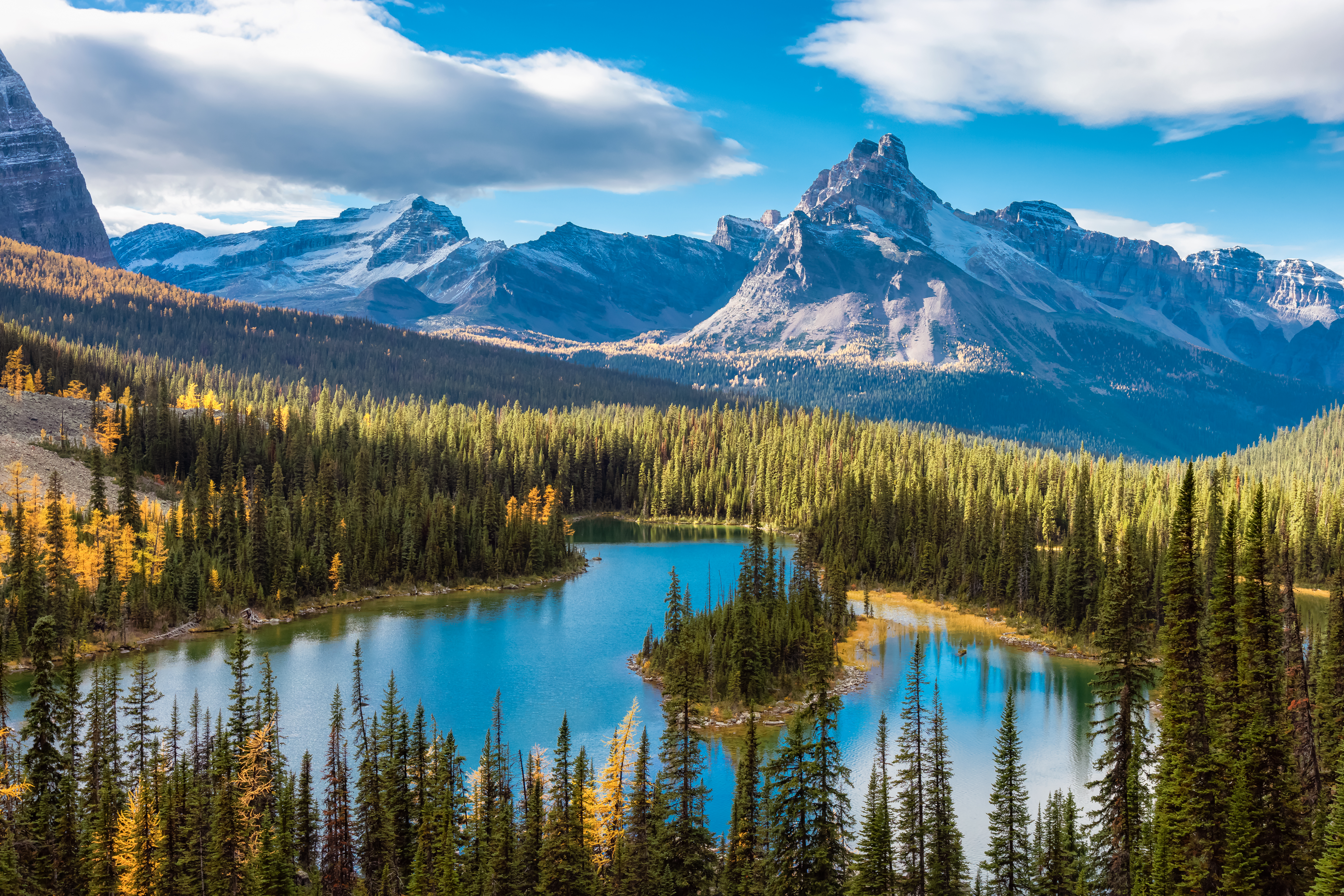
September is the single best month to visit most of Canada — temperatures remain warm (10-20°C), the fall colour begins across Quebec and Ontario, crowds thin significantly from the July-August peak, and prices drop; the Canadian Rockies are at their most photogenic in September; Banff, Lake Louise and Moraine Lake are more accessible without the extreme summer crowds
Canada receives more than 45 million visitors a year. Most arrive expecting a milder version of the United States and leave surprised — by the scale, the wilderness, the quality of the food and wine in Vancouver and Montreal, the extraordinary efficiency of a country that manages to contain the French-speaking nation of Quebec, the Rocky Mountain west and the Maritime provinces all within one federal framework. For Australians and New Zealanders, Canada offers an English-speaking (mostly) destination with a climate range from tropical summers to arctic winters, a shared Commonwealth heritage and a disproportionate number of the world’s most dramatic natural landscapes.
Visa and entry requirements
eTA required for air travel — no traditional visa
Australian and New Zealand passport holders do not need a Canadian visitor visa. However, both must apply for an Electronic Travel Authorization (eTA) before boarding a flight to Canada.
Key details:
| Cost | CAD $7 |
| Where to apply | canada.ca/eta — the official Government of Canada portal only |
| Processing time | Most applications approved within minutes; some may take a few days |
| Validity | 5 years or until passport expires — whichever comes first |
| Entries | Multiple |
| Stay per visit | Up to 6 months (final decision made by border officer on arrival) |
| Required for | Air travel only |
| Not required for | Land or sea entry (e.g. driving from the US or arriving by cruise ship) |
The eTA is linked to your passport electronically. If you get a new passport, you must apply for a new eTA — your old eTA is no longer valid.
Apply early but not too early — the eTA is valid for 5 years, so applying well before any trip is fine. Most applications are approved within minutes; a small number require additional document submission and may take a few days.
Scam warning: Only apply through the official government portal at canada.ca/eta — cost is CAD $7. Numerous third-party sites charge significantly more to “process” your application. Use the official site only.
Land and sea entry — no eTA required
If you enter Canada from the United States by car, bus, train or boat (including cruise ships), you do not need an eTA. Your passport is sufficient. This is relevant for travellers doing a combined US-Canada itinerary.
Best time to visit
Canada spans six time zones and enormous climate variation — the best time varies significantly by region and type of trip.
September — best overall for most visitors The finest month for most of Canada — warm temperatures (10-20°C in the cities, cooler in the Rockies), spectacular fall foliage beginning in Quebec and Ontario, significantly fewer crowds than July-August and meaningfully lower accommodation prices. The Canadian Rockies are at their most photogenic — Moraine Lake and Lake Louise without the summer scrum.
June to August — peak summer Warm to hot (25-35°C in Toronto and Montreal; 18-25°C in Vancouver and the Rockies). Everything is open; all tours, parks and attractions operating; very busy and expensive. July and August are peak at Banff and Lake Louise — book accommodation and park shuttle tickets months ahead.
April to May and October — shoulder seasons Good value; fewer crowds. April and May can be cold in the Rockies (snow possible). October brings the peak of fall colour in Quebec and Ontario — one of North America’s great seasonal spectacles. Banff and Jasper begin to thin out significantly after Labour Day (first Monday of September).
November to March — winter Skiing world-class at Whistler, Banff, Lake Louise and Mont-Tremblant. Northern Lights season in Yellowknife (November to March) and Churchill (October to March). Cities are cold but fully operational. Hotels are significantly cheaper in winter except at ski resorts.
Getting there
From Australia
No direct flights — all routes connect via the US (Los Angeles, San Francisco, Seattle, Dallas), Asia or the Pacific.
| City | Route | Approx flight time |
|---|---|---|
| Sydney to Vancouver (YVR) | Via Los Angeles or San Francisco | ~17-19 hours |
| Sydney to Toronto (YYZ) | Via Los Angeles or Dallas | ~20-22 hours |
| Melbourne to Vancouver | Via Los Angeles | ~17-19 hours |
| Perth to Vancouver | Via Tokyo or Hong Kong | ~18-20 hours |
Cost: Return flights from Australia to Canada typically range from AUD $1,400-$2,800 booked ahead. Vancouver is generally the cheapest gateway from Australia; Toronto is slightly more.
From New Zealand
All routes connect via Australian cities or US hubs.
Cost: Return flights from Auckland to Canada typically range from NZD $1,800-$3,200.
Getting around Canada
Domestic flights
Canada’s vast distances make domestic flights essential for multi-city itineraries. Air Canada, WestJet and Flair Airlines connect all major cities. Flying from Vancouver to Toronto is approximately 4.5 hours — the equivalent of Sydney to Perth; driving it is 45+ hours and not a realistic option for most itineraries.
Book ahead — Canadian domestic airfare rises sharply close to departure. Vancouver-Toronto round trips booked 6+ weeks ahead can cost CAD $200-$400; same-week fares are often CAD $600+.
Train — The Canadian
VIA Rail’s The Canadian is one of the world’s great train journeys — a 4,500km transcontinental route from Toronto to Vancouver (or reverse) through the Canadian Shield, the prairies and the Rocky Mountains; 3-4 days, with dome cars for viewing the landscape. A legendary trip — book months ahead for sleeping car cabins.
The Rocky Mountaineer
A private luxury train operating between Vancouver and Banff/Lake Louise — double-decker glass dome cars with 180-degree panoramic views of the Canadian Rockies; daytime travel only with overnight hotel stops; operates May to October. One of North America’s most spectacular rail experiences.
Car hire
A hire car is essential for exploring the Canadian Rockies at your own pace — the Icefields Parkway between Banff and Jasper cannot be fully experienced any other way. Drive on the right. International Driving Permit recommended alongside your Australian or New Zealand licence.
City transport
Vancouver, Toronto and Montreal all have excellent public transport:
- Vancouver: SkyTrain rapid transit; Canada Line connects YVR airport to downtown in 20-30 minutes
- Toronto: TTC subway and streetcar; GO Transit for regional connections
- Montreal: STM Metro — four lines covering the city extensively
Top destinations
Vancouver — mountains, ocean and city
Vancouver is regularly ranked among the world’s most liveable cities — a coastal metropolis of glass towers set against the North Shore mountains and the Pacific Ocean; outdoor activities (skiing, hiking, kayaking, whale watching) within an hour of downtown; one of the best restaurant scenes in North America; and a strongly multicultural character shaped by decades of immigration from across Asia.

Stanley Park: A 400-hectare old-growth forest on a peninsula adjacent to the city centre — the seawall (a 9km paved path around the park’s perimeter) is Vancouver’s most beloved urban walk; Beaver Lake, Prospect Point, the totem poles and Siwash Rock are among the highlights. Rent a bicycle at the park entrance — the seawall is perfect for cycling.

Granville Island: A former industrial island under the Granville Street Bridge — now home to the Granville Island Public Market (fresh produce, seafood, cheese, street food), artist studios, theatres, independent shops and a microbrewery; one of Vancouver’s most enjoyable neighbourhoods for an afternoon.

Gastown: Vancouver’s historic first neighbourhood — cobblestone streets, Victorian brick buildings, the steam-powered Gastown Steam Clock (which whistles every 15 minutes), independent restaurants and cocktail bars.
Capilano Suspension Bridge: A 136-metre-long pedestrian bridge suspended 70 metres above the Capilano River in the North Shore rainforest — one of Vancouver’s most visited attractions; the Cliffwalk (a cantilever walkway on the cliff face) and Treetops Adventure (platforms in old-growth Douglas firs) are part of the same complex.
Whistler and Whistler Blackcomb: 90 minutes north of Vancouver by Sea to Sky Highway — Whistler is one of the finest mountain resorts in North America in both summer and winter; in winter, Whistler Blackcomb is the largest ski resort in North America by skiable terrain; in summer, mountain biking, hiking and the Peak 2 Peak Gondola (connecting Whistler and Blackcomb mountains) are the main draws.


Vancouver Island and Victoria: A 90-minute ferry from Vancouver — Victoria, British Columbia’s capital, is known for its British heritage (afternoon tea at the Empress Hotel, the impressive Parliament Buildings, the Royal BC Museum), the famous Butchart Gardens (55 acres of landscaped gardens in a former limestone quarry) and whale watching; more than 80 orcas live in Victoria’s surrounding waters.
The Canadian Rockies — Banff, Jasper, Lake Louise
The Canadian Rockies are one of the world’s great landscapes — a chain of UNESCO World Heritage-listed national parks containing the most dramatic mountain scenery in North America; turquoise glacially-fed lakes, ancient icefields, wildlife (bears, elk, bighorn sheep, mountain goats) and the Icefields Parkway — one of the world’s great drives.
Banff National Park: Canada’s oldest national park (established 1885) and the most visited — centred on the town of Banff in the Bow River valley; the Banff Gondola (an 8-minute ride to the summit of Sulphur Mountain for views of six mountain ranges), the Cave and Basin National Historic Site and the Bow Falls are the main town attractions.


Lake Louise: A glacially-fed turquoise lake at 1,731 metres — the Victoria Glacier at the far end, the Chateau Lake Louise hotel on the shore, canoe rentals on the lake and hiking trails through the surrounding mountains. One of the most photographed natural scenes in North America. The shuttle from Banff runs frequently — book ahead in summer.


Moraine Lake: A smaller glacially-fed lake 14km from Lake Louise — the turquoise of the water against the ten peaks of the Valley of the Ten Peaks is extraordinary; formerly featured on the Canadian $20 note. Access is by shuttle (book ahead) from the Lake Louise park and ride — private vehicles are prohibited during peak season.

The Icefields Parkway (Highway 93): A 230km road connecting Banff and Jasper National Parks — widely regarded as one of the world’s great scenic drives; passing the Athabasca Glacier (part of the Columbia Icefield — one of the largest icefields south of the Arctic), Bow Lake, Peyto Lake and dozens of glaciers, waterfalls and wildlife viewing areas.

Jasper National Park: Canada’s largest Rocky Mountain national park — less crowded than Banff; Athabasca Falls, Maligne Canyon, Maligne Lake (Spirit Island by boat is one of the most iconic Canadian images) and excellent wildlife watching are the highlights.


Toronto — Canada’s largest city
Toronto is Canada’s most populous city and its economic capital — a densely multicultural city of 3 million where neighbourhoods like Greektown, Little Italy, Chinatown, Little India and Koreatown give the city a genuinely global character.

CN Tower: Toronto’s defining landmark — 553 metres (1,815 feet) tall; the observation deck and glass floor give 360-degree views across the city and Lake Ontario; the EdgeWalk (a hands-free walk around the outside of the tower’s main pod, 356 metres above the ground) is for the brave.

The Distillery District: A Victorian industrial heritage precinct of 40+ red-brick buildings — now galleries, restaurants, cafés, theatres and shops; the finest concentration of Victorian industrial architecture in North America.

St Lawrence Market: One of the world’s great food markets — the South Market building (open Tuesday to Saturday) contains over 120 vendors of fresh produce, seafood, cheese, charcuterie, bread and prepared foods; the Saturday farmers’ market in the North Market is excellent.
Kensington Market: A dense, bohemian neighbourhood of vintage clothing, independent food shops, cafés and street art; one of the most characterful neighbourhoods in Toronto.
Niagara Falls: 90 minutes from Toronto — the Horseshoe Falls (the Canadian falls; 51 metres high, approximately 790 metres wide) are among the most spectacular waterfalls on earth; the Maid of the Mist boat tour brings you to the base of the falls inside the spray; Journey Behind the Falls gives access to tunnels directly behind the waterfall. Easily done as a day trip from Toronto.

Montreal — the French city
Montreal is unlike any other city in North America — a city where French is the official language and the dominant culture, where food and design are taken seriously at every level, and where a deep European sensibility sits alongside a distinctly North American energy.

Old Montreal (Vieux-Montréal): The historic heart of the city — 17th-century stone buildings, cobblestone streets, the Notre-Dame Basilica (1829; the interior is one of the most spectacular Gothic Revival spaces in North America, with an extraordinary blue and gold painted vault and Casavant Frères pipe organ), the Pointe-à-Callière archaeology museum and the Old Port on the St Lawrence River.

The Plateau and Mile End: Montreal’s most beloved neighbourhood — independent cafés, restaurants, boutiques and Victorian walk-up apartments on streets like Saint-Denis and Saint-Laurent (The Main); the Mile End neighbourhood above the Plateau is the centre of Montreal’s artistic and food community, home to some of Canada’s finest restaurants, bakeries (Saint Viateur Bagel and Fairmount Bagel — the city’s two rival legendary bagel institutions) and independent bookshops.
Mount Royal: The park and mountain at the centre of Montreal — designed by Frederick Law Olmsted (the same landscape architect as New York’s Central Park); the Kondiaronk Belvedere lookout gives panoramic views over the city; in winter the park is used for cross-country skiing, ice skating and tobogganing.
Quebec City — the walled city
Quebec City is the only walled city north of Mexico — a UNESCO World Heritage Site; the fortified old city (Vieux-Québec) divides into the Upper Town (within the walls; the Château Frontenac hotel, the Plains of Abraham, the Citadelle) and the Lower Town (Basse-Ville; the Quartier Petit-Champlain — claimed to be the oldest commercial district in North America — and the Place Royale where Samuel de Champlain founded New France in 1608). The entire old city has a distinctly European character unique in North America.

The Northern Lights — Yellowknife and Churchill
Canada offers two of the world’s finest Northern Lights destinations — both accessible from major Canadian cities.


Yellowknife (Northwest Territories): The Northern Lights Capital of North America — clear, dark skies for 8-9 months of the year; the best viewing is August to April; aurora viewing lodges operate throughout the season with guided excursions to optimal viewing sites.
Churchill (Manitoba): Famous for two extraordinary wildlife events — the polar bear migration (October and November, when bears gather on the coast of Hudson Bay waiting for the ice to form) and the beluga whale season (June and July, when thousands of belugas migrate to the Churchill River estuary). The Northern Lights are also visible from Churchill from autumn through winter.
Canadian food and drink
Poutine: Quebec’s great contribution to world cuisine — french fries topped with cheese curds and gravy; originated in rural Quebec in the 1950s and now found across Canada in a thousand variations; the original and best versions are still found in Montreal and Quebec City.

Maple syrup: Canada produces approximately 70% of the world’s maple syrup — almost entirely from the maple forests of Quebec; the grade system (Golden, Amber, Dark, Very Dark) reflects flavour intensity rather than quality; buy directly from producers (cabanes à sucre — sugar shacks) in Quebec for the finest fresh-season syrup.

Smoked meat and bagels: Montreal’s two most iconic foods — smoked meat (brisket cured and steamed in the Montreal style, served piled high on rye bread with yellow mustard at Schwartz’s Delicatessen, opened 1928) and Montreal-style bagels (smaller, denser and sweeter than New York bagels, hand-rolled and baked in a wood-fired oven; the rivalry between Saint Viateur and Fairmount bagel is one of the great debates in Canadian food culture).

Pacific seafood: British Columbia’s coast produces some of the world’s finest seafood — wild Pacific salmon (chinook, coho, sockeye), Dungeness crab, BC spot prawns (May-June season), Pacific halibut and oysters from Fanny Bay and Desolation Sound.
Canadian whisky: Canada’s whisky tradition is distinct from both Scottish and American styles — typically lighter, blended and smooth; Canadian Club, Crown Royal and Forty Creek are the most internationally recognised; a growing number of craft distilleries in Ontario, British Columbia and the Maritimes are producing genuinely interesting single malts and rye expressions.
Ice wine: Ontario’s Niagara Peninsula and British Columbia’s Okanagan Valley produce some of the world’s finest ice wine — dessert wine made from grapes left to freeze on the vine; harvest typically December to January; intensely sweet with exceptional acidity and complexity; a genuinely world-class wine style unique to Canada.
Money and costs
Currency: Canadian Dollar (CAD). As of September 2026, approximately AUD $1 = CAD $0.89; NZD $1 = CAD $0.77.
Daily budgets:
| Budget level | Daily spend | What you get |
|---|---|---|
| Budget | AUD $120-160 | Hostel, casual dining, public transport |
| Mid-range | AUD $250-380 | Hotel, restaurants, activities, hire car |
| Luxury | AUD $500+ | Boutique hotel, fine dining, guides |
Canada is comparable in cost to Australia and New Zealand — not cheap by Asian standards, but familiar and comfortable. Banff and Whistler are significantly more expensive than the cities, particularly in peak season. Quebec City is more affordable than Toronto or Vancouver.
Tipping: Expected in Canada — 15-20% in restaurants, 10-15% in taxis and for guides. Unlike Australia, tipping is genuinely part of service worker income.
What it means for your transfers
Canada is home to one of the world’s largest and most established multicultural communities — significant Filipino, Indian, Chinese, Vietnamese and South Asian diaspora communities, many of whom maintain strong financial ties to family overseas.
AUD to CAD and NZD to CAD transfers with OrbitRemit — check current fees and rates at orbitremit.com before sending.
FAQs (frequently asked questions)
Do Australians need a visa for Canada?
No traditional visa — but an eTA (Electronic Travel Authorization) is required for air travel. Cost: CAD $7. Apply at canada.ca/eta. Valid 5 years, multiple entries, up to 6 months per stay.
Do New Zealanders need a visa for Canada?
No traditional visa — eTA required for air travel only. Same conditions as Australians. Not required for land or sea entry.
Do I need an eTA if entering Canada from the US by car?
No — the eTA is only required for air travel. Entering by land or sea does not require an eTA.
What is the best time to visit Canada?
September for most destinations — warm temperatures, fall colour beginning, fewer crowds than summer, lower prices. Summer (June-August) for maximum activities and warmth. Winter for skiing (Whistler, Banff) or Northern Lights (Yellowknife, Churchill).
How long do I need for Canada?
Ten days covers Vancouver, the Canadian Rockies and one of Toronto/Montreal. Two weeks allows all four. Three weeks lets you add Quebec City or Vancouver Island. Canada rewards longer trips — it is genuinely vast.
Is Canada safe for Australian and New Zealand travellers?
The Australian Government’s Smartraveller advisory for Canada is Exercise Normal Safety Precautions — the baseline level. Canada is one of the world’s safest travel destinations. Standard urban precautions apply in city centres.
What is the Canadian Rockies must-do?
The Icefields Parkway — the 230km drive between Banff and Jasper passing the Columbia Icefield, Peyto Lake and Athabasca Falls — is the single most extraordinary experience in the Canadian Rockies. Book accommodation along the route well in advance for summer travel.
Related guides
- What is the Schengen Area? →
- Best travel money cards in Australia 2026 →
- Best travel money cards in New Zealand 2026 →
- Best travel insurance Australia 2026 →
- Best travel insurance New Zealand 2026 →
Visa and eTA requirements are subject to change — verify at canada.ca and Smartraveller (smartraveller.gov.au) or Safetravel (safetravel.govt.nz) before travel. Last updated September 2026.
Sources: canada.ca/eta — Electronic travel authorization: How to apply (official, August 11, 2026) | traveloka.com — Canada eTA for Australians 2026 (August 4, 2026) | 1cover.co.nz — Visa requirements for Canada: New Zealand (2026) | wise.com/nz — Travel to Canada from New Zealand (January 19, 2026) | commbitz.com — Canada Travel Guide 2026 (May 19, 2026) | travel.rethinkways.com — Top Canada Attractions 2026 (August 1, 2026) | usnews.com — 20 Best Places to Visit in Canada 2026 | nomadicmatt.com — Canada Travel Guide 2026 (February 16, 2026)


