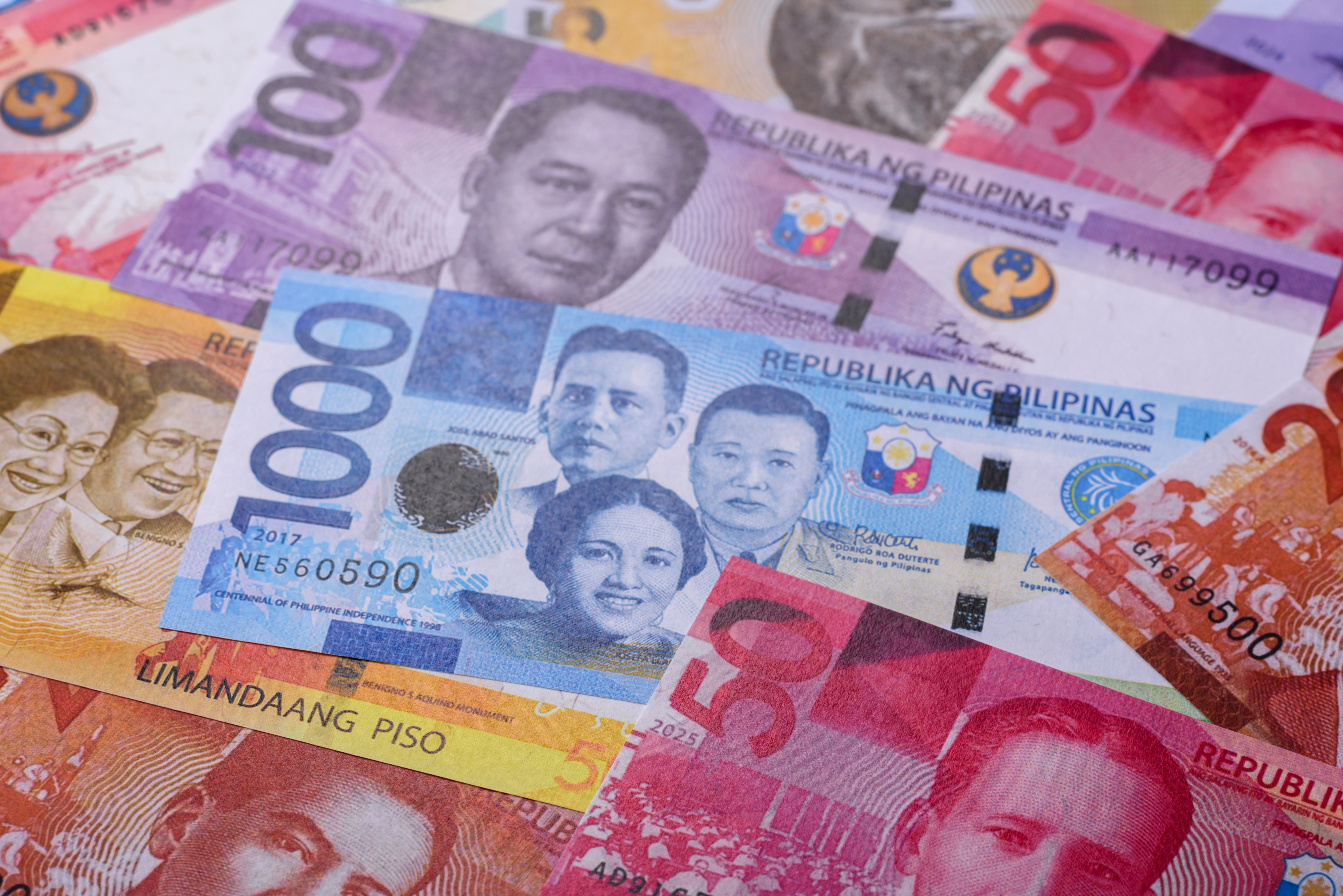
Asia is home to over 30 currencies — from the world-famous Japanese yen and Indian rupee to the little-known Bhutanese ngultrum and Lao kip. Whether you are sending money home, planning a trip across the region or simply curious about the money in your family’s pocket, here is the complete guide to every Asian currency — including an Asian currencies list with the fun facts that make each one worth knowing.
South Asia
🇮🇳 India — Indian Rupee (INR) ₹
Symbol: ₹ | Code: INR | Subdivisions: 1 rupee = 100 paise
The Indian rupee is the currency of the world’s most populous country and one of the fastest-growing major economies. It is managed by the Reserve Bank of India (RBI) and is one of the most actively traded currencies in Asia.
Fun facts:
- The ₹ symbol was only created in 2010 — designed by D. Udaya Kumar, a design student from Chennai, who won a national competition. Before 2010, the rupee had no unique symbol and was written as “Rs” — shared with Pakistan, Nepal and Sri Lanka
- The word “rupee” comes from the Sanskrit rūpya, meaning “wrought silver” — the concept of the rupee dates back over 2,500 years
- Indian banknotes display the denomination in 17 different languages on the back — a small window into India’s extraordinary linguistic diversity
- India’s citizens collectively hold more privately owned gold than any country’s central bank — yet the rupee is a fiat currency not backed by gold
🇵🇰 Pakistan — Pakistani Rupee (PKR) ₨
Symbol: ₨ | Code: PKR | Subdivisions: 1 rupee = 100 paisa
Fun facts:
- Pakistan’s rupee shares the ₨ symbol with Sri Lanka — the ISO code (PKR vs LKR) is the only way to distinguish them in writing
- The Pakistani rupee replaced the Indian rupee at partition in 1947 — initially at parity, though the two currencies have since diverged significantly
- Pakistan’s largest denomination note is ₨5,000 — introduced in 2006
🇧🇩 Bangladesh — Bangladeshi Taka (BDT) ৳
Symbol: ৳ | Code: BDT | Subdivisions: 1 taka = 100 paisa
Fun facts:
- The word taka is used colloquially to mean “money” in general across Bangladesh — asking “koto taka?” (how much money?) is the standard way to ask any price
- Bangladesh introduced the taka in 1972 after independence from Pakistan, replacing the Pakistani rupee
- The taka’s name derives from the Sanskrit tanka — a type of silver coin used across the Indian subcontinent for centuries
- OrbitRemit AUD to BDT transfers are fee-free from Australia — one of very few corridors with no fee from either country
🇳🇵 Nepal — Nepali Rupee (NPR) रू
Symbol: रू | Code: NPR | Subdivisions: 1 rupee = 100 paisa
Fun facts:
- The Nepali rupee is pegged to the Indian rupee at a fixed rate of 1.6 NPR per 1 INR — maintained since 1994, reflecting Nepal’s deep economic integration with India
- Nepal has the world’s only non-rectangular national flag — and the Nepali rupee banknotes proudly feature it
- Until Nepal abolished its monarchy in 2008 and became a republic, all Nepali coins featured the portrait of the reigning king. Coins now feature national symbols including Mount Everest and the rhododendron (Nepal’s national flower)
- The highest denomination is 1,000 NPR — worth approximately AUD $11
🇱🇰 Sri Lanka — Sri Lankan Rupee (LKR) ₨
Symbol: ₨ | Code: LKR | Subdivisions: 1 rupee = 100 cents
Fun facts:
- Sri Lanka’s rupee also uses ₨ — the same symbol as Pakistan’s rupee; the ISO code is essential to distinguish them
- Sri Lanka experienced a severe currency crisis in 2022 when the LKR lost approximately 80% of its value against the USD in a matter of months — one of the sharpest currency collapses in Asian history
- The Sri Lankan rupee has been in use since 1872 — introduced during British colonial rule, replacing the Indian rupee
🇧🇹 Bhutan — Bhutanese Ngultrum (BTN) Nu
Symbol: Nu | Code: BTN | Subdivisions: 1 ngultrum = 100 chhertum
Fun facts:
- The ngultrum is pegged to the Indian rupee at a fixed 1:1 rate — both currencies are accepted interchangeably across Bhutan
- Bhutan measures national success using “Gross National Happiness” rather than GDP — a philosophy reflected in its carefully managed economy and currency
- The word ngultrum comes from the Dzongkha words ngul (silver) and trum (coin)
- Bhutan was one of the last countries in the world to introduce television — in 1999, the same year it introduced the internet
🇲🇻 Maldives — Maldivian Rufiyaa (MVR) Rf
Symbol: Rf | Code: MVR | Subdivisions: 1 rufiyaa = 100 laari
Fun facts:
- The rufiyaa name traces a chain of linguistic evolution: Sanskrit rūpya → Indian rupee → rufiyaa
- The Maldives consists of 26 atolls and over 1,000 coral islands — yet it maintains a single unified currency across this extraordinarily dispersed geography
- The Maldives uses the US dollar extensively alongside the rufiyaa in tourist resorts — most resort pricing is in USD
🇦🇫 Afghanistan — Afghan Afghani (AFN) ؋
Symbol: ؋ | Code: AFN | Subdivisions: 1 afghani = 100 puls
Fun facts:
- The afghani was redenominated in 2002 after decades of conflict-related hyperinflation — 1 new afghani replaced 1,000 old afghanis
- During the Soviet-Afghan War and subsequent civil war, multiple competing currencies circulated simultaneously in different parts of the country
- The afghani symbol ؋ is one of the few currency symbols derived from Arabic script
Southeast Asia
🇵🇭 Philippines — Philippine Peso (PHP) ₱
Symbol: ₱ | Code: PHP | Subdivisions: 1 peso = 100 centavos
Fun facts:
- The double-bar ₱ symbol is unique to the Philippines — every other country that uses a peso currency (Mexico, Colombia, Argentina, Chile) uses the dollar sign ($) for their peso
- The Philippine peso traces its roots to the Spanish colonial period — the Spanish real de a ocho (piece of eight) was the currency of the Philippines from the 16th century
- Philippine banknotes feature the country’s UNESCO World Heritage Sites and natural wonders on the reverse — including Tubbataha Reef, the Puerto Princesa Underground River and the Chocolate Hills of Bohol
- Before Spanish colonisation, pre-colonial Filipinos used gold, beeswax and cowrie shells (sigay) as currency
🇻🇳 Vietnam — Vietnamese Dong (VND) ₫
Symbol: ₫ | Code: VND | Subdivisions: None in practical use
Fun facts:
- A visitor exchanging AUD $100 receives approximately 1,650,000 VND — becoming a millionaire within minutes of landing in Vietnam
- The word đồng means bronze or copper in Vietnamese — a reference to the bronze coins used in Vietnamese trade for centuries
- All Vietnamese dong banknotes from 10,000 VND upward are printed on polymer plastic — not paper; Vietnam adopted polymer in 2003, making it one of the first Asian countries to do so
- Every Vietnamese dong banknote features Ho Chi Minh on the front — the only currency in Southeast Asia to feature a single person on all denominations
- Vietnam redenominated its currency twice — in 1978 and 1985 — to combat post-war hyperinflation
🇮🇩 Indonesia — Indonesian Rupiah (IDR) Rp
Symbol: Rp | Code: IDR | Subdivisions: 1 rupiah = 100 sen (not used)
Fun facts:
- Despite sharing the name “rupiah” (from Sanskrit rupya, the same root as the Indian rupee), the Indonesian rupiah has no connection to or peg with the Indian rupee
- Indonesia’s 1998 Asian Financial Crisis caused the rupiah to lose approximately 85% of its value in months — from around 2,500 IDR per USD to over 16,000 IDR per USD at its worst
- The 100,000 IDR note (approximately AUD $10) is the highest denomination — featuring Soekarno and Mohammad Hatta, the two founding fathers who proclaimed Indonesian independence in 1945
- Indonesia is the only country in the world where the currency’s name includes a word that sounds like “rupee” but is a completely independent currency
🇹🇭 Thailand — Thai Baht (THB) ฿
Symbol: ฿ | Code: THB | Subdivisions: 1 baht = 100 satang
Fun facts:
- The baht is one of the oldest currencies in Southeast Asia — it has been the currency of Thailand (then Siam) since at least the 14th century
- Historically, the baht was a unit of weight for gold and silver — one baht of gold weighed 15 grams; Thai gold jewellery is still sold by the baht weight today
- It is illegal to step on Thai banknotes or coins — because they bear the image of the King, stepping on them is considered a serious act of disrespect and is punishable by law
- The 1997 Asian Financial Crisis began when the Thai baht’s peg to the USD collapsed, triggering a region-wide financial contagion
🇲🇾 Malaysia — Malaysian Ringgit (MYR) RM
Symbol: RM | Code: MYR | Subdivisions: 1 ringgit = 100 sen
Fun facts:
- Ringgit means “jagged” in Malay — a reference to the milled (serrated) edges of the old Spanish silver real coins that circulated widely in the region
- Malaysia pegged the ringgit to the USD at 3.80 MYR per USD from 1998 to 2005 — an emergency measure during and after the Asian Financial Crisis. The peg was controversial but widely credited with stabilising Malaysia’s economy
- The ringgit is sometimes informally called the “Malaysian dollar” — it replaced the Malaya and British Borneo dollar in 1967
🇸🇬 Singapore — Singapore Dollar (SGD) S$
Symbol: S$ | Code: SGD | Subdivisions: 1 dollar = 100 cents
Fun facts:
- The Singapore dollar and Brunei dollar are interchangeable at face value — accepted in both countries under a longstanding currency interchangeability agreement established in 1967
- Singapore’s currency is managed by the Monetary Authority of Singapore (MAS) using an exchange rate band rather than interest rates — one of the few central banks in the world that targets the exchange rate rather than the price of money
- Singapore’s banknotes come in two series simultaneously — the Portrait series (featuring Singapore’s first president Encik Yusof bin Ishak) and the Orchid series for collectors
- The SGD is one of the strongest and most stable currencies in Southeast Asia
🇲🇲 Myanmar — Myanmar Kyat (MMK) K
Symbol: K | Code: MMK | Subdivisions: 1 kyat = 100 pyas
Fun facts:
- The US dollar is widely accepted alongside the kyat in tourist areas — but the government officially discourages foreign currency use and the kyat is the only legal tender for most transactions
- Myanmar’s banknotes feature mythological figures, animals and landscapes — the 1,000 kyat note depicts the Myanmar Central Bank building in Naypyidaw
- The word kyat is related to the word for pical — a traditional weight unit used in trade across Burma for centuries
- Following the 2021 military coup, the kyat lost significant value and parallel exchange rates diverged sharply from official rates
🇰🇭 Cambodia — Cambodian Riel (KHR) ៛
Symbol: ៛ | Code: KHR | Subdivisions: 1 riel = 100 sen (not in use)
Fun facts:
- The US dollar is so widely used in Cambodia that many businesses quote prices only in USD — the riel is mainly used for small change (amounts under $1)
- Cambodia’s riel was completely abolished by the Khmer Rouge regime between 1975 and 1980 — all currency was banned, banks were closed and money was declared worthless. The riel was reintroduced in 1980 after the regime fell
- Cambodia is one of very few countries where a foreign currency (USD) is more commonly used than the national currency for most daily transactions
🇱🇦 Laos — Lao Kip (LAK) ₭
Symbol: ₭ | Code: LAK | Subdivisions: 1 kip = 100 att (not in use)
Fun facts:
- The kip is one of the least-valued currencies in Asia — exchange rates regularly exceed 20,000 LAK per 1 USD
- USD and Thai baht are widely accepted in tourist areas alongside the kip — particularly in Vientiane and Luang Prabang
- The 100,000 kip note — the largest denomination — is worth approximately AUD $7
🇧🇳 Brunei — Brunei Dollar (BND) B$
Symbol: B$ | Code: BND | Subdivisions: 1 dollar = 100 cents
Fun facts:
- The Brunei dollar and Singapore dollar have been interchangeable at face value since 1967 — you can pay with either in both countries
- Brunei’s extraordinary oil and gas wealth means its government charges zero income tax — and subsidises fuel, education and healthcare for citizens
- Brunei’s currency is among the most stable in Southeast Asia due to its vast sovereign wealth reserves
🇹🇱 Timor-Leste — US Dollar (USD) $
Symbol: $ | Code: USD
Fun facts:
- Timor-Leste is one of only a handful of non-US countries to use the US dollar as its sole official currency — others include Ecuador, Panama and El Salvador
- Timor-Leste mints its own coins (centavos) but uses US dollar banknotes — the coins have limited circulation
- When Timor-Leste achieved independence in 2002, it adopted the USD immediately rather than creating a new national currency — a deliberate choice for monetary stability
East Asia
🇨🇳 China — Renminbi / Yuan (CNY) ¥
Symbol: ¥ | Code: CNY | Subdivisions: 1 yuan = 10 jiao = 100 fen
Fun facts:
- Renminbi (人民币) means “people’s currency” — the yuan is the unit; saying “I paid in renminbi” is correct; “I paid in yuan” is also correct. Saying “I paid in RMB” is most common internationally
- The ¥ symbol is shared with the Japanese yen — creating regular confusion in menus and price tags across Asia. The yuan and yen are unrelated currencies; they share a symbol derived from the Chinese character for “round” (圆)
- The yuan is not freely convertible on international markets — China maintains capital controls; the offshore yuan (CNH, traded in Hong Kong) operates with slightly more flexibility than the onshore yuan (CNY)
- China’s digital yuan (e-CNY) has over 2 billion wallets as of 2025 — the world’s most advanced Central Bank Digital Currency (CBDC) in terms of adoption
- Every yuan note features Mao Zedong on the front — he has appeared on all Chinese banknotes since 1999
🇯🇵 Japan — Japanese Yen (JPY) ¥
Symbol: ¥ | Code: JPY | Subdivisions: 1 yen = 100 sen (not in use)
Fun facts:
- The Japanese yen is the third most traded currency in the world after the USD and EUR — used as a global safe-haven asset; when global markets are turbulent, investors buy yen
- Japan’s 1 yen coin weighs exactly 1 gram and is made of 100% pure aluminium — it costs approximately 3 yen to produce each 1 yen coin, meaning Japan loses money every time it mints one; it is so light it can float on water, resting on the surface tension without sinking
- The word yen derives from the Chinese character 圓 (yuán), meaning “round” — the same character that gave China’s yuan its name
- The ¥10,000 note features Fukuzawa Yukichi, a 19th-century scholar and educator — the highest-denomination note of any major economy relative to the base denomination
- Japan replaced all its banknote designs in July 2024 — the first full redesign in 20 years; the new ¥10,000 note features Shibusawa Eiichi (an industrialist) replacing Fukuzawa
🇰🇷 South Korea — South Korean Won (KRW) ₩
Symbol: ₩ | Code: KRW | Subdivisions: 1 won = 100 jeon (not in use)
Fun facts:
- South Korea’s won has a very low unit value relative to purchasing power — approximately 900 KRW = 1 AUD; a cup of coffee costs 5,000-6,000 KRW
- Korea redenominated its currency in 1962 — 10 old hwan = 1 new won; the won has been South Korea’s currency since
- The 50,000 won note (the highest denomination, approximately AUD $55) features Shin Saimdang — a 16th-century artist and mother of scholar Yi I; she is the first woman to appear on a South Korean banknote
- The 1997 Asian Financial Crisis hit the won particularly hard — it fell from approximately 900 won per USD to nearly 2,000 won per USD before an IMF bailout stabilised the economy
🇹🇼 Taiwan — New Taiwan Dollar (TWD) NT$
Symbol: NT$ | Code: TWD | Subdivisions: 1 dollar = 100 cents
Fun facts:
- The “New” in New Taiwan Dollar was added in 1949 to distinguish it from the mainland Chinese currency when the Republic of China government relocated to Taiwan
- Taiwan’s NT$1,000 note features the Presidential Office Building in Taipei — a Japanese colonial-era building that became the seat of Taiwan’s government after 1945
- Taiwan manages its currency through the Central Bank of the Republic of China (Taiwan) — one of the few central banks in the world to conduct active currency interventions to prevent excessive appreciation
🇭🇰 Hong Kong — Hong Kong Dollar (HKD) HK$
Symbol: HK$ | Code: HKD | Subdivisions: 1 dollar = 100 cents
Fun facts:
- The HKD has been pegged to the USD at 7.75-7.85 HKD per USD since 1983 — one of the world’s oldest and most tested currency pegs still operating
- Three private banks issue Hong Kong dollar banknotes — HSBC, Standard Chartered and Bank of China (Hong Kong) — alongside the Hong Kong Monetary Authority’s coins; Hong Kong is one of the few places where commercial banks (not just the central bank) issue legal tender
- Hong Kong’s Currency Board system means every HKD in circulation is backed 100% by USD reserves — the city cannot print money it doesn’t have
🇲🇴 Macau — Macanese Pataca (MOP) P
Symbol: P | Code: MOP | Subdivisions: 1 pataca = 100 avos
Fun facts:
- The pataca is pegged to the Hong Kong dollar at 1.03 MOP per 1 HKD — and both currencies are accepted interchangeably in most Macau businesses
- The pataca was introduced in 1894 during Portuguese colonial rule — the name comes from the Portuguese word for the old Spanish peso coin
- Macau’s gambling revenue is approximately five times that of Las Vegas — yet the pataca remains one of the lesser-known Asian currencies internationally
🇲🇳 Mongolia — Mongolian Tögrög (MNT) ₮
Symbol: ₮ | Code: MNT | Subdivisions: 1 tögrög = 100 möngö
Fun facts:
- The word tögrög means “circular” in Mongolian — a reference to the round shape of coins
- Mongolia’s currency features Genghis Khan on its banknotes — the founder of the Mongol Empire, which was once the largest contiguous land empire in history
- The tögrög was introduced in 1925, replacing Chinese silver coins and Russian rubles that had previously circulated in Mongolia
- Mongolia is one of the most sparsely populated countries in the world — yet maintains a fully functional national currency across a territory three times the size of France
Central Asia
🇰🇿 Kazakhstan — Kazakhstani Tenge (KZT) ₸
Symbol: ₸ | Code: KZT | Subdivisions: 1 tenge = 100 tiyn
Fun facts:
- The tenge was introduced on 15 November 1993 — when Kazakhstan left the Soviet ruble zone after independence; 15 November is now celebrated as “Tenge Day” in Kazakhstan
- The tenge symbol ₸ was selected through a public competition in 2006 — it evokes the Kazakh word for “money” and resembles the letter T with double horizontal bars
- Kazakhstan is the world’s largest landlocked country — and its currency reflects the oil-rich economy that emerged after independence
🇺🇿 Uzbekistan — Uzbekistani Sum (UZS) лв
Symbol: лв | Code: UZS | Subdivisions: 1 sum = 100 tiyin
Fun facts:
- Uzbekistan redenominated its currency in 2017 — 1 new sum replaced 1,000 old sum; the old 1,000 sum note became the new 1 sum note overnight
- Sum means “pure” in several Turkic languages — a reference to pure silver or gold
- Uzbekistan holds the world’s fourth largest gold reserves relative to its economy — gold features prominently in its monetary policy
🇰🇬 Kyrgyzstan — Kyrgyzstani Som (KGS) С
Symbol: С | Code: KGS | Subdivisions: 1 som = 100 tyiyn
Fun facts:
- The som was introduced in 1993 after independence from the Soviet Union — replacing the Soviet ruble at 200 rubles per 1 som
- Kyrgyzstan’s som banknotes feature Manas — the legendary hero of the Kyrgyz epic poem, one of the longest epic poems in the world at over 500,000 lines
🇹🇯 Tajikistan — Tajikistani Somoni (TJS) SM
Symbol: SM | Code: TJS | Subdivisions: 1 somoni = 100 diram
Fun facts:
- The somoni is named after Ismoil Somoni — founder of the Samanid Empire in the 9th-10th centuries; it is one of the few currencies in the world named after a historical figure
- The somoni replaced the Tajikistani ruble in 2000 at a rate of 1,000 rubles per 1 somoni — introduced to help stabilise the economy after civil war hyperinflation
🇹🇲 Turkmenistan — Turkmenistani Manat (TMT) T
Symbol: T | Code: TMT | Subdivisions: 1 manat = 100 tennesi
Fun facts:
- Turkmenistan redenominated in 2009 — 5,000 old manat = 1 new manat
- The manat is strictly controlled by the Turkmen government — it is not freely convertible and the official rate differs significantly from the parallel market rate
- Turkmenistan has the world’s fourth largest natural gas reserves — yet remains one of the most closed economies in Asia
Notable facts across Asian currencies
Most widely traded: The Japanese yen (JPY) is the third most traded currency in the world — after the USD and EUR.
Most stable Southeast Asian currency: The Singapore dollar (SGD) — managed via exchange rate band by the Monetary Authority of Singapore.
Oldest concept: The Indian rupee concept traces back over 2,500 years — to Sanskrit rūpya (wrought silver).
Shared symbol confusion: The ¥ symbol is used by both the Chinese yuan (CNY) and Japanese yen (JPY) — two completely different currencies.
Most dramatic collapse: The Cambodian riel was completely abolished by the Khmer Rouge from 1975 to 1980 — one of the only times in modern history a country eliminated its own currency entirely.
Only country using USD: Timor-Leste — the only Asian country with no national currency of its own.
Currencies OrbitRemit supports from Australia and New Zealand
| Country | Currency | Code | Fee from Australia | Fee from New Zealand |
|---|---|---|---|---|
| India | Indian Rupee | INR | AUD $0 — fee-free | NZD $4 flat |
| Philippines | Philippine Peso | PHP | AUD $0 — fee-free (mobile wallets) | NZD $4 flat |
| Vietnam | Vietnamese Dong | VND | AUD $0 — fee-free | NZD $4 flat |
| Nepal | Nepali Rupee | NPR | AUD $0 — fee-free | NZD $4 flat |
| Bangladesh | Bangladeshi Taka | BDT | AUD $0 — fee-free | NZD $0 — fee-free |
| South Korea | South Korean Won | KRW | AUD $0 — fee-free | NZD $0 — fee-free |
| China | Chinese Yuan | CNY | AUD $0.99 flat | NZD $0.99 flat |
| Indonesia | Indonesian Rupiah | IDR | AUD $4 flat | NZD $4 flat |
| Sri Lanka | Sri Lankan Rupee | LKR | AUD $4 flat | NZD $4 flat |
| Pakistan | Pakistani Rupee | PKR | AUD $4 flat | NZD $4 flat |
| Japan | Japanese Yen | JPY | AUD $4 flat | NZD $4 flat |
Fees are subject to change. Check current rates at orbitremit.com.
FAQs (frequently asked questions)
Which Asian currencies are fee-free to send from Australia?
INR (India), PHP (Philippines), VND (Vietnam), NPR (Nepal) and BDT (Bangladesh) are all fee-free from Australia. KRW (South Korea) and BDT are also fee-free from New Zealand.
What is the difference between the yuan and renminbi?
Renminbi (RMB) is the official name of China’s currency system. Yuan is the base unit of that system. You pay in yuan; the currency is called renminbi. Both terms are correct in different contexts.
Why does Vietnam have such a low unit value for its dong?
The dong was redenominated twice — in 1978 and 1985 — but inflation in the late 1980s continued to erode its value. Rather than redenominating again, Vietnam stabilised the dong at its current level. It is economically healthy at its current value.
Which Asian currency has the most creative name?
Many candidates — the Bhutanese ngultrum (ngul = silver + trum = coin), the Malaysian ringgit (means “jagged”), the Mongolian tögrög (means “circular”) and the Lao kip all have distinctive origins.
Is the Chinese yuan freely convertible?
No — China maintains capital controls on the yuan. The offshore yuan (CNH, traded in Hong Kong) has slightly more flexibility. Most international transactions use the onshore yuan (CNY).
What it means for your transfers
Every currency in this guide represents a family connection across borders. OrbitRemit supports transfers from Australia and New Zealand to over 50 countries — with fee-free options across major Asian corridors.
Currency information is for general reference. Exchange rates fluctuate. Last updated August 2026.
Sources: Wikipedia — List of currencies in Asia | xs.com — World currency list 2026 (May 2026) | no1currency.com — Asian currency symbols guide | nationsonline.org — International currencies by country | mnathall.com — Asian countries and currencies (July 2026)


