Summary
Australian and New Zealand passport holders can enter Fiji visa-free for up to 4 months (120 days) — no application, no fee and no prior approval required; you receive an entry stamp on arrival at Nadi International Airport or other official ports of entry; you need a passport valid for at least 6 months beyond your departure date, a return or onward ticket and proof of accommodation
Fiji is Australia and New Zealand’s most beloved Pacific Island destination — Australians are the single largest group of foreign visitors to Fiji, with over 345,000 arrivals in 2022 alone; New Zealanders are second; from Sydney, Perth or Auckland, Fiji is one of the closest island escapes available — and one of the most genuinely warm
The dry season from May to October is the best time to visit — lower humidity, reliable sunshine and calm seas; the wet season from November to April brings occasional heavy showers but significantly lower prices and fewer crowds; there is no bad time to visit Fiji — only different Fijis
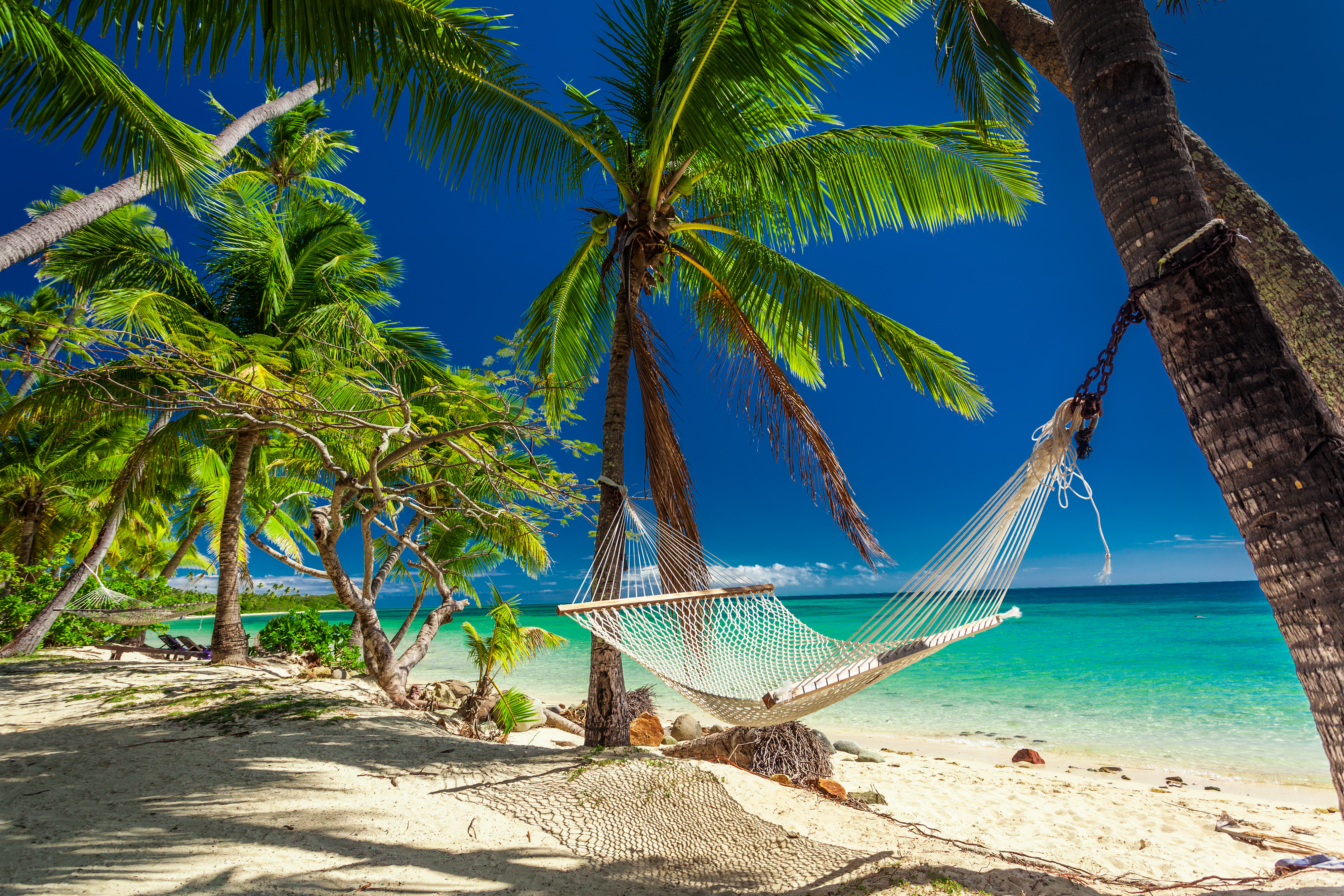
Fiji is where Australia and New Zealand go to exhale. Three hours from Sydney. Four hours from Auckland. A world made of turquoise water, white sand, coral reef and an extraordinary warmth of welcome that no brochure has ever adequately captured.
The Fijian greeting — Bula! — is not a formality. It is an expression of genuine delight at your presence, offered by everyone from immigration officers to resort staff to strangers on the road. Fiji is a country that genuinely likes visitors. And visitors, overwhelmingly, genuinely like Fiji back.
Visa and entry requirements
Visa-free — no application required
Both Australian and New Zealand passport holders can enter Fiji without a visa. You receive a visitor’s permit stamped in your passport on arrival at Nadi International Airport (NAN) or any official port of entry, granting a stay of up to 4 months (120 days).
What you need:
- Passport valid for at least 6 months beyond your planned departure date from Fiji, with at least one blank page
- Return or onward ticket — immigration will check
- Proof of accommodation — hotel booking confirmation or address of stay
- Evidence of sufficient funds for your stay
No pre-approval, no form, no fee. Simply arrive, present your documents and you are in.
Extension: If you want to stay beyond your initial permit, extensions of up to 2 additional months are available from the Fiji Immigration Department in Suva. The initial permit duration at arrival is at the discretion of the immigration officer — most travellers receive the full 4 months.
No COVID-related entry requirements remain in place as of 2026. No vaccination mandates for entry — though hepatitis A and typhoid vaccinations are commonly recommended by travel health clinics.
Best time to visit
Dry season: May to October — best overall
The dry season is Fiji’s peak travel period for good reason. Temperatures sit at a comfortable 26-28°C, humidity is lower, seas are calm and the skies are reliably clear. June, July and August are peak months — perfect weather but higher prices and fuller resorts. May and September-October offer an excellent balance: still dry, still warm, with fewer crowds.
Wet season: November to April — budget-friendly and lush
The wet season brings warmer temperatures (28-32°C), higher humidity and occasional heavy rain — typically in bursts rather than all-day downpours. The landscape turns extraordinarily lush and green. Prices drop significantly. Crowds thin. If you can be flexible about weather, the wet season offers some of the best resort deals of the year. Note: Fiji sits in a cyclone zone — while cyclones are not common, the risk is highest from November to April.
For Australians and New Zealanders: The dry season aligns with the Australian/NZ school holidays of July and the post-winter spring period. Book well in advance for July travel — Fiji is extraordinarily popular with Australian families.
Getting there
From Australia
Direct flights: Fiji Airways and Jetstar operate direct flights from Sydney, Melbourne, Brisbane and Auckland to Nadi International Airport (NAN).
| City | Airlines | Flight time |
|---|---|---|
| Sydney | Fiji Airways, Jetstar | ~3.5 hours |
| Melbourne | Fiji Airways, Jetstar | ~4.5 hours |
| Brisbane | Fiji Airways | ~3 hours |
| Perth | Fiji Airways (via Sydney or direct seasonal) | ~5.5-7 hours |
Cost: Return flights from eastern Australia range from approximately AUD $450-800 during sales to AUD $700-1,200 at standard rates.
From New Zealand
Direct flights: Fiji Airways operates direct flights from Auckland (AKL) to Nadi — one of the most popular routes in the Pacific.
Flight time: Auckland to Nadi approximately 3.5 hours.
Cost: Return flights from Auckland typically range from NZD $550-1,000.
Top destinations
Viti Levu — the main island
Viti Levu is Fiji’s largest island and home to both Nadi (the main international airport and western gateway) and Suva (the capital on the southeast coast). Most visitors arrive at Nadi and either stay on Viti Levu or use it as a base to hop to the outer islands.

Nadi and Denarau: The western hub — the airport, Port Denarau Marina (departure point for island ferries), Denarau Island resorts and a handful of genuinely worthwhile attractions.
Sri Siva Subrahmanya Swami Temple: Located in central Nadi — the largest Hindu temple in the Southern Hemisphere. The building is extraordinary: painted in vivid pinks, oranges and blues, with elaborate gopuram (tower) sculptures depicting Hindu deities. Open to visitors of all faiths — remove shoes before entering, dress modestly.
Garden of the Sleeping Giant: A botanical garden of orchids and tropical plants in the hills above Nadi — established by the late actor Raymond Burr on his private property; now open to the public. A peaceful morning visit before a beach afternoon.
Sigatoka Sand Dunes National Park: An extraordinary landscape of wind-sculpted sand dunes — some up to 18 metres high — along Fiji’s Coral Coast. One of the most unusual natural environments in the Pacific. Easy walking trails through the dunes to the coast.
The Coral Coast
Running along the south coast of Viti Levu from Sigatoka to Pacific Harbour, the Coral Coast is where most of Fiji’s family resorts and mid-range properties sit. Lagoon swimming, reef snorkelling directly off the beach, village visits and a more relaxed pace than the resort-heavy Mamanuca Islands.

Pacific Harbour — the Adventure Capital of Fiji: On Fiji’s south coast, Pacific Harbour is the base for white-water rafting on the Upper Navua River — a spectacular gorge journey through highland rainforest, past waterfalls and remote Fijian villages. Offshore, the Beqa Lagoon (Beqa is pronounced “Beng-ga”) is one of the world’s great dive sites — shark diving at Shark Reef Marine Reserve, where up to eight species of shark gather regularly.
The Mamanuca Islands
A group of approximately 20 islands off the western coast of Viti Levu — the most accessible and most popular island group in Fiji. Range from busy resort islands (Malolo, Castaway) to tiny uninhabited sandbars with nothing but a beach and a coral reef.

Getting there: High-speed catamarans depart from Port Denarau in Nadi — 20 minutes to the nearest islands, up to 2 hours to the furthest. Water taxis and traditional sailing boats (bilibili) also operate from Vuda Marina.
Monuriki Island: A small, uninhabited island in the Mamanuca group — famous as the location where the film Castaway with Tom Hanks was filmed. Pristine beaches and snorkelling in completely private surroundings.
What to do: Jet skiing, kayaking, kiteboarding, paddleboarding, surfing at Cloudbreak (one of the most powerful left-hand reef breaks in the world — for expert surfers only), snorkelling in clear lagoons, diving among soft coral gardens and shipwrecks.
The Yasawa Islands
A chain of volcanic islands stretching 90km north of the Mamanucas — more remote, less developed and more culturally authentic than the Mamanucas. The Yasawas are where you go when you want Fiji without the resort density.

Getting there: The South Sea Cruises Yasawa Flyer departs Port Denarau in Nadi at 8:45am daily, stopping at multiple islands along the chain. The journey to the furthest islands takes up to 5.5 hours. You can hop on and off at different islands using a Bula Pass.
What you find: Small boutique resorts, traditional Fijian villages where tourism is welcomed, snorkelling among some of the best coral in Fiji, caves including the famous Blue Lagoon and Sawa-i-Lau cave (where you can swim into an underground chamber), and a pace of life that makes even Bali feel hectic.
Blue Lagoon: The stretch of impossibly clear, shallow turquoise water between the northern Yasawa islands — made famous by the 1980 film of the same name. Swimming and snorkelling in the lagoon is the highlight of any Yasawa trip.
Vanua Levu and Savusavu
Fiji’s second-largest island — largely undeveloped and visited primarily by divers. Savusavu, on the south coast, is sometimes called “the hidden paradise” — a small town on a beautiful bay surrounded by coconut plantations and the Namena Marine Reserve, one of the world’s great dive destinations.

Taveuni — the Garden Island: Known for its extraordinary biodiversity — the 180th meridian runs through Taveuni; the island is home to the Bouma National Heritage Park and the spectacular Tavoro Waterfalls. Offshore, the narrow channel between Vanua Levu and Taveuni holds the Great White Wall and Rainbow Reef — considered among the world’s finest soft coral dive sites.
Food and drink
Fijian food is a warm, coconut-rich blend of indigenous Melanesian, Indian and Pacific traditions — reflecting the country’s three main communities.
Fijian food:
- Kokoda: Raw fish marinated in citrus juice (lime or lemon) and coconut milk — Fiji’s answer to ceviche; tangy, fresh and one of the most satisfying dishes in the Pacific
- Palusami: Fresh fish or corned beef wrapped in taro leaves with coconut cream, cooked in an earth oven (lovo); rich, soft and deeply aromatic
- Lovo feast: A traditional earth-oven feast — whole fish, pork, chicken and root vegetables cooked underground with hot stones; many resorts host lovo nights with traditional meke (song and dance) performances
- Ota miti: The tender young shoots of the wood fern — eaten with coconut milk as a side; distinctly Fijian
Fijian-Indian food: Fiji’s Indian community (Indo-Fijians) have maintained a distinct cuisine over five generations — mild to moderately spiced curries served with roti, rice and dal. Widely available in local restaurants at extremely affordable prices. The pumpkin curry at a local Nadi warung (small restaurant) is one of Fiji’s great budget food experiences.
Fresh fruit: Fiji grows extraordinary tropical fruit — sweet pineapple, ripe mango, pawpaw, passionfruit, soursop, breadfruit. The Suva Municipal Market (Thursday to Saturday) is the best place to buy fresh produce cheaply and directly from farmers.
Kava (yaqona): The cornerstone of Fijian social culture. Kava is a mildly sedating drink made from the ground root of the yaqona plant, mixed with water and consumed from a shared coconut shell bowl (bilo). If you are offered kava at a village visit or ceremony — say yes. Clap once before receiving the bilo. Drain it in one. Clap three times after. This is the formal ceremony; relax into it. Kava relaxes muscles and creates a mild numbing sensation. It is not intoxicating in the way alcohol is.
Fijian culture — dos and don’ts
Things to do
Say Bula: The Fijian greeting means “life” or “health” — and it is offered with complete sincerity by everyone, everywhere. Return it the same way.
Observe the sevusevu when entering a village: When visiting a traditional Fijian village, it is customary to present a sevusevu — a small gift of kava root (available at markets for a few dollars) — to the village chief or elder. Your guide will explain the protocol; follow their lead. Entering a village without a sevusevu is considered disrespectful.
Dress modestly in villages: Cover shoulders and knees when entering any Fijian village or church. Swimwear, singlets and short shorts are for beaches and resorts — not for village visits or the town centre. Carry a sarong or sulu (the traditional wrap-around garment) as a cover-up.
Remove your hat in villages: Wearing a hat in a Fijian village is considered disrespectful — the head is regarded as sacred. Remove it before entering.
Accept food and drink when offered: Fijian hospitality is expressed through giving. Declining food or kava offered at a village can cause offence. Accept at least a small amount.
Move slowly: Fiji operates on “Fiji time” — a relaxed, unhurried approach to schedules and timing that reflects the culture’s values around relationships over punctuality. Embrace it.
Things not to do
Do not enter a village without permission: Fijian villages are private property and community spaces. Always ask permission before entering — or arrive with a guide who has arranged it.
Do not touch someone’s head: As in many Pacific and Asian cultures, the head is sacred — touching or patting someone’s head (including children’s) is disrespectful.
Do not point your feet at people: Feet are considered the lowest part of the body — avoid pointing them directly at another person when sitting.
Do not take photos at ceremonies without permission: Village ceremonies, church services and cultural events are real occasions for real people. Ask before photographing.
Money and costs
Currency: Fijian Dollar (FJD). As of mid-2026, approximately AUD $1 = FJD 1.45; NZD $1 = FJD 1.25.
Daily budgets:
| Budget level | Daily spend | What you get |
|---|---|---|
| Budget | AUD $80-120 | Guesthouse or small resort, local meals, day trips |
| Mid-range | AUD $150-280 | Resort all-inclusive or room with meals, activities |
| Luxury | AUD $400-800+ | Premium resort, private transfers, exclusive experiences |
Cash: ATMs are available in Nadi, Suva and most resort areas. Remote islands and smaller resorts may be cash-only or have limited EFTPOS. Carry FJD cash before heading to the Yasawas.
Tipping: Not mandatory but appreciated at resorts. Most resorts have a staff Christmas fund — a small daily contribution (FJD $5-10) is common.
What it means for your transfers
Fiji has one of the largest Fijian diaspora communities in Australia and New Zealand — particularly in Auckland, Sydney and Melbourne. AUD to FJD transfers from Australia carry a flat AUD $1 fee with OrbitRemit. NZD to FJD from New Zealand carries a flat NZD $1 fee. All transfers above AUD or NZD $10,000 are fee-free.
Related guides
- How to send money to Fiji from Australia and New Zealand →
- The 5 best eSIMs for international travel from Australia →
- The 5 best travel money cards in Australia 2026 →
- The 5 best travel money cards in New Zealand 2026 →
- World currencies: fun facts →
FAQs (frequently asked questions)
Do Australians need a visa for Fiji?
No — Australian passport holders enter Fiji visa-free for up to 4 months (120 days). No application needed. You need a passport valid for 6 months beyond your departure date, a return ticket and proof of accommodation.
Do New Zealanders need a visa for Fiji?
No — same as Australians. Visa-free, up to 4 months on arrival. Passport valid 6 months, return ticket, proof of accommodation.
What is the best time to visit Fiji?
May to October (dry season) — lower humidity, clear skies, calm seas. July-August is peak season. May, September and October offer great weather with fewer crowds.
How long is the flight from Australia to Fiji?
Sydney to Nadi approximately 3.5 hours. Melbourne approximately 4.5 hours. Brisbane approximately 3 hours.
What is the Yasawa Flyer?
The South Sea Cruises ferry that departs Port Denarau in Nadi at 8:45am daily, connecting islands throughout the Yasawa chain. You can hop on and off at different islands using a Bula Pass.
Is Fiji safe for Australian and New Zealand travellers?
The Australian Government’s Smartraveller advisory is “Exercise Normal Safety Precautions” — the baseline level. Fiji is considered a safe destination for tourists. Standard precautions apply in urban areas.
What is kava?
A traditional Fijian drink made from the ground root of the yaqona plant, mixed with water and shared from a communal bowl. Mildly sedating, not intoxicating. Central to Fijian social and ceremonial life. Accept it if offered in a village — it is a gesture of welcome.
Visa requirements and entry conditions are subject to change — always verify at Smartraveller (smartraveller.gov.au) or Safetravel (safetravel.govt.nz) before travelling. Last updated September 2026.
Sources: visago.dev — Fiji Visa Requirements for Australian Citizens 2026 (March 12, 2026) | grandbleufiji.com — Everything You Need to Know About Travelling to Fiji 2026-2027 (May 27, 2026) | backpackingtours.com — How to Get Your Fiji Visa (June 29, 2026) | londonerinsydney.com — Which Fijian Island Is Right for You? (April 4, 2026) | fijipocketguide.com — The Complete Guide to Viti Levu 2026 (June 3, 2026) | frommers.com — Fiji Travel Guide 2026 | nomadicmatt.com — Fiji Travel Guide (Updated 2026)


