Summary
Simbang Gabi 2026 runs from Wednesday 16 December to Thursday 24 December, with anticipated evening Masses from Tuesday 15 to Wednesday 23 December – it is a novena of nine Masses before Christmas, the dates are fixed every year, and the series ends on Christmas Eve, when many Filipino families go on to share Noche Buena
The Masses were traditionally held before dawn, and many Filipino communities abroad hold them in the evening – the name is usually translated as “night worship”, the Masses are often called Misa de Gallo (Mass of the Rooster) after the rooster’s crow at dawn, and many believe that completing all nine brings a wish true
Food and community are part of it – Filipinos traditionally share bibingka (rice cakes) and puto bumbong (purple rice cakes) with ginger tea (salabat) or hot chocolate after Mass, and in Australia and New Zealand the gathering after Mass is as much a part of the tradition as the service
Simbang Gabi 2026 dates
| Date | |
|---|---|
| First dawn Mass | Wednesday 16 December 2026 |
| Last dawn Mass | Thursday 24 December 2026 |
| Anticipated evening Masses | Tuesday 15 to Wednesday 23 December 2026 (each held the evening before its dawn Mass) |
| Christmas Eve and Noche Buena | Thursday 24 December 2026 |
| Christmas Day | Friday 25 December 2026 |
Simbang Gabi always begins on 16 December and ends on 24 December. In practice, parishes set their own Mass times, so check with your local parish.
What is Simbang Gabi?
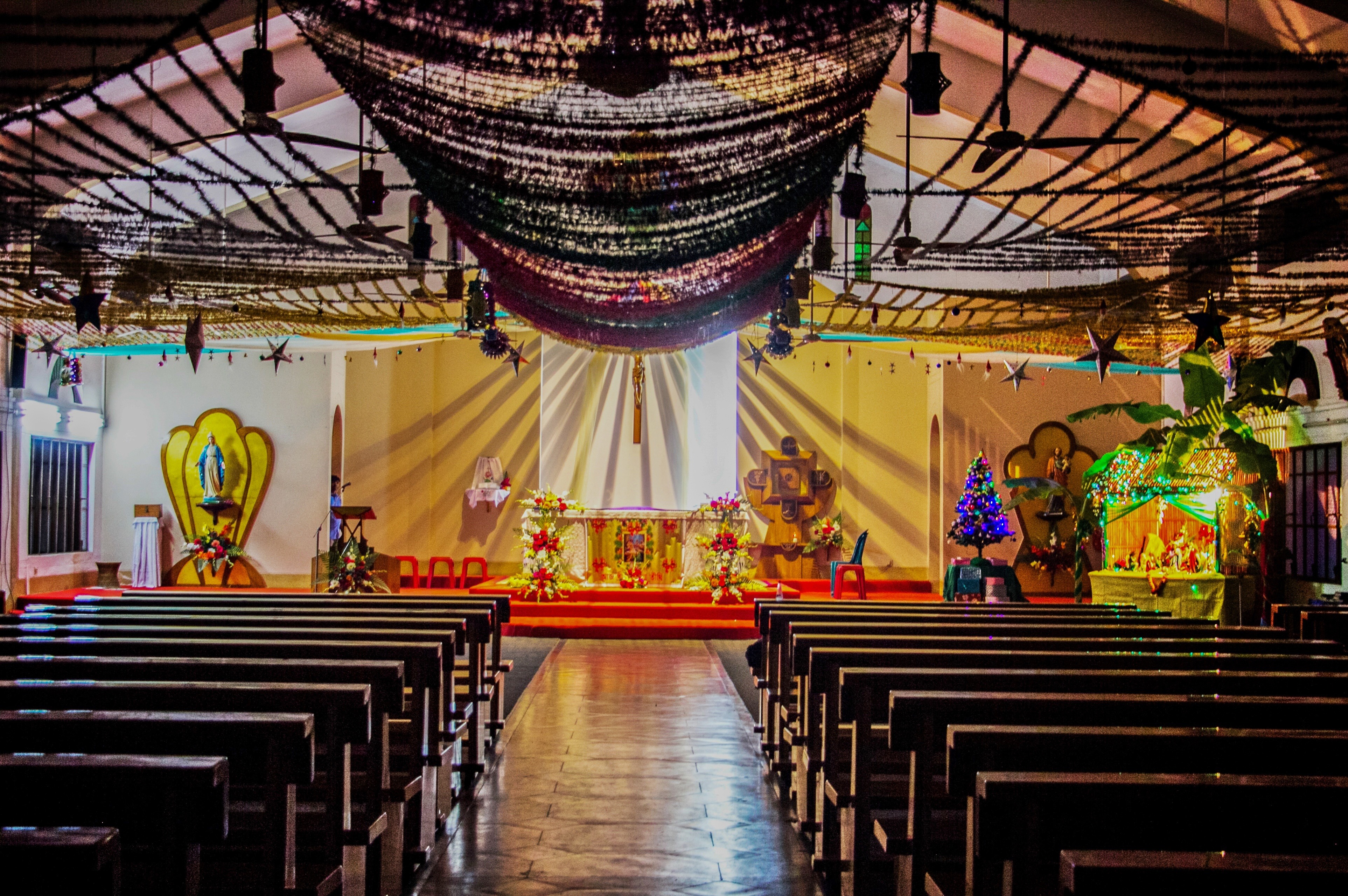
Simbang Gabi is a Filipino Catholic Christmas tradition of nine Masses held on consecutive days before Christmas. The Tagalog name is usually translated as “night worship”, and it is also described as the dawn Masses or the nine-day Christmas novena. It is a way of preparing spiritually for Christmas.
The nine Masses. The Masses were traditionally held very early, around 4 or 5am, so that farmers could attend before going to the fields. In the Philippines many families still go before dawn, and parishes also hold anticipated evening Masses, often starting around 8pm.
Misa de Gallo. Misa de Gallo means “Mass of the Rooster”, after the rooster that crows at dawn. Many Filipinos use the term for the dawn Masses. Some writers distinguish the nine dawn Masses, which they call Misas de Aguinaldo, from the Misa de Gallo proper, which in Spain is the midnight Mass of Christmas Eve. In everyday use, Simbang Gabi covers the whole series.
A long-standing practice. In 1953, the First Plenary Council of the Philippines petitioned the Holy See to allow the practice of Misa de Gallo to continue, and the request was granted.
The wish. Many Filipino Catholics believe that if you complete all nine Masses, your wish will be granted. It is a common reason people keep going even through a busy December.
The foods that follow
Outside Philippine churches, stalls traditionally sell treats to eat after Mass:
| Food | What it is |
|---|---|
| Bibingka | A rice cake made with glutinous rice and coconut milk, cooked with heat above and below |
| Puto bumbong | Steamed purple rice pastry, served with butter, grated coconut and brown sugar |
| Salabat | Ginger tea |
| Tsokolate or champorado | Hot chocolate or chocolate rice porridge |
| Suman | Sticky rice wrapped in leaves |
The meal after Mass is a big part of why many families look forward to it.
Simbang Gabi in Australia and New Zealand
Many parishes with Filipino communities in Australia and New Zealand hold Simbang Gabi. Our guide to Pasko in Australia notes that, in Australia, the traditional pre-dawn Masses are often adapted to evening times to fit work schedules, with a community gathering and Filipino food afterwards.
Practical points:
- Check your parish. Mass times and which nights are offered vary, so ask your local parish or Filipino community group.
- Everyone is welcome. Filipino Catholic communities often invite people of all backgrounds to join.
- Bring something to share. Food and conversation afterwards are part of the tradition, so ask your community whether people bring dishes.
From Simbang Gabi to Noche Buena
Simbang Gabi leads into Christmas Eve. Many Filipino families gather for Noche Buena, a feast shared late on 24 December. The table commonly includes lechon, hamon, queso de bola, pancit, spaghetti, bibingka and leche flan. See our guides to Christmas food in Australia and Christmas food in New Zealand for more on how Filipino Christmas tables look here.
Sending money home for Pasko
If you are sending money to family in the Philippines for Christmas, public holidays in Australia, New Zealand and the Philippines can add time to a transfer. OrbitRemit’s Help Centre gives settlement guidance in working days, counted after your payment reaches OrbitRemit. Check the estimated delivery time in your account before you confirm, and note that delivery estimates are not guarantees. See our guide to why December is the busiest month for remittances.
OrbitRemit charges no flat transfer fee for AUD to PHP wallet delivery and AUD $4 for bank deposits from Australia, and NZD $4 for wallet delivery and NZD $6 for bank deposits from New Zealand. Payment method fees may incur.
FAQs (frequently asked questions)
When is Simbang Gabi in 2026?
Dawn Masses run from Wednesday 16 December to Thursday 24 December 2026. Anticipated evening Masses usually run from Tuesday 15 to Wednesday 23 December.
What does Simbang Gabi mean?
It is Tagalog and is usually translated as “night worship”. It refers to a novena of nine Masses before Christmas.
What is the difference between Simbang Gabi and Misa de Gallo?
In everyday use Filipinos often use the terms interchangeably. Some writers say the nine dawn Masses are properly called Misas de Aguinaldo, and Misa de Gallo is the midnight Mass of Christmas Eve.
Does Simbang Gabi always start on 16 December?
Yes. The dates are fixed: 16 December is the first Mass and 24 December is the ninth.
Why do people complete all nine Masses?
Many believe that if you complete all nine, your wish will be granted. Others attend as spiritual preparation for Christmas.
What do Filipinos eat after Simbang Gabi?
Traditionally bibingka and puto bumbong, with ginger tea (salabat), hot chocolate or champorado.
Is Simbang Gabi only for Filipinos?
It is a Filipino Catholic tradition, and Filipino communities often welcome everyone to join.
Important information
This article is general information about a religious and cultural tradition. Mass times, locations and customs vary between parishes and communities, so check with your local parish. Transfer times vary by destination and payment method, and delivery estimates are not guarantees. OrbitRemit does not provide advice on exchange rate timing, and its exchange rate includes a margin, with the rate and destination amount shown before you confirm each transfer.
Related guides
- Pasko Australia 2026: a guide to Filipino Christmas events
- December: the busiest month for remittances
- Christmas food in Australia
- Christmas food in New Zealand
Last updated 12 November 2026.
Sources: Wikipedia, Simbang Gabi | Philippine News Agency, Simbang Gabi: an enduring Filipino Christmas tradition | Asian Journal, Simbang Gabi: a revered Filipino Christmas tradition | Archdiocese of Indianapolis, Filipino Simbang Gabi tradition | Spot.ph, Misa de Gallo vs Simbang Gabi | Caffeine Brothers, Simbang Gabi 2026: dates, Mass times and coffee tips | Jon to the World, Simbang Gabi 2026 schedule | OrbitRemit, Pasko Australia 2026 guide | OrbitRemit Help Centre, settlement guidance by destination


