Summary
Australian and New Zealand passport holders can enter China visa-free for up to 30 days — no application, no fee, no prior approval — under China’s unilateral visa-free policy, which runs until 31 December 2026 — the policy covers tourism, business, family visits and transit; multiple entries are permitted; your passport must be valid for at least 6 months beyond your planned departure from China; the policy was introduced on 1 July 2024 and extended to 31 December 2026 — for trips in 2027, verify the status before booking
China requires practical preparation that most other destinations do not — Google, Facebook, Instagram, WhatsApp, Gmail and most Western apps are blocked by China’s Great Firewall; download a VPN before you arrive (VPNs cannot be downloaded inside China); WeChat Pay and Alipay are the dominant payment methods and can now be linked to international Visa and Mastercard; have both set up before you travel; carry some Chinese Yuan (CNY/RMB) cash as a backup
China’s scale and variety makes it one of the most extraordinary travel destinations in the world — the Forbidden City and Great Wall in Beijing, the Terracotta Warriors in Xi’an, the futuristic skyline of Shanghai, giant pandas in Chengdu, the karst mountains of Guilin, the Avatar-inspiring rock pillars of Zhangjiajie and the ancient Silk Road cities of Dunhuang and Kashgar; a first trip of 14-21 days typically covers 3-4 cities connected by China’s extraordinary high-speed rail network
China is a destination that tends to exceed expectations — even for well-travelled Australians and New Zealanders who approach it with some scepticism. The scale is genuinely overwhelming in the best possible way: cities larger than Sydney or Auckland at every stop, history layered across five millennia, landscapes that look like traditional paintings made real and food that varies more between provinces than between most separate countries.
The practical barriers — the Great Firewall, the payment system, the language — are real but manageable with preparation. This guide covers everything you need for 2026, including the visa-free access that has made China significantly more accessible for Australian and New Zealand travellers.
Visa and entry requirements
Visa-free — 30 days, no application required
Australian and New Zealand passport holders do not need a visa to visit China for stays of up to 30 days — for tourism, business, family visits or transit.
Key details:
| Cost | Free — no application required |
| Maximum stay | 30 days per entry |
| Entries | Multiple entries permitted |
| Covers | Tourism, business, family visits, transit |
| Valid until | 31 December 2026 |
| Passport validity | At least 6 months beyond your departure date |
What it does not cover:
- Stays exceeding 30 days — you need an L-Visa (tourist visa) applied through the Chinese Embassy before departure
- Work or employment
- Study at a Chinese institution
- Journalism
For 2027 trips: The visa-free policy is tied to 31 December 2026. For travel in 2027, verify whether the policy has been renewed at the Chinese Embassy website or smartraveller.gov.au before booking.
240-hour (10-day) transit visa-free
Separate from the 30-day tourism policy, China also offers a 240-hour (10-day) visa-free transit for eligible travellers connecting through China to a third country or region — including Hong Kong, Macau and Taiwan — via any mode of transport. Entry must be through one of 64 approved ports. A confirmed onward ticket is required.
At the border
Bring a printed or digital copy of your accommodation details and return or onward ticket. Immigration officers may ask for these. The process is generally smooth at major international airports.
Practical essentials — prepare before you arrive
The Great Firewall — download a VPN before you go
China operates the “Great Firewall” — a system of internet censorship that blocks most Western apps and websites including:
- Google (Search, Maps, Gmail, Drive, Translate)
- Facebook, Instagram, WhatsApp, Messenger
- Twitter/X, YouTube
- Most Western news sites
Download a VPN before you leave Australia or New Zealand — VPN apps cannot be downloaded from inside China (the App Store and Play Store also restrict VPN apps in China). Paid VPN services (ExpressVPN, NordVPN, Astrill and others) generally work in China; free VPNs typically do not.
Useful alternatives inside China without a VPN:
- Maps: Baidu Maps (in Chinese) or Apple Maps (works reasonably well in major cities)
- Translation: Download Google Translate’s Chinese language pack for offline use before departure; Microsoft Translator also works
- Navigation: DiDi (China’s Uber equivalent) — set up before arrival
- Search: Baidu (Chinese only)
WeChat Pay and Alipay — set up before you go
China is predominantly cashless — WeChat Pay and Alipay are used for virtually everything from street food to museum tickets to taxis. Since 2023, both platforms have enabled international Visa and Mastercard to be linked directly to a Chinese mobile payment account.
Set up before arriving:
- Download WeChat and Alipay
- Link your Visa or Mastercard through the international card option
- Test a small transaction
Cash backup: Carry some Chinese Yuan (CNY, also called RMB — Renminbi) as a backup for smaller markets, rural areas and situations where mobile payment is unavailable. ATMs at major banks (Bank of China, ICBC, China Construction Bank) accept foreign cards reliably. ATM fees typically apply.
SIM cards
SIM cards for tourists are available at major airports (Beijing Capital, Shanghai Pudong and others) on arrival. China Mobile, China Unicom and China Telecom all offer tourist SIM plans with data — useful for DiDi and navigation even with a VPN for other services.
Alternatively, buy a Hong Kong SIM card before arriving in mainland China — Hong Kong SIMs with roaming coverage in mainland China bypass the Great Firewall.
Best time to visit
China is a vast country with enormous climate variation — the best time depends heavily on which regions you plan to visit.
Spring (April to May) — best overall for most of China Warm, green and clear across Beijing, Xi’an, Shanghai and Chengdu. Cherry blossoms in Hangzhou and the West Lake area (late March to April). Avoid Golden Week (early May — Labour Day holiday) when domestic tourism peaks dramatically.
Autumn (September to October) — equally excellent The finest season for Beijing — clear skies, comfortable temperatures (15-22°C) and the Great Wall at its most photogenic with autumn foliage. Guilin is beautiful in autumn. Avoid the Golden Week at the start of October (National Day holiday, 1-7 October) — China’s busiest domestic travel period.
Summer (June to August) — hot and humid Very hot in Beijing, Xi’an and Shanghai (35-40°C with high humidity). Guilin and Zhangjiajie remain scenic but can be rainy. Tibet and Yunnan are more comfortable in summer — cooler at altitude.
Winter (December to February) — cold in the north, mild in the south Beijing and Xi’an are cold (below 0°C); fewer tourists at major sites; the Great Wall in snow is extraordinary. Chengdu, Guilin and Yunnan remain mild. Harbin in January hosts the famous Ice and Snow Festival.
Avoid: National Day (1-7 October) and Chinese New Year (January or February — dates vary annually). Both holidays see hundreds of millions of domestic travellers — major sites are extremely crowded and accommodation prices surge.
Getting there
From Australia
No direct flights from most Australian cities to Chinese mainland cities — most route through Hong Kong, Singapore or other hubs.
| City | Route | Approx flight time |
|---|---|---|
| Sydney to Beijing | Via Hong Kong or direct (Air China, China Eastern) | ~11-13 hours |
| Sydney to Shanghai | Via Hong Kong or direct (China Eastern, Qantas codeshare) | ~11 hours |
| Melbourne to Shanghai | Via Hong Kong or direct | ~11 hours |
| Perth to Shanghai | Via Hong Kong or direct | ~9 hours |
Cost: Return flights from Australia to China typically range from AUD $800-$1,800 booked ahead. Chinese airlines (Air China, China Eastern, China Southern) offer competitive fares.
From New Zealand
All routes connect via Australian cities or Asian hubs.
Cost: Return flights from Auckland to China typically range from NZD $1,100-$2,200.
Getting around China
High-speed trains — the best way between cities
China has the world’s largest high-speed rail network — connecting virtually all major tourist cities at speeds of up to 350km/h. The network is punctual, comfortable and significantly faster than flying when airport time is included.
Key journey times:
| Route | Time | Notes |
|---|---|---|
| Beijing to Shanghai | 4.5 hours | Multiple daily departures |
| Beijing to Xi’an | 4.5 hours | Via Zhengzhou |
| Shanghai to Hangzhou | 45 minutes | Day trip viable |
| Chengdu to Chongqing | 1 hour | Frequent service |
| Guilin to Guangzhou | 2 hours | Onward to Hong Kong |
Book tickets at: 12go.asia or Trip.com (in English); or at any train station (passport required at ticket window). Buy tickets in advance for popular routes, particularly around public holidays.
DiDi — China’s ride-hailing app
DiDi is China’s dominant ride-hailing platform — the equivalent of Uber. Download before arrival and link your international card. Set up your destination using the in-app address search in English — DiDi translates to Chinese for the driver. Available across all major cities and most tourist areas.
Domestic flights
For longer distances (Beijing to Chengdu, Shanghai to Guilin, Beijing to Kunming), domestic flights are fast and affordable. Chinese budget carriers (Air China, China Eastern, Shenzhen Airlines) offer competitive fares. Book through Trip.com or Ctrip.
Top destinations
Beijing — the capital
Beijing is the starting point for most China itineraries — a city of 22 million people where imperial palaces, Ming dynasty walls and ancient hutong (lane) neighbourhoods sit alongside modern Olympic stadia and the world’s largest collection of Starbucks. Allow 4-5 days minimum.
The Forbidden City (Palace Museum): The former imperial palace of the Ming and Qing dynasties — the largest palace complex in the world, covering 72 hectares and containing 980 surviving buildings; the residence of 24 emperors from 1420 to 1912. Enter through Tiananmen Gate (the gate with Mao’s portrait), cross Tiananmen Square and enter the Meridian Gate. Book timed-entry tickets online in advance — walk-up tickets sell out on peak days.

Tiananmen Square: The largest public square in the world — covering 440,000 square metres; flanked by the Great Hall of the People, the National Museum of China and Mao’s Mausoleum. The square has deep political significance for modern Chinese history. Photography is permitted.

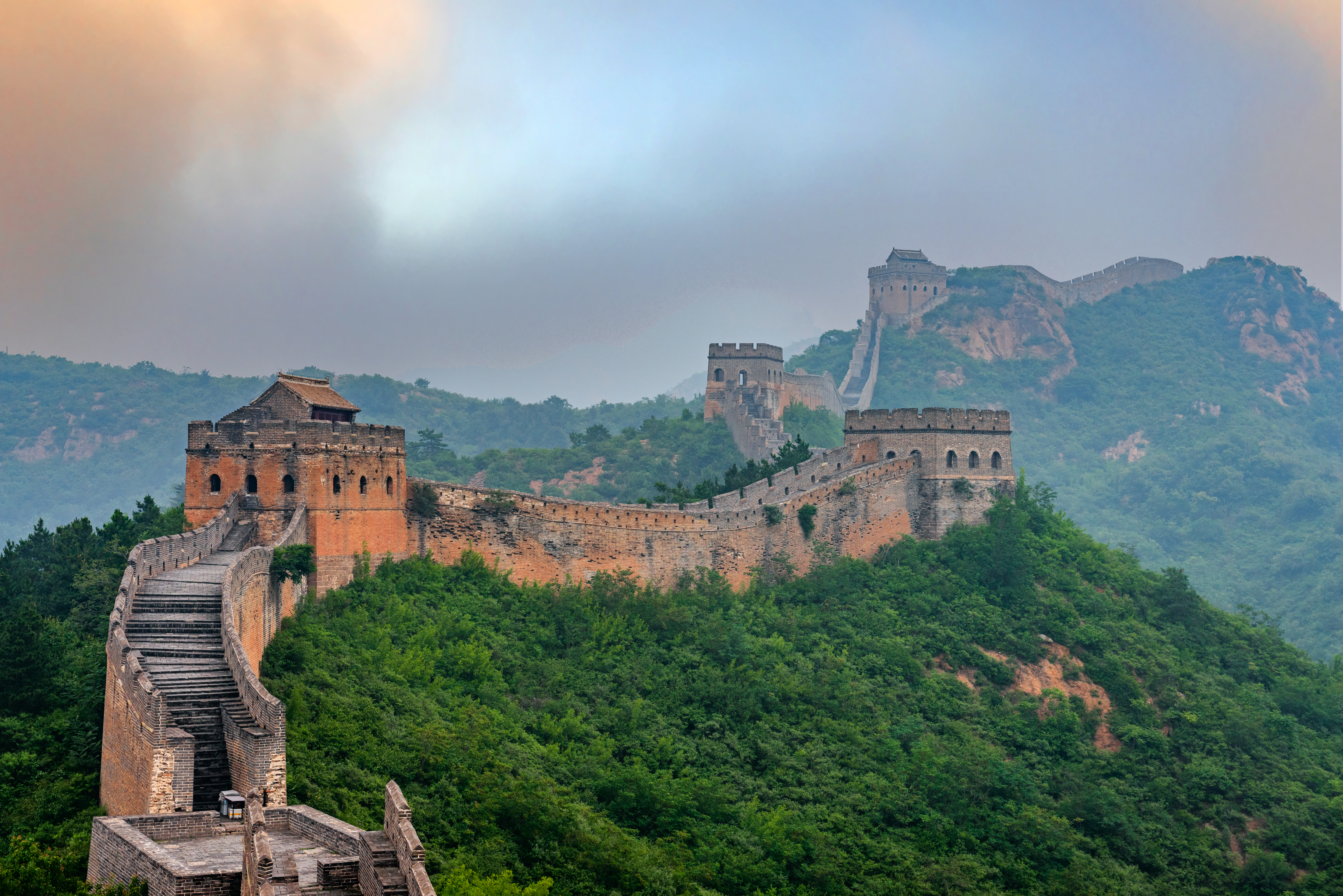
The Great Wall: The Great Wall extends over 21,000 kilometres across northern China — the sections most accessible from Beijing are Badaling (most visited, well-restored, crowds), Mutianyu (less crowded, good facilities, cable car), Simatai (open at night, no crowds), and Jinshanling (best for hiking — the Jinshanling-to-Simatai section is among the finest Great Wall walks in the world). Arrive early morning at any section to beat the crowds. Badaling is reached by high-speed train from Beijing North station in approximately 1 hour.


The Temple of Heaven (Tiantan): A Ming dynasty ritual complex where the emperor performed annual ceremonies to pray for good harvests — the circular Hall of Prayer for Good Harvests is one of China’s most iconic structures; the surrounding park fills daily with Beijing residents practicing tai chi, playing instruments, flying kites and dancing.


Beijing hutongs: The traditional lane neighbourhoods of old Beijing — Nanluoguxiang, Shichahai and the areas around the Drum Tower contain the best-preserved hutong streets; a maze of courtyard residences, local restaurants, independent cafés and craft shops that give a glimpse of Beijing life before the bulldozers of development arrived. Explore on foot or by rickshaw.
Summer Palace (Yiheyuan): A UNESCO World Heritage Site — an imperial garden of lakes, pavilions, covered walkways and Longevity Hill on the western outskirts of Beijing; the 17-arch bridge, the Long Corridor (728 metres of painted walkway) and the Marble Boat are the highlights. Quieter than the Forbidden City; allow half a day.


Shanghai — the modern metropolis
Shanghai is China’s most internationally familiar city — a dense, fast-moving, intensely vertical city where Art Deco buildings from the 1930s concession era face off against the extraordinary futuristic skyline of Pudong across the Huangpu River. It is also the food capital of eastern China.

The Bund: The 1.5km waterfront promenade along the west bank of the Huangpu River — lined with 52 neoclassical and Art Deco buildings from the 1920s and 30s, built by British, American, French and other international banks and trading companies; the view across the river to the Pudong skyscraper cluster (the Oriental Pearl Tower, the Shanghai Tower, the Jin Mao Tower and the World Financial Center) is one of the great urban vistas on earth; best photographed at dusk and after dark when both sides of the river are illuminated.


The French Concession: The former French administrative district — tree-lined streets of restored 1930s townhouses, independent restaurants, wine bars, boutiques and the best café culture in China; Xintiandi (a restored shikumen — stone-gated house — precinct) and Tianzifang (a warren of lane shops and cafés) are the main focal points.
Yu Garden (Yuyuan) and Old City: A classical Ming dynasty garden in the heart of the old city — pavilions, rockeries, ponds and covered walkways; the surrounding bazaar area is the most tourist-dense part of Shanghai but the Nanxiang dumpling restaurant (xiaolongbao) on the north side of the garden is worth the queue.
Shanghai Tower and Pudong: The Shanghai Tower is the world’s third tallest building at 632 metres — the tallest in China; the observation deck on floor 118 gives views over the city and the Yangtze delta. The surrounding Pudong financial district is the visual face of modern China: a cluster of distinctive skyscrapers built in 30 years on what was previously farmland.


Day trips from Shanghai:


- Hangzhou (45 minutes by high-speed train): the West Lake UNESCO landscape — pavilions, causeways, pagodas and tea plantations; one of China’s most beautiful cities
- Suzhou (30 minutes): the “Venice of the East” — classical Chinese gardens (UNESCO listed), silk workshops and canals
Xi’an — the ancient capital
Xi’an (formerly Chang’an) was the starting point of the Silk Road and the capital of China during its most powerful dynasties — the Han and Tang. It is now a modern city of 13 million wrapped around a remarkable concentration of ancient sites.
The Terracotta Warriors (Bingmayong): The most extraordinary archaeological site in China — discovered in 1974 by farmers digging a well; three pits containing approximately 8,000 life-sized terracotta soldiers, horses and chariots buried to protect Emperor Qin Shi Huang in the afterlife (210 BCE); each warrior is individually modelled with unique facial features; the largest figures stand 1.9 metres. Pit 1 is the largest — a vast aircraft hangar of excavated warriors in military formation. Book tickets in advance and arrive early. Located 30km east of Xi’an city.


The Xi’an City Walls: One of the best-preserved city walls in China — built in the 14th century during the Ming dynasty; 14km long, 12 metres high and 15 metres wide at the top; hire a bicycle at any of the four main gates and cycle the full perimeter (approximately 1.5-2 hours). Best at sunset.
The Muslim Quarter (Huifang): Xi’an’s historic Muslim neighbourhood — home to the Hui (Chinese Muslim) community for over 1,000 years; the Great Mosque (founded 742 CE, rebuilt in Tang style with Chinese architecture) is one of the largest and oldest mosques in China; the surrounding Beiyuanmen Street is a dense food market with lamb skewers, persimmon cakes, roujiamo (Chinese “hamburger” — stewed pork or lamb in flatbread) and noodles.

Tang Dynasty shows: Xi’an was the capital during the Tang dynasty — the golden age of Chinese culture; traditional Tang music and dance performances are staged nightly at the Tang Palace (Shaanxi Grand Opera House) — theatrical, visually spectacular and genuinely informative about the period.
Chengdu — pandas and hotpot
Chengdu is the laid-back capital of Sichuan province — a city known for its tea house culture, its extraordinarily spicy food and its giant pandas. It is also the base for day trips to the Buddhist giant Buddha at Leshan and the ancient town of Dujiangyan.
Chengdu Research Base of Giant Panda Breeding: The finest place in the world to see giant pandas — a conservation and breeding centre 10km north of the city centre housing over 100 giant pandas; morning visits (8-10am) are when the pandas are most active and being fed; the red panda enclosure (a separate, smaller species) is also excellent. Book tickets online in advance; tuk-tuks and DiDi run from the city centre.


Leshan Giant Buddha: A UNESCO World Heritage Site 2.5 hours from Chengdu — a 71-metre tall seated Buddha carved into a cliff face at the confluence of three rivers during the Tang dynasty (713-803 CE); the largest stone Buddha in the world; viewable from boats on the river below or by climbing the steep carved steps down the cliff face. An excellent full-day excursion from Chengdu.


Sichuan hotpot: Chengdu is the home of Sichuan hotpot — a bubbling vat of chilli-and-Sichuan-pepper-laden broth in which raw meats, vegetables, tofu and offal are cooked at the table; the numbing heat of Sichuan pepper (mala — numbing and spicy) is unique and genuinely addictive; ask for a split pot (mandarin duck pot) with one mild broth and one spicy for first-timers.

Jinli Ancient Street: A restored Qing dynasty commercial street adjacent to the Wuhou Shrine — traditional architecture, street food, tea houses, silk shops and craft vendors; touristy but pleasant in the evening when lanterns are lit.

Guilin and Yangshuo — karst landscapes
The karst landscape of the Li River between Guilin and Yangshuo is one of China’s most distinctive and beautiful natural environments — limestone pillars rising hundreds of metres from flat rice paddies and river bends, reflected in the water; the image appears on the Chinese 20-yuan note.
Li River cruise: A 4-5 hour cruise from Guilin to Yangshuo — the classic way to experience the karst landscape; bamboo rafts, cormorant fishermen and the extraordinary rock formations of the Elephant Trunk Hill, the Nine Horses Fresco Hill and the Yellow Cloth Shoal; book through your hotel or a tour operator in Guilin.

Yangshuo: The small town at the end of the Li River cruise — a laid-back base for cycling through the surrounding karst countryside; rent a bicycle and explore the Moon Hill (a natural limestone arch), the Yu Long River (a quieter alternative to the Li) and the surrounding villages; West Street is the main tourist strip with restaurants, bars and accommodation.
Longji Rice Terraces (Longsheng): 2 hours from Guilin — terraced rice paddies carved into the hillsides of the Longji mountains by the Zhuang and Yao ethnic minority communities over 600 years ago; extraordinary at sunrise and sunset; best from April-June (water season, green terraces) and September-October (golden harvest).


Zhangjiajie — Avatar mountains
Zhangjiajie in Hunan province is the landscape that inspired the floating Hallelujah Mountains in the film Avatar — thousands of quartzite sandstone pillars rising hundreds of metres from the mist-covered subtropical forest; a genuinely otherworldly landscape that photographs cannot fully prepare you for.
Zhangjiajie National Forest Park: The core of the Zhangjiajie landscape — take the Tianzi Avatar Mountain cable car to the ridge and walk among the pillars on suspended glass walkways and mountain trails; the Bailong Elevator (the world’s highest outdoor lift at 326 metres, built into the cliff face) descends to the valley floor.

Tianmen Mountain: A separate mountain near Zhangjiajie city — accessed by the world’s longest cable car (7.5km); the Glass Skywalk (a transparent walkway on the edge of a 1,400-metre cliff) and Tianmen Cave (a natural archway through the mountain peak) are the highlights.

Getting there: Fly to Zhangjiajie Hehua Airport from Beijing, Shanghai or Chengdu — approximately 2 hours.
Chinese food — what to eat
Chinese cuisine is not one cuisine — it is dozens of distinct regional traditions as different from each other as French and Turkish food. Where you are determines what you should eat.
Beijing: Peking duck (kaoya) — roasted whole duck carved tableside and served with thin pancakes, spring onion, cucumber and hoisin sauce; the definitive Beijing dish, at its finest at Quanjude (founded 1864) or Da Dong. Zhajiang noodles (thick wheat noodles with fermented soybean paste and minced pork).

Xi’an: Biang biang noodles — wide, hand-pulled “belt noodles” topped with chilli oil, garlic and vinegar; roujiamo (stewed meat in flatbread); lamb skewers (yangrouchuan) from the Muslim Quarter.

Shanghai: Xiaolongbao (soup dumplings — thin-skinned dumplings filled with pork and hot soup); hairy crab (Shanghai’s seasonal delicacy, September to November); shengjianbao (pan-fried pork dumplings with crispy base).


Chengdu/Sichuan: Mala hotpot; mapo tofu (silken tofu in a fiery mala sauce); dan dan noodles (sesame and chilli noodles with preserved vegetables); kung pao chicken (the original version — considerably more complex than the Western adaptation).


Cantonese/Guangdong: Dim sum (yum cha) — the Cantonese tradition of small dishes served with tea; the finest in Hong Kong and Guangzhou; char siu (barbecue pork), har gao (prawn dumplings), siu mai (pork and prawn dumplings).

Money and costs
Currency: Chinese Yuan (CNY), also called Renminbi (RMB). As of September 2026, approximately AUD $1 = CNY 4.70; NZD $1 = CNY 4.10.
Daily budgets:
| Budget level | Daily spend | What you get |
|---|---|---|
| Budget | AUD $60-90 | Hostel, local restaurants, trains |
| Mid-range | AUD $150-250 | Hotel, good restaurants, tours |
| Luxury | AUD $400+ | 5-star hotel, fine dining, guides |
Payment: Set up WeChat Pay or Alipay linked to your international card before arrival. Cash (CNY) as backup. Bank of China and ICBC ATMs reliably accept foreign cards.
What it means for your transfers
China is home to one of Australia’s and New Zealand’s largest diaspora communities — the Chinese-Australian and Chinese-New Zealand populations are among the largest migrant communities in both countries. Many send money home to family in China regularly.
AUD to CNY and NZD to CNY transfers with OrbitRemit — check current fees and rates at orbitremit.com before sending.
FAQs (frequently asked questions)
Do Australians need a visa for China?
No — until 31 December 2026. Australian passport holders can enter China visa-free for up to 30 days for tourism, business, family visits or transit. For stays beyond 30 days or for 2027 travel, apply for an L-Visa at the Chinese Embassy before departure.
Do New Zealanders need a visa for China?
No — same as Australians. Visa-free for up to 30 days until 31 December 2026.
What is blocked in China?
Google, Facebook, Instagram, WhatsApp, Gmail, YouTube, Twitter/X and most Western apps and websites. Download a VPN before you arrive — VPNs cannot be downloaded from inside China.
How do I pay for things in China?
WeChat Pay and Alipay are the dominant payment methods — link your international Visa or Mastercard before arrival. Carry some Chinese Yuan (CNY) cash as a backup for areas where mobile payment is unavailable.
What is the best way to travel between Chinese cities?
China’s high-speed rail network — punctual, comfortable and often faster than flying when airport time is included. Beijing to Shanghai takes approximately 4.5 hours. Book tickets at 12go.asia or Trip.com.
What is the best time to visit China?
Spring (April-May) and autumn (September-October) offer the best weather for most destinations. Avoid National Day (1-7 October) and Chinese New Year (January-February) — the two busiest domestic holiday periods.
How long do I need for China?
14 days covers 3-4 cities at a comfortable pace. 21 days allows 4-5 cities plus day trips. Given the 30-day visa-free limit, 21-28 days is the practical maximum for most visitors.
Is China safe for Australian and New Zealand travellers?
The Australian Government’s Smartraveller advisory is Exercise a High Degree of Caution — noting the risk of arbitrary detention and the sensitivity around political discussions, protests and certain locations (Tibet, Xinjiang); the advisory does not reflect safety from everyday crime, which is generally low in major Chinese cities. Read the full Smartraveller advisory at smartraveller.gov.au before travel.
Related guides
- South Korea travel guide 2026 →
- Thailand travel guide 2026 →
- Philippines travel guide 2026 →
- Best travel money cards in Australia 2026 →
- Best travel money cards in New Zealand 2026 →
Visa and entry requirements are subject to change — verify at smartraveller.gov.au or safetravel.govt.nz and the Chinese Embassy before travel. Last updated September 2026.
Sources: onthegotours.com/nz — China Tourist Visa Requirements 2026 | ctstours.co.nz — China Visa-Free for New Zealand 2026 (July 30, 2026) | chinatravelradar.com — Do Australians Need a Visa for China? 2026 (June 14, 2026) | au.trip.com — China Entry Requirements (3 weeks ago) | cabinzero.com — Best Places to Visit in China 2026 (June 13, 2026) | passportnomads.com — China Travel Guide 2026 (May 2, 2026) | museumofwander.com — Top Places to Visit in China 2026 (July 19, 2026) | chinadiscovery.com — China Travel Guide 2026 (August 1, 2026)


