Summary
Australian and New Zealand passport holders require a Visa on Arrival (VoA) or e-Visa on Arrival (e-VoA) to enter Indonesia — the visa costs IDR 500,000 (approximately AUD $50) and grants a 30-day stay, extendable once to 60 days total; Australians account for the single largest group of foreign arrivals to Bali, representing 23.44% of all international visitors in 2025
In 2026, travellers to Bali need three separate documents — the VoA or e-VoA, the All Indonesia e-Arrival Card (free, complete within 72 hours of arrival) and the Bali Tourist Levy (IDR 150,000, approximately AUD $15, paid online via the Love Bali portal); missing any one of these causes delays at Ngurah Rai Airport
Indonesia is 17,000 islands and the most diverse archipelago on earth — Bali is the most popular entry point for Australians and New Zealanders, but Lombok’s rice terraces and pristine beaches, Komodo’s prehistoric dragons and Raja Ampat’s world-class diving are all within reach of a Bali visa
For Australians, Indonesia is the most visited international destination after New Zealand and the United Kingdom. Bali alone draws more than a million Australian visitors a year. From Perth, it is a short 3.5-hour flight — closer than Sydney to Melbourne if you account for airport time. From Auckland, it is under 9 hours direct.
But Indonesia is not just Bali. It is the world’s largest archipelago: 17,000 islands, 270 million people, six major religions, over 700 languages and some of the most extraordinary natural and cultural landscapes on earth. This guide covers everything you need to know before you go.
Visa and entry requirements
Visa on Arrival (VoA) — required for Australians and New Zealanders
Neither Australian nor New Zealand passport holders can enter Indonesia visa-free. A Visa on Arrival is required — available at Ngurah Rai International Airport (Bali), Soekarno-Hatta International Airport (Jakarta), and other major Indonesian international airports.
Visa on Arrival (VoA) — 2026:
| Details | |
|---|---|
| Cost | IDR 500,000 (approximately AUD $50 / USD $35) |
| Duration | 30 days from entry |
| Entry | Single entry |
| Extension | Extendable once for an additional 30 days (60 days total) — at an Indonesian immigration office in person |
| Eligibility | Available to Australian and New Zealand passport holders |
e-VoA (electronic Visa on Arrival) — recommended: Apply online before you travel at molina.imigrasi.go.id — the official Indonesian immigration portal. Advantages: use the automated e-gates at Bali Airport, avoid the VoA queue (which can be 30-90 minutes during peak season), and have your visa confirmed before you board.
Cost is identical to the airport VoA (IDR 500,000). Apply at least 48 hours before departure.
Warning: Many unofficial websites charge AUD $80-150 for the same e-VoA service. Use only molina.imigrasi.go.id. The levy and arrival card are also free or fixed price — any site charging extra is a scam.
The three documents you need for Bali in 2026
Since late 2025, all international arrivals to Indonesia must have three separate documents. Get them in this order:
1. VoA or e-VoA — IDR 500,000 (~AUD $50). Apply online at molina.imigrasi.go.id or pay at the airport on arrival.
2. All Indonesia e-Arrival Card — free. A single digital form that replaced all previous immigration, customs and health declarations (including the old SATUSEHAT form) from late 2025. Complete online within 72 hours of arrival. Generates a QR code shown at immigration. Available at the official portal.
3. Bali Tourist Levy — IDR 150,000 (~AUD $15). A tourism tax introduced in February 2024 and applicable to all international visitors to Bali. Pay online at lovebali.baliprov.go.id before arrival. Generates a QR code. The levy applies even if you are transiting through Bali to Lombok or elsewhere.
Pro tip: Take a screenshot of every QR code — visa, levy receipt and arrival card — and save them to your photo gallery before boarding. Airport Wi-Fi can be unreliable.
Passport requirement: Valid for at least 6 months beyond your arrival date in Indonesia, with at least 2 blank pages.
Visa extension
If you want to stay longer than 30 days:
- Extensions must be applied for in person at an Indonesian immigration office (since June 2025, all extensions must be done in person — online extensions are no longer available)
- One extension only — maximum stay 60 days total on a VoA
- Extension fee: approximately IDR 500,000 (~AUD $50)
- Apply before your current visa expires — overstaying carries a fine of IDR 1,000,000 (~AUD $100) per day
The Bali Tourist Levy — explained
The Bali Tourist Levy (IDR 150,000, approximately AUD $15) was introduced in February 2024 to fund cultural conservation and environmental programmes across Bali. It is a one-time payment per visit — not per day.
Pay at lovebali.baliprov.go.id before arrival. You receive a QR code which may be checked at the airport. The levy applies to all foreign tourists entering Bali — including those transiting through Ngurah Rai to other Indonesian islands.
The funds are allocated to heritage preservation, environmental management and cultural programmes across Bali’s regencies.
Best time to visit
Indonesia straddles the equator — most of the archipelago has two seasons: wet and dry.
Bali and Lombok:
- Dry season: May to September — the best time; clear skies, low humidity, minimal rain; July and August are peak season with highest prices and largest crowds
- Wet season: October to April — heavy afternoon rain, particularly November to March; surf season on the west coast; cheaper prices; landscapes are lush and green; Ubud and inland Bali are beautiful even in the wet season
Komodo and Flores:
- Best: April to June and September — calm seas for diving and liveaboard trips; July-August is peak and windier; January-March can have rough seas
For Australians and New Zealanders: The Australian school holiday periods (July and December-January) coincide with Bali’s peak season — expect higher prices and fuller beaches. The shoulder months of May-June and September-October offer the best balance of good weather and manageable crowds.
Getting there
From Australia
Direct flights:
| City | Destination | Airlines | Flight time |
|---|---|---|---|
| Sydney | Denpasar (Bali) | Garuda, Jetstar, Scoot, Virgin | ~6 hours |
| Melbourne (Tullamarine) | Denpasar (Bali) | Garuda, Jetstar, Scoot | ~6 hours |
| Melbourne (Avalon) | Denpasar (Bali) | Batik Air (from March 2026) | ~6 hours |
| Perth | Denpasar (Bali) | Garuda, Jetstar, Scoot | ~3.5 hours |
| Brisbane | Denpasar (Bali) | Garuda, Jetstar | ~6.5 hours |
| Darwin | Denpasar (Bali) | Batik Air | ~2.5 hours |
| Adelaide | Denpasar (Bali) | Via hub | ~7+ hours |
Cost: Return flights from eastern Australia typically range from AUD $400-700 during sales to AUD $700-1,200 at standard rates. Perth to Bali is typically the cheapest route — often AUD $300-500 return.
From New Zealand
No direct flights from New Zealand to Indonesia — all routes connect via Australian cities (Sydney, Melbourne, Brisbane) or Asian hubs (Singapore, Kuala Lumpur).
Flight time: Auckland to Denpasar (Bali) approximately 8-9 hours with a connection.
Cost: Return flights from New Zealand typically range from NZD $600-1,000 booked 2-3 months ahead.
Top destinations
Bali — the island of the gods
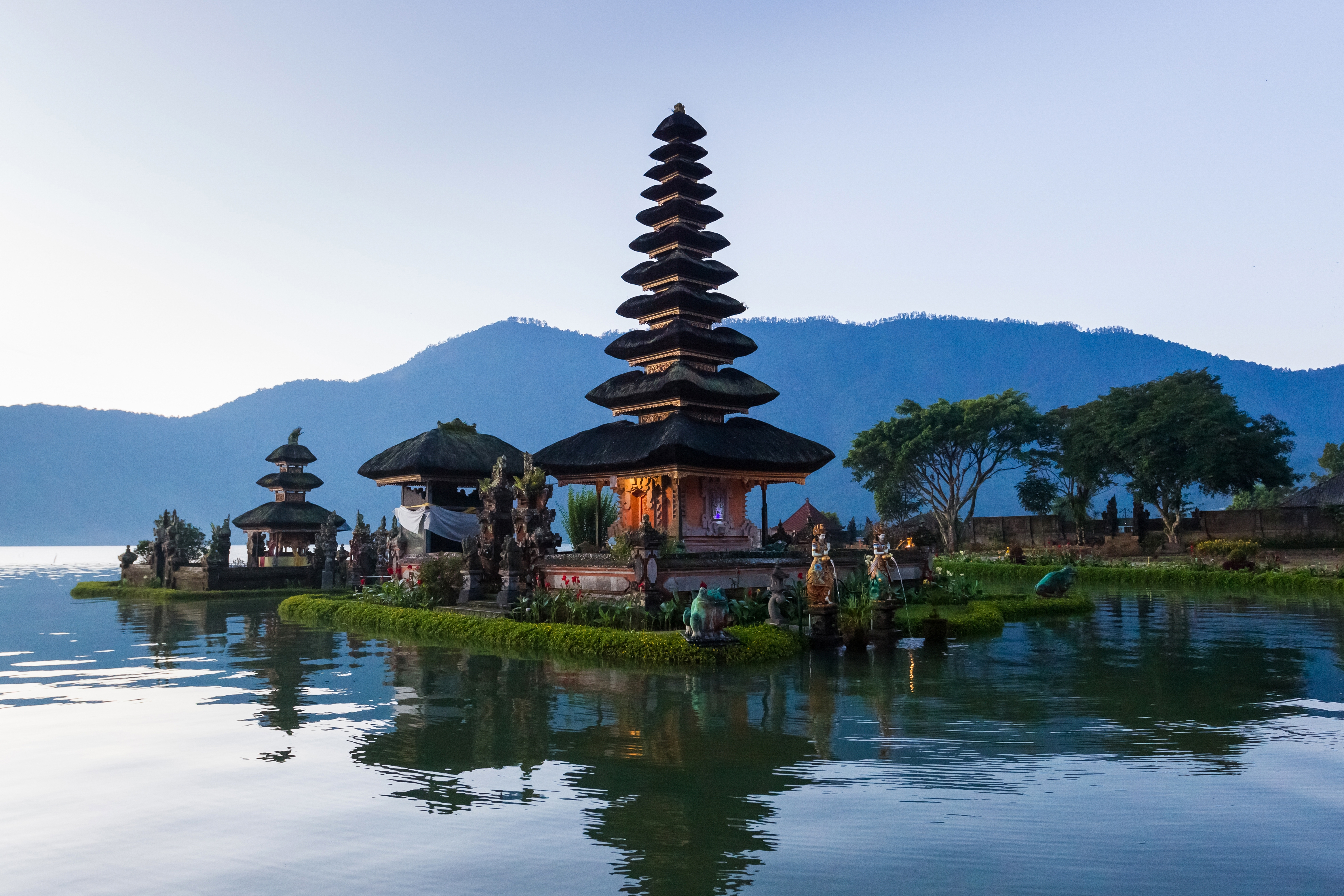
Bali is Indonesia’s most visited island — a Hindu-majority enclave in the world’s largest Muslim-majority country, with a culture built on temple ceremonies, rice terraces, gamelan music and extraordinary craftsmanship.
South Bali — beaches and nightlife:
Kuta and Legian: Bali’s original beach strip — now heavily developed, with a vibrant if chaotic beach scene, surfing, cheap food and busy nightlife. Best for budget travellers and first-timers.
Seminyak: Upmarket beach clubs, boutique hotels and excellent restaurants. Potato Head Beach Club is the most iconic; La Laguna and Ku De Ta are well-established alternatives. Seminyak blends beach relaxation with Bali’s best dining and shopping.
Canggu: The newest hot spot — a creative neighbourhood of rice paddies and warung (local restaurants) interspersed with specialty coffee shops, surf breaks, coworking spaces and boutique accommodation. Echo Beach and Batu Bolong Beach are the main surf breaks.
Nusa Dua: Resort enclave at the southern tip — quieter, more controlled, better for families; home to Bali’s international hotels (Mulia, Sofitel, St Regis).
Central Bali — culture and nature:
Ubud: Bali’s cultural heartland — rice terraces, the Sacred Monkey Forest, the Ubud Royal Palace, traditional dance performances, organic cafés and the world’s most sophisticated wellness retreat scene. The Tegalalang rice terraces (easily accessible from Ubud) are among the most photographed landscapes in Asia.
Tegalalang: The most-visited rice terrace in Bali — tiered emerald paddies descending into a river valley north of Ubud. Arrive before 8am to beat the crowds and the heat.
East Bali — volcanic and volcanic scenery:
Mount Agung (3,142m): Bali’s sacred volcano and highest peak — trekkers summit for sunrise (starting at midnight), reaching the crater rim as the sun rises over Lombok and Sumbawa. A guide is mandatory. Only for reasonably fit trekkers.
Mount Batur (1,717m): More accessible than Agung — a 2-hour sunrise trek from Kintamani gives extraordinary views over the caldera lake and the surrounding mountains. The most popular volcano trek in Bali.
Amed: A quiet fishing village and dive area on Bali’s east coast — home to the famous USAT Liberty shipwreck at Tulamben (sunk by a Japanese torpedo in 1942), one of Indonesia’s most accessible wreck dives. Excellent snorkelling directly off the beach.
Lombok — what Bali used to be
Lombok sits just east of Bali across the 35km Lombok Strait — and feels like a different world. Less developed, predominantly Muslim, with a Sasak culture quite distinct from Bali’s Hindu traditions. The beaches on the Gili Islands are cleaner than Bali’s; the surf breaks are less crowded; and Mount Rinjani (3,726m) — Indonesia’s second-highest volcano — is one of Southeast Asia’s great trekking experiences.
Getting there: Fast boat from Padang Bai or Sanur in Bali (2-3 hours) or fly from Bali’s Ngurah Rai to Lombok International Airport (30 minutes).
The Gili Islands: Three small islands off Lombok’s northwest coast — Gili Trawangan (the largest and most social), Gili Meno (the quietest, for couples and divers) and Gili Air (the middle ground). No motorised vehicles on any island. White sand, turquoise water, sea turtles at every dive site and a pace of life that makes Bali feel hectic by comparison.
Kuta Lombok: Not to be confused with Kuta Bali — Kuta Lombok (also called Kuta Mandalika) is a surf and beach destination at the south of the island, with powerful reef breaks and a dramatically different character from the Gili Islands. The 2021 Mandalika circuit brought international MotoGP racing to Lombok.
Mount Rinjani (3,726m): Indonesia’s second-highest volcano — a 2-3 day trek to the summit crater and the stunning Segara Anak crater lake inside. The trek is demanding but one of Southeast Asia’s most rewarding; book through a registered Rinjani trekking agency in Senggigi or Mataram. Permits required.
Komodo — the dragon islands
The Komodo National Park — a UNESCO World Heritage Site in East Nusa Tenggara — is home to the Komodo dragon (Varanus komodoensis), the world’s largest living lizard. Reaching up to 3 metres long and 70 kilograms, Komodo dragons are genuine apex predators — they hunt deer, pigs and, occasionally, water buffalo with a combination of powerful claws, serrated teeth and a venom-laced bite.
Getting there: Fly from Bali or Lombok to Labuan Bajo on the island of Flores — the gateway town for Komodo National Park. Flights take approximately 1.5 hours from Bali; 45 minutes from Lombok.
The islands:
Komodo Island: The largest in the park and home to the highest concentration of dragons — day trips and liveaboard stopovers visit Loh Liang, the main ranger station. Rangers accompany all visitors; never walk without a ranger.
Rinca Island: Smaller and often less crowded than Komodo — equally good for dragon sightings and closer to Labuan Bajo (approximately 1-2 hours by speedboat vs 2.5-4 hours to Komodo Island depending on vessel). Most liveaboard itineraries include both.
Padar Island: No dragons — but one of Indonesia’s most spectacular viewpoints; a 30-minute hike to the ridge above three bays gives a panorama that has become one of the most iconic Instagram images in Southeast Asia.
Pink Beach (Pantai Merah): One of fewer than 10 naturally pink beaches in the world — the colour comes from fragments of red coral mixed with white sand. Excellent snorkelling directly off the beach.
Liveaboard diving: Komodo has some of the best diving in the world — manta rays at Manta Alley and Manta Point, schooling hammerheads at Crystal Rock, vibrant soft coral at Cannibal Rock, and the thrilling drift diving at Batu Bolong. Liveaboard trips of 3-7 days depart from Labuan Bajo; prices range from USD $150-400+ per person per day depending on vessel.
Java — culture and volcanoes
Java is the most populous island in the world — home to over 150 million people — and the economic and cultural heart of Indonesia. While most Australian and New Zealand visitors focus on Bali, Java rewards the traveller willing to go further.
Yogyakarta (Jogja): The cultural capital of Java — home to the Kraton (the Sultan’s Palace), the traditional batik textile industry, wayang kulit (shadow puppet) performances and the two greatest monuments in Southeast Asia.
Borobudur: The world’s largest Buddhist temple — a 9th-century mandala of 2,672 relief panels and 504 Buddha statues built on a hill above the Kedu Plain. Visit at sunrise when mist fills the valley below and the stupas glow in the early light. UNESCO World Heritage Site.
Prambanan: A 9th-century Hindu temple compound of 240 individual temples — the largest Hindu temple complex in Southeast Asia and a UNESCO World Heritage Site. Located 15 minutes from Yogyakarta; often visited in combination with Borobudur.
Mount Bromo: One of the most dramatic volcanic landscapes in the world — a Martian caldera of grey ash and smoke, with Bromo’s active cone steaming inside the vast Tengger Caldera and the higher peak of Semeru (Java’s highest at 3,676m) rising in the background. Jeep tours depart from Cemoro Lawang village at 3am for sunrise at the viewpoint.
Money and costs
Currency: Indonesian Rupiah (IDR). As of mid-2026, approximately IDR 10,000 = AUD $1; IDR 1,000,000 ≈ AUD $100.
Handling IDR: The large numbers take getting used to — IDR 500,000 is worth approximately AUD $50, not AUD $500. Always double-check before handing over notes.
Daily budgets:
| Budget level | Daily spend | What you get |
|---|---|---|
| Budget | AUD $40-70 | Guesthouse or homestay, local warungs, scooter hire |
| Mid-range | AUD $80-150 | Boutique hotel, restaurants, day trips |
| Luxury | AUD $200+ | Villa with pool, fine dining, private drivers |
Scooter hire: AUD $6-10 per day — the standard way to get around Bali and Lombok. Requires an International Driving Permit (IDP) with a motorcycle endorsement; Bali police do occasionally stop tourists and request paperwork. Download the IDP before you leave Australia.
ATMs: Widely available in tourist areas. Use bank ATMs (BCA, Mandiri, BNI) rather than standalone ATMs which often charge higher fees. Standard withdrawal limit is IDR 1,500,000-3,000,000 per transaction.
GoPay and OVO: Indonesia’s two dominant digital wallet apps — accepted at most modern businesses. Requires an Indonesian phone number to set up; useful for longer stays.
Indonesian culture — dos and don’ts
Things to do
Dress modestly at temples: Cover shoulders and knees when visiting any Hindu temple. A sarong and sash (selendang) are usually provided at temple entrances for a small fee or as part of the entry — wear them respectfully.
Greet with a smile and slight bow: Indonesian culture values warmth and politeness; a smile, nod and “Selamat pagi” (good morning) or “Terima kasih” (thank you) is enormously appreciated.
Use your right hand: The right hand is used for eating, giving and receiving. Offering money or food with your left hand is considered impolite.
Participate if invited: If you are invited to witness or join a ceremony, a family meal or a traditional event — accept. Indonesian hospitality is genuine and participation is welcomed.
Respect during Ramadan: In predominantly Muslim areas (most of Indonesia outside Bali) — avoid eating, drinking or smoking in public during daylight hours during Ramadan. Bali is more relaxed given its Hindu majority, but awareness is appreciated everywhere.
Learn a few words of Bahasa Indonesia:
- Terima kasih — Thank you
- Selamat pagi / siang / malam — Good morning / afternoon / evening
- Berapa? — How much?
- Enak — Delicious
- Maaf — Sorry / Excuse me
Things not to do
Don’t touch someone’s head: The head is sacred in Indonesian culture — never pat or touch anyone’s head, including children’s.
Don’t point with your finger or foot: Point with your thumb or open hand. Never point with your foot — feet are considered the lowest and most impure part of the body.
Don’t step on offerings: Small woven palm-leaf trays (canang sari) filled with flowers, incense and rice are placed on the ground throughout Bali as daily offerings to the gods. Step around them, never over or on them.
Don’t raise your voice: Direct confrontation and public anger are deeply uncomfortable in Indonesian culture. Stay calm, smile and resolve issues quietly.
Don’t take photos at private ceremonies without permission: Funerals, weddings and temple ceremonies are real events for real families — ask before photographing and accept a refusal graciously.
Don’t wear swimwear away from the beach: Bali’s beach areas are relaxed, but walking through villages, markets or temples in swimwear is disrespectful and increasingly subject to local regulations.
What it means for your transfers
Indonesia is home to one of Australia’s largest diaspora communities — and AUD to IDR transfers from Australia carry a flat AUD $4 fee with OrbitRemit. NZD to IDR transfers from New Zealand also carry a flat NZD $4 fee. The rate is locked at confirmation with no hidden markup.
Related guides
- The 5 best eSIMs for international travel from Australia →
- The 5 best eSIMs for international travel from New Zealand →
- The 5 best SIM cards for international travel from Australia →
- The 5 best travel money cards in Australia 2026 →
- The 5 best travel money cards in New Zealand 2026 →
FAQs (frequently asked questions)
Do Australians need a visa for Indonesia / Bali?
Yes. Australian passport holders require a Visa on Arrival (VoA) or e-VoA — cost IDR 500,000 (approximately AUD $50), valid for 30 days, extendable once to 60 days. Apply for the e-VoA online at molina.imigrasi.go.id before travel.
Do New Zealanders need a visa for Indonesia?
Yes. Same requirements as Australians — VoA or e-VoA, IDR 500,000, 30 days extendable to 60.
What is the Bali Tourist Levy?
A tourism tax of IDR 150,000 (approximately AUD $15) payable by all foreign tourists entering Bali. Pay online at lovebali.baliprov.go.id before arrival. Applies even if transiting through Bali to other Indonesian islands.
What is the All Indonesia e-Arrival Card?
A free mandatory digital form combining all previous immigration and customs declarations. Complete within 72 hours of arrival at the official portal. Generates a QR code checked at immigration.
What is the best time to visit Bali?
May to September (dry season) — clear skies, low humidity, calm seas. July-August is peak season with highest prices. May-June and September offer the best balance of good weather and manageable crowds.
Can I visit Lombok and Komodo on the same visa as Bali?
Yes. The VoA or e-VoA is valid across all of Indonesia — Lombok, Komodo, Java and beyond are all covered by the same visa. The Bali Tourist Levy applies to Bali only; other islands have no equivalent levy at present.
How far is Komodo from Bali?
Fly from Bali (Ngurah Rai) to Labuan Bajo on Flores — approximately 1.5 hours. Labuan Bajo is the gateway to Komodo National Park.
Visa requirements, fees and entry conditions are subject to change — always verify at the Indonesian immigration portal (molina.imigrasi.go.id) and Australia’s Smartraveller (smartraveller.gov.au) or NZ Safetravel (safetravel.govt.nz) before travelling. Last updated August 2026.
Sources: tripprof.com — Bali Entry Requirements for Australians 2026 (June 29, 2026) | travelsmartapp.com — Bali Entry Requirements 2026 (April 20, 2026) | the-savvytourist.com — Bali Entry Requirements for Australians (2 weeks ago) | holafly.com — Travelling to Indonesia from Australia (June 4, 2026) | localsinsider.com — Indonesia Travel Guide 2026 | perfectwavetravel.com — Travelling to Indonesia in 2026 (January 13, 2026)


