Summary
Australian and New Zealand passport holders do not need a visa to visit Ireland — entry is visa-free for up to 90 days — Ireland is not part of the Schengen Area; a Schengen visa does not give entry to Ireland, and Ireland does not require ETIAS (the EU’s forthcoming digital travel authorisation applies to Schengen, not Ireland); arrive with a valid passport and you are in; no pre-registration, no application, no fee
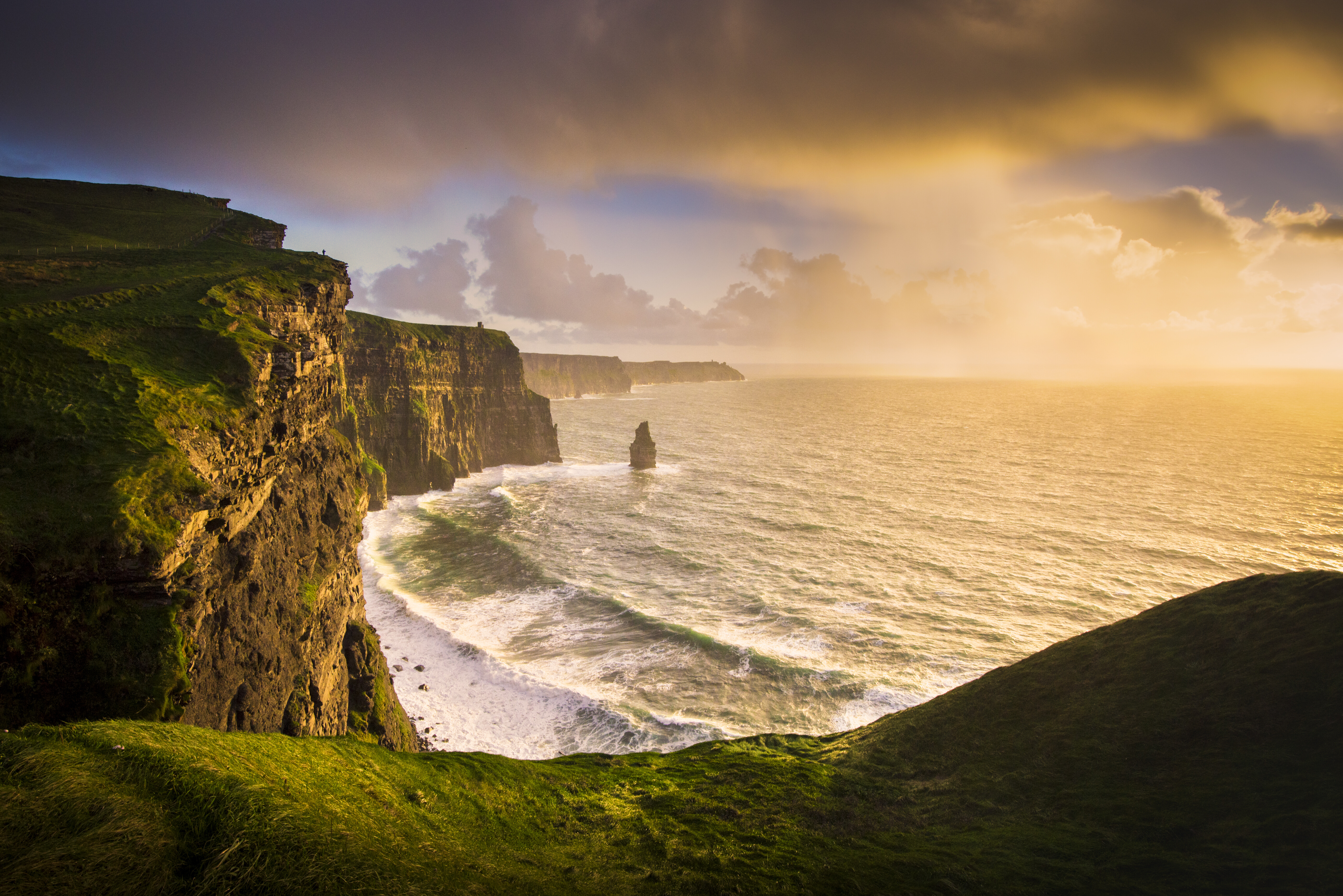
The Wild Atlantic Way is one of the world’s longest defined coastal driving routes — 2,500 kilometres from Kinsale in County Cork to the Inishowen Peninsula in Donegal — it threads together sea cliffs, fishing villages, surf beaches, island ferries, ancient monastic sites and some of the most dramatic Atlantic coastline anywhere on earth; most travellers tackle it in sections; the Cliffs of Moher (214 metres high, 14 kilometres long), the Dingle Peninsula, Connemara and Slieve League (cliffs nearly three times the height of the Cliffs of Moher) are among the highlights
Ireland is one of the most emotionally resonant destinations for Australians and New Zealanders — a significant proportion of both countries’ populations have Irish heritage; the connection is historical, cultural and personal; coming to Ireland for many AU/NZ travellers is part ancestry tourism, part literary pilgrimage, part pub crawl and part landscape encounter; the warmth of Irish hospitality is genuine and consistent; and the country is compact enough to cover a great deal in two weeks
For Australians and New Zealanders, Ireland occupies a particular place in the imagination. The Irish diaspora in both countries is enormous — Ireland has one of the highest rates of emigration relative to population of any country in the world, and Australia and New Zealand received some of the largest waves. Names, faces and family stories often trace back here. Coming to Ireland is frequently both a holiday and something more.
This guide covers everything you need for 2026.
Visa and entry requirements
No visa — no Schengen, no ETIAS
Ireland is not a member of the Schengen Area. This has two important practical consequences:
First: Australian and New Zealand passport holders enter Ireland completely visa-free — no application, no fee, no advance registration. Arrive at Dublin Airport with a valid passport and you enter. Ireland processes travellers under its own national immigration rules, not EU Schengen rules.
Second: A Schengen visa does NOT give entry to Ireland. If you are travelling from a Schengen country (France, Germany, Italy, Spain etc.) to Ireland, you cross a separate border with different rules.
ETIAS does not apply to Ireland. ETIAS — the EU’s forthcoming digital travel authorisation currently expected to launch in 2027 — applies to the Schengen Area, not to Ireland. No ETIAS application is required to visit Ireland, regardless of when the system launches.
Entry details:
| Visa required | No — visa-free for AU and NZ |
| Maximum stay | 90 days |
| Passport validity | Valid for the duration of your stay |
| Schengen visa accepted | No |
| ETIAS required | No |
| Currency | Euro (€) |
At Dublin Airport: Present your passport to the immigration officer. You may be asked about the purpose of your visit, accommodation and funds available. Immigration officers have discretion — carry your return or onward ticket and basic proof of accommodation.
Important note — Ireland vs Northern Ireland
Ireland (the Republic of Ireland) and Northern Ireland are two separate jurisdictions on the island of Ireland.
Republic of Ireland: Independent country; EU member; currency is the Euro (€); capital is Dublin.
Northern Ireland: Part of the United Kingdom; currency is the British Pound (£); capital is Belfast.
Both are worth visiting — and many travellers combine both in one trip. The border between them is open and unmarked (no passport control). But the currencies, phone plans and political contexts are different.
This guide covers the Republic of Ireland. The Giant’s Causeway, Belfast and the Causeway Coastal Route are in Northern Ireland.
Best time to visit
Ireland’s weather is famously changeable — sunshine, rain and wind can all occur on the same afternoon walk. There is no truly bad time to visit, but the experience differs significantly by season.
May to September — best overall The warmest and brightest months. June evenings stay light until around 10:30pm — one of the longest twilights in Europe at Ireland’s latitude. The countryside is at its most intensely green. May and September offer the best balance of good weather, manageable tourist numbers and lower accommodation prices. July and August are peak — busiest and most expensive.
October to November — autumn colour and quieter roads The Wild Atlantic Way in autumn is extraordinary — fewer tourists, dramatic Atlantic light and the gorse turning gold across the hillsides. Many smaller guesthouses close from October; book ahead.
December to February — winter atmosphere Cold, grey and often wet — but Ireland’s pubs, whiskey distilleries and the cosy domesticity of a good fire make winter appealing in its own way. St Patrick’s Day (17 March) marks the turn toward spring; the Dublin parade is one of the world’s largest.
Getting there
From Australia
No direct flights — all routes connect through London, Dubai, Singapore or other hubs.
| City | Route | Approx flight time |
|---|---|---|
| Sydney to Dublin | Via London, Dubai or Singapore | ~22-26 hours |
| Melbourne to Dublin | Via London, Dubai or Singapore | ~22-26 hours |
| Perth to Dublin | Via Dubai or Singapore | ~20-22 hours |
Cost: Return flights from Australia typically range from AUD $1,800-$3,200 booked 3-6 months ahead. Via London is often the cheapest routing — and allows a stop in England or Scotland.
The Eurostar option: Fly to London, spend a few days in England or Scotland, then take the Eurostar to Paris and explore Europe — or fly London to Dublin (1 hour, from ~£30 on Ryanair, Aer Lingus or British Airways) for a combined Ireland-UK itinerary.
From New Zealand
All routes connect via Australian cities or Asian/European hubs.
Cost: Return flights from Auckland to Dublin typically range from NZD $2,400-$3,800.
Getting around Ireland
Car hire — the best option
Ireland drives on the left — the same as Australia and New Zealand. A hire car gives you access to the Wild Atlantic Way, the Ring of Kerry, Connemara and every rural corner that buses and trains cannot reach. Roads outside the motorways and national primaries are often narrow, winding and shared with tractors, sheep and other hazards that reward patience. Allow more time than Google Maps suggests for rural routes.
Hire from Dublin Airport or Cork Airport for the most flexibility. Major international companies operate at both. Book in advance for peak summer months.
Tolls: The M50 motorway around Dublin operates an electronic toll — you will need to pay online at eflow.ie within 24 hours of travel if your hire car does not handle it automatically.
Trains and buses
Irish Rail (Iarnród Éireann): Connects Dublin with Cork (2.5 hours), Galway (2.5 hours), Limerick (2 hours), Waterford, Sligo and Belfast. Comfortable, reliable and scenic on some routes. Book at irishrail.ie.
Bus Éireann: The national bus network — slower than trains but reaches towns and villages that rail does not. The Expressway coaches between cities are comfortable.
Dublin — city transport: The Luas (tram), DART (coastal rail) and Dublin Bus cover the city. The Leap Card (reloadable contactless card) gives discounted fares across all three. Alternatively, tap directly with your Australian or New Zealand Visa or Mastercard contactless on many services.
Top destinations
Dublin — the capital
Dublin is a city of contradictions — intensely literary and intensely convivial; medieval and modern; historically complicated and genuinely warm. It is small enough to walk across in an afternoon but layered enough to reward days of exploration.

Trinity College and the Book of Kells: Ireland’s oldest university, founded in 1592 — and home to the Book of Kells, a breathtakingly illuminated manuscript of the four Gospels created by Celtic monks around 800 CE. The Long Room library — 65 metres of barrel-vaulted oak ceiling lined with 200,000 ancient texts — is one of the most beautiful rooms in Europe. Book tickets in advance; queues are significant in summer.

Guinness Storehouse: Seven floors tracing the history of Guinness — Ireland’s most famous export and the most consumed stout in the world; brewed at St James’s Gate Brewery in Dublin since 1759. The rooftop Gravity Bar offers 360-degree views over Dublin with a complimentary pint. Book in advance.
The National Museum of Ireland: Free — four sites across Dublin and the west; the Archaeology branch on Kildare Street contains the Ardagh Chalice, the Tara Brooch and the Bog Bodies — Iron Age human remains preserved for 2,000 years in Ireland’s peatlands. Among the finest collections of early medieval metalwork in the world.
Temple Bar: Dublin’s cultural quarter — cobbled streets, live music pubs, galleries and the city’s most photographed alleyways. The area attracts stag and hen parties in volume; for authentic Dublin pub culture, explore the streets immediately beyond Temple Bar (Stoneybatter, Portobello, Ranelagh, Rathmines).
The Liberties and the Irish Whiskey Museum: The oldest part of Dublin — the Liberties district was the heart of medieval Dublin and the location of the original Guinness and Jameson distilleries. The Irish Whiskey Museum on Grafton Street traces the history of Irish whiskey from ancient monastic distilling to the modern revival. The Teeling Distillery in the Liberties is one of Dublin’s new urban distilleries offering tours and tastings.
Glasnevin Cemetery: The largest cemetery in Ireland — 1.5 million people buried here including Daniel O’Connell, Michael Collins, Éamon de Valera and Brendan Behan; the museum interprets Irish history through the lives of those buried; a deeply informative and moving experience.
Literary Dublin: Dublin is a UNESCO City of Literature — home to four Nobel Prize winners in Literature: George Bernard Shaw, W.B. Yeats, Samuel Beckett and Seamus Heaney. The Dublin Writers Museum on Parnell Square covers the full arc of Irish literary history. The James Joyce Centre near Mountjoy Square is for serious Joyceans. Davy Byrnes pub on Duke Street — where Leopold Bloom eats his gorgonzola sandwich in Ulysses — still serves food and is a pilgrimage point.
The Wild Atlantic Way
Stretching 2,500 kilometres from Kinsale in County Cork to the Inishowen Peninsula in Donegal, the Wild Atlantic Way is one of the world’s longest defined coastal driving routes. It threads together fishing villages, surf beaches, sea cliffs, island ferries, and ancient monastic sites into a single, signposted journey.
Most travellers tackle it in sections — one to two weeks for a meaningful portion, two weeks for the full southern and western coast.

Key sections and highlights:
County Clare — the Burren and Cliffs of Moher The Burren is a unique karite limestone landscape covering 250 square kilometres — a grey, lunar expanse of bare rock, rare wildflowers and ancient megalithic tombs. The Cliffs of Moher rise 214 metres above the Atlantic along a 14-kilometre clifftop walk — one of Ireland’s most visited and genuinely most dramatic natural landmarks. The visitor centre is built into the hillside. Walk south from the main visitor centre for increasingly dramatic cliff views with fewer crowds. On a clear day, the Aran Islands are visible offshore.

County Galway — Connemara Connemara is the western part of County Galway — a wild, boggy, mountain-and-lake landscape of extraordinary beauty; Irish-speaking (Gaeltacht) in parts; home to Connemara ponies, Kylemore Abbey (a 19th-century Gothic Revival castle built by a Manchester merchant as a gift for his wife) and the Sky Road above Clifden — a narrow clifftop loop with some of the finest coastal views in Ireland.

County Kerry — Dingle Peninsula The Dingle Peninsula juts 48km into the Atlantic — a landscape of sea stacks, stone beehive huts (clocháns) built by early Christian monks, dramatic mountain passes and Ireland’s westernmost point (Slea Head). The town of Dingle is small, colourful and excellent for seafood. The neighboring Dingle Peninsula often provides a more enjoyable drive than the Ring of Kerry for those wanting to avoid tour bus traffic.
Slieve League, County Donegal Slieve League — cliffs nearly three times the height of the Cliffs of Moher. At 601 metres above the Atlantic, the Slieve League sea cliffs are among the highest in Europe — and far less visited than the Cliffs of Moher. The walk along the cliff edge to the summit is one of Ireland’s great coastal hikes. In the far northwest of Ireland — a full day’s drive from Dublin.

The Ring of Kerry
The Ring of Kerry — officially the Iveragh Peninsula — is a 179-kilometre circular route through County Kerry that is one of Ireland’s most famous scenic drives. Mountains, lakes, coastal villages and ancient stone forts line the route.

Key stops: Killarney National Park (Muckross House, the Lakes of Killarney, Torc Waterfall), Cahersiveen, Waterville, Sneem and the mountain pass at Moll’s Gap with views over the MacGillycuddy’s Reeks — Ireland’s highest mountain range, topped by Carrauntoohil (1,041 metres, Ireland’s highest peak).

Practical note: Tour buses travel the Ring of Kerry clockwise — if driving a hire car, go anti-clockwise to avoid meeting them head-on on narrow roads.
Galway — the west coast city
Galway is Ireland’s most distinctively west-coast city — a compact, colourful, music-filled university city where the River Corrib meets Galway Bay. The medieval Latin Quarter, the Spanish Arch (a remnant of the 16th-century city walls), the Saturday market at St Nicholas’ Church and the traditional music sessions in Tigh Coilí and other pubs make Galway one of Ireland’s most enjoyable cities to spend time in.

Aran Islands: Three islands — Inis Mór, Inis Meáin and Inis Oírr — in Galway Bay; accessible by ferry from Rossaveal (45 minutes) or Doolin; Irish-speaking; home to Dún Aonghasa (a spectacular prehistoric cliff fort on Inis Mór). Hire a bike on the island — the main road passes prehistoric stone walls, thatched cottages and sheer Atlantic cliffs.

Kilkenny — the medieval city
Kilkenny is Ireland’s most intact medieval city — a compact city of narrow lanes (called “slips”), Kilkenny Castle (12th century, seat of the Butler dynasty for 500 years), St Canice’s Cathedral (13th century with a round tower you can climb for views) and the Smithwick’s brewery (the oldest operating brewery in Ireland, in continuous use on the same site since 1710).


Kilkenny Arts Festival (August): One of Ireland’s most celebrated arts festivals — theatre, music, visual art and literature across the city’s historic buildings for ten days in August.
Glendalough — the monastic valley
In the Wicklow Mountains 1.5 hours south of Dublin, Glendalough is a 6th-century monastic settlement founded by St Kevin — a valley of extraordinary beauty containing a round tower (30 metres, intact), a cathedral, St Kevin’s Church and the ruins of several other medieval structures beside two glacial lakes. One of Ireland’s most visited heritage sites and one of its most peaceful. The Wicklow Way walking trail passes through the valley.

Blarney Castle and the Blarney Stone
Blarney Castle in County Cork — a 15th-century tower house — houses the Blarney Stone, which according to tradition confers the “gift of the blarney” (eloquence) on those who kiss it. The process involves lying on your back at the top of the castle and leaning backwards over a gap to kiss the stone embedded in the outer wall. The castle grounds contain a rock garden, poison garden and ancient yew trees.


Irish food and drink
Guinness: Stout brewed at St James’s Gate, Dublin since 1759. The standard of a pub’s Guinness is one of Ireland’s most seriously debated subjects. A pint poured correctly takes approximately 119.5 seconds. The best Guinness — famously — is found in small rural pubs rather than tourist establishments.

Irish stew: Lamb or mutton, potatoes, onion and carrots — slow-cooked; a genuinely ancient dish; found in every pub that serves food; deeply warming on a wet west coast afternoon.

Seafood: Ireland’s coastal waters produce outstanding seafood — Dublin Bay prawns, Galway Bay oysters (the Galway International Oyster and Seafood Festival runs each September), Dingle crab, Atlantic salmon and the smoked fish of Connemara are all worth seeking.
Soda bread: Leavened with bicarbonate of soda rather than yeast — a uniquely Irish quick bread with a dense, slightly tangy crumb; made fresh daily in most Irish homes and good restaurants; best with butter and smoked salmon.

Irish whiskey: Ireland’s whiskey tradition predates Scotland’s — the world’s oldest licensed distillery (Bushmills, 1608) is in Northern Ireland. Irish whiskey is triple-distilled (smoother than Scotch), typically unpeated and produced in a growing number of craft distilleries. The major expressions — Jameson, Teeling, Redbreast, Green Spot, Tullamore D.E.W. — are very different in character. A tasting flight at a Dublin whiskey bar or a distillery tour is one of Ireland’s most enjoyable experiences.
The pub: The Irish pub is not primarily a drinking venue — it is a social institution that functions as community hall, music venue, debating chamber and extended living room. Traditional music sessions (seisiúns) happen in pubs across Ireland most nights, particularly in the west — in Doolin, Dingle, Galway and Killarney. No cover charge; buy a drink and listen.

St Patrick’s Day — 17 March
St Patrick’s Day is Ireland’s national holiday — marking the feast day of the country’s patron saint, who is credited with bringing Christianity to Ireland in the 5th century. In Ireland, it is both a public holiday and one of the great annual celebrations — the culmination of a week-long festival in Dublin that draws visitors from across the world.
The Dublin St Patrick’s Festival: The Dublin parade on 17 March is one of the largest St Patrick’s Day parades in the world — floats, marching bands, community groups and performers moving through the city centre; the route typically runs from Parnell Square south through O’Connell Street, across the Liffey and through the city to St Patrick’s Cathedral. The surrounding festival runs for 4-5 days — outdoor concerts, céilí dancing, cultural events and the greening of landmarks including the Liffey fountains.

Beyond Dublin: Every town and village in Ireland holds its own parade on 17 March — smaller parades in Galway, Cork, Kilkenny and Limerick are often more intimate and more authentic than the Dublin spectacle. The village parade experience — a brass band, the local GAA club, tractors decorated with shamrocks — is genuinely charming.
For Australians and New Zealanders: St Patrick’s Day falls in March — late summer in Australia, early autumn in New Zealand; a natural time to travel to Ireland before the European summer peak. Accommodation in Dublin books out months in advance for the festival week. If you are planning to be in Ireland for St Patrick’s Day, book flights and accommodation by January at the latest.
The shamrock: The shamrock — a three-leaf clover — is Ireland’s national symbol; St Patrick is said to have used it to explain the Christian Trinity. On 17 March, the Taoiseach (Irish Prime Minister) presents a bowl of shamrock to the US President at the White House — a tradition dating to 1952. Wearing green on St Patrick’s Day is universal; in Ireland, wearing a real shamrock is the more traditional gesture.

What to expect in the pubs: St Patrick’s Day in Ireland is a public holiday — pubs open early and are full by midday. Traditional music sessions are continuous throughout the day in most pubs. The atmosphere is genuinely celebratory rather than the raucous tourist-oriented version more familiar from Sydney or Auckland. Pace yourself — it is a long day.
Money and costs
Currency: Euro (€). Ireland uses the euro — not the British Pound. As of September 2026, approximately AUD $1 = €0.61; NZD $1 = €0.53.
Daily budgets:
| Budget level | Daily spend | What you get |
|---|---|---|
| Budget | AUD $100-140 | Hostel, pub meals, public transport |
| Mid-range | AUD $220-380 | B&B or hotel, restaurants, hire car |
| Luxury | AUD $500+ | Country house hotel, fine dining |
Ireland is not cheap by Asian standards — accommodation in particular is expensive, especially in Dublin and during the summer peak. B&Bs are excellent value and give genuine Irish hospitality; book well ahead for summer. Rural Ireland is significantly more affordable than Dublin.
Tipping: Not mandatory; 10-12% in restaurants is standard for good service. Not expected in pubs.
What it means for your transfers
Ireland is home to a significant Irish-Australian and Irish-New Zealand diaspora community — and many Irish emigrants in Australia and New Zealand send money home regularly.
AUD to EUR and NZD to EUR transfers with OrbitRemit — check current fees and rates at orbitremit.com before sending.
FAQs (frequently asked questions)
Do Australians need a visa for Ireland?
No — Australian passport holders enter Ireland visa-free for up to 90 days. No advance registration required.
Do New Zealanders need a visa for Ireland?
No — same as Australians. Visa-free for 90 days.
Is Ireland in the Schengen Area?
No — Ireland is not in Schengen. A Schengen visa does not give entry to Ireland. ETIAS (when it launches for the Schengen Area) will not apply to Ireland.
Does Ireland use the Euro or British Pound?
The Republic of Ireland uses the Euro (€). Northern Ireland (part of the UK) uses the British Pound (£). The border between them is open with no currency exchange required — but carry both currencies if visiting both.
What is the best way to see the Wild Atlantic Way?
Hire car — Ireland drives on the left (same as Australia and New Zealand). The Wild Atlantic Way is 2,500km; most travellers choose a section. The Galway to Kerry section covering Connemara, the Cliffs of Moher, the Dingle Peninsula and the Ring of Kerry takes 5-7 days at a relaxed pace.
What is the best time to visit Ireland?
May to September for the best weather and longest days. May and September offer the best balance of conditions and manageable crowds. June has the longest evenings — light until around 10:30pm.
How long do I need for Ireland?
Five days covers Dublin and day trips. Ten days allows Dublin plus the Wild Atlantic Way highlights (Galway, Cliffs of Moher, Kerry). Two weeks allows a full circuit of the island including Northern Ireland.
Is the Cliffs of Moher worth visiting?
The Cliffs of Moher — 214 metres high, 14 kilometres long — are one of Ireland’s most impressive natural landmarks. They are very busy in summer; arrive early morning or late afternoon to avoid peak crowds. The clifftop walk south of the main visitor centre is less crowded than the immediate viewing area.
Related guides
- England travel guide 2026 →
- Scotland travel guide 2026 →
- What is VAT in Europe? →
- Best travel money cards in Australia 2026 →
- Best travel money cards in New Zealand 2026 →
Visa and entry requirements are subject to change — always verify at irishimmigration.ie, Smartraveller (smartraveller.gov.au) or Safetravel (safetravel.govt.nz) before travel. Last updated September 2026.
Sources: youririshadventure.com — Entry Requirements For Ireland 2026 (May 30, 2026) | evisa-card.com — Ireland Visa Requirements 2026 (August 5, 2026) | tourismattractions.net — Ireland Travel Guide 2026 (March 25, 2026) | escapesim.com — Things to Do in Ireland: The 2026 Travel Guide (June 5, 2026) | backpacktrip.cz — What to See in Ireland: 26 Best Places 2026 (2 weeks ago) | cliffsmoher.com — Cliffs of Moher guided tours 2026 | myirelandtour.com — 10-Day Iconic Scenes of Ireland Tour 2026 | vagabondtoursofireland.com — Ireland Bucket List 2026


