Summary: Your Essential Scotland Travel Guide 2026
Australian and New Zealand passport holders do not need a traditional visa to visit Scotland — but both require the UK Electronic Travel Authorisation (ETA) before boarding — the same £20 ETA that covers England covers all four nations of the United Kingdom including Scotland; it is valid for 2 years with multiple entries, allows stays of up to 6 months and is applied for at gov.uk or via the UK ETA app; one ETA is all you need whether you are visiting Edinburgh, the Highlands, the Isle of Skye or all three
Scotland is one of the most dramatic and emotionally powerful landscapes in the world — a country of volcanic cities, ancient castles, mist-covered Highland glens, island-studded coasts and a culture of whisky, clans, literature and a streak of fierce, enduring pride; Edinburgh in August hosts the world’s largest arts festival; the North Coast 500 is regarded as one of the world’s great road trips; the Isle of Skye is simply one of the most beautiful places on earth
The best time to visit Scotland is May to September — with June and September offering the best balance of long days, reasonable weather and manageable crowds; August brings the Edinburgh Festival (the world’s largest arts festival) and the highest prices and visitor numbers; the Highlands are visitable year-round and winter has a stark, otherworldly beauty that summer cannot replicate
Scotland is not like England. Even the landscape announces it immediately — the volcanic crags, the heather moorland, the grey Atlantic light. The history is different, the culture is different, the accent is different and the whisky is very definitely different. Scotland rewards travellers who slow down, drive the single-track roads and stop when something demands to be looked at — which in Scotland is approximately every ten minutes.
Visa and entry requirements — the UK ETA
Scotland is part of the United Kingdom. The same entry requirements that apply to England apply to Scotland — including the UK ETA.
Australian and New Zealand passport holders require a UK ETA before travel. A single ETA covers all four UK nations: England, Scotland, Wales and Northern Ireland. There is no separate Scottish entry requirement.
ETA details:
| Cost | £20 per person (~AUD $37-39 / ~NZD $43-45) since 8 April 2026 |
| Validity | 2 years or until passport expires |
| Entries | Multiple |
| Max stay per visit | 6 months |
| Mandatory for Australians from | 25 February 2026 |
| Mandatory for New Zealanders from | 8 January 2025 |
| Where to apply | gov.uk or the UK ETA app |
| Processing | Usually within 3 working days |
Each traveller — including children — needs their own ETA. Apply before booking flights. Dual AU-British or NZ-British citizens must travel on their British passport.
Best time to visit
May to June — best for long days and manageable crowds Scottish days are extraordinarily long in summer — sunset after 10pm in June. Wildflowers across the Highlands, warm enough for the beaches of the Outer Hebrides and the coast of Skye, and the midges (small biting insects) not yet at their August peak. The single best month for first-time visitors to the Highlands is May.
July to August — the Edinburgh Festival The Edinburgh Festival Fringe (the world’s largest arts festival) runs throughout August — the city transforms into one enormous performance venue with thousands of shows daily. Accommodation must be booked months ahead and prices peak. The Highlands in August are beautiful but busy, and midges are at their worst.
September to October — golden Highlands Autumn brings golden heather, red deer rut in the glens and lower visitor numbers. September is arguably the finest month for Highland photography and road trips — the light is extraordinary, the summer crowds have thinned and the roads are manageable again.
November to April — winter and the Northern Lights Scotland’s winters are cold, wet and dark in the cities — but the Highlands in snow are extraordinary. The Northern Lights (Aurora Borealis) are visible from northern Scotland and the islands on clear nights from October to March. Skiing at Aviemore and Glencoe. The quietest, cheapest and most atmospheric time to visit Edinburgh.
Getting there
From Australia
Most flights connect via London Heathrow then domestic to Edinburgh (1 hour), or via other European hubs to Edinburgh direct.
Flying to Edinburgh (EDI): Direct connections from London Heathrow (~1 hour with British Airways, Loganair), London Gatwick (~1.5 hours) and Amsterdam (~1.5 hours with KLM). Some European carriers fly direct to Edinburgh from Amsterdam, Paris and other European hubs — useful for those routing through Europe.
Alternatively — fly to London then train: The LNER train from London King’s Cross to Edinburgh takes approximately 4.5 hours — a scenic route through the English countryside, across the Northumbrian coast and over the Forth Bridge. For those who want to combine England and Scotland, the train is often preferable to a domestic flight.
Cost from Australia: Return flights to Edinburgh from Australia typically range from AUD $1,900-$3,200 with connections.
From New Zealand
All routes connect via Australian cities or Asian/European hubs.
Cost: Return flights from Auckland to Edinburgh typically range from NZD $2,300-$3,700.
Getting around Scotland
Car hire — essential for the Highlands and islands
A hire car is almost essential for exploring the Scottish Highlands, the Isle of Skye and the North Coast 500. Public transport reaches the main towns but misses most of what makes Scotland extraordinary.
Drive on the left — the same as Australia and New Zealand. The challenge in Scotland is the single-track roads — one-lane roads with passing places — that crisscross the Highlands and islands. The etiquette is to pull into a passing place (a small widened section of road) to allow oncoming traffic through, and to wave in acknowledgement. It is not complicated once you accept that driving in the Highlands takes longer than the map suggests.
Hire a car in Edinburgh, Glasgow or Inverness for the most flexibility.
Train — the scenic option
Scotland’s train routes are among the most beautiful in the world:
The West Highland Line (Glasgow to Mallaig): Considered one of the world’s great railway journeys — through the Loch Lomond valley, across Rannoch Moor (one of Europe’s last great wildernesses), past Glencoe and on to Fort William and the fishing port of Mallaig. The Glenfinnan Viaduct — made globally famous as the Hogwarts Express viaduct in the Harry Potter films — is on this line.
The Kyle Line (Inverness to Kyle of Lochalsh): 82 miles of Highland scenery ending at the bridge to the Isle of Skye — approximately 2.5 hours. One of the most scenic rail journeys in Britain.
The Caledonian Sleeper: An overnight sleeper train from London Euston to Edinburgh, Glasgow, Aberdeen, Inverness and Fort William. Go to sleep in London; wake up in the Highlands. A genuinely useful and romantic way to travel.
Tours from Edinburgh
For travellers without a hire car, small-group tours from Edinburgh cover the main Highland destinations — Loch Ness, Glencoe, the Isle of Skye — in 1 to 5-day itineraries. Timberbush Tours and Rabbie’s are the most consistently well-reviewed operators.
Top destinations
Edinburgh — the capital
Edinburgh is one of Europe’s most architecturally dramatic cities — a medieval Old Town of closes (alleyways), wynds and tenements climbing the ridge from Holyrood Palace to the Castle; and a Georgian New Town of broad streets and elegant squares descending to the Firth of Forth. All of it overlooked by the volcanic crags of Arthur’s Seat.

Edinburgh Castle: Built on the plug of an ancient volcano rising 130 metres above sea level — with cliffs dropping 80 metres to the surrounding city streets below. The castle has been a royal residence, military garrison and state prison. The Scottish Crown Jewels (the Honours of Scotland) — the oldest surviving crown jewels in Britain — are displayed inside. Book tickets in advance.
The Royal Mile: The spine of the Old Town — a mile-long street connecting Edinburgh Castle at the top to the Palace of Holyroodhouse at the bottom. Every close and wynd opening off the Royal Mile conceals something: a courtyard, a whisky bar, a hidden garden. The Writers’ Museum (dedicated to Robert Burns, Walter Scott and Robert Louis Stevenson) is free and worth finding.
Palace of Holyroodhouse: The official Scottish residence of the monarch — where Mary Queen of Scots held court and witnessed the murder of her secretary David Rizzio in 1566. Open to the public most of the year; closed when the Royal Family is in residence (typically one week in late June/July).
Arthur’s Seat: An extinct volcano rising 251 metres above the city — a 45-minute walk from the Royal Mile gives views across Edinburgh, the Firth of Forth and (on a clear day) the Highlands. Free. No equipment needed. Go at sunrise for the light and the solitude.

The Scottish National Museum: Free. Covers Scottish history, science, innovation and culture from the ancient Picts through the Industrial Revolution to the present. The skeleton of Dolly the sheep (the first cloned mammal, born in Edinburgh in 1996) is on display.
Whisky distillery and bar scene: Edinburgh has a remarkable number of whisky bars — the Scotch Whisky Experience on the Royal Mile, the Bow Bar, the Cloisters and Teuchter’s Landing are all excellent starting points. The Scotch Whisky Experience offers guided tasting flights through Scotland’s five whisky regions.
The Edinburgh Festival Fringe (August): The world’s largest arts festival — over 3,000 shows across 300 venues in a single month. Comedy, theatre, dance, opera, circus, cabbage and spoken word. Free shows on the Royal Mile. The atmosphere is unlike anything else in Europe. Book accommodation months ahead.
Glasgow — the other city
Glasgow is Scotland’s largest city and its cultural engine — a post-industrial city that has reinvented itself through art, music, food and architecture. Less immediately beautiful than Edinburgh but more genuinely alive.

The Kelvingrove Art Gallery and Museum: One of Scotland’s greatest museums — free, housed in a spectacular red sandstone Victorian building in the West End. Dalí’s Christ of Saint John of the Cross, Charles Rennie Mackintosh, Egyptian mummies and a Spitfire hanging from the ceiling.
Charles Rennie Mackintosh: Glasgow’s architectural genius — the Glasgow School of Art (the Mackintosh Building), the Willow Tea Rooms and the House for an Art Lover are all accessible to visitors. Mackintosh’s influence on Art Nouveau architecture was international.
The Merchant City: Glasgow’s historic trading quarter — now a neighbourhood of independent restaurants, bars and design studios centred on the Briggait (a converted Victorian fish market) and the Trongate arts complex.
Music: Glasgow’s music scene produced Simple Minds, Mogwai, Belle and Sebastian, Franz Ferdinand and Chvrches. The venue scene — King Tut’s Wah Wah Hut, Barrowland Ballroom, the O2 Academy — is one of the best in the UK outside London.
Getting there: 4 hours from London Euston by Avanti West Coast train to Glasgow Central; 50 minutes from Edinburgh by ScotRail.
The Scottish Highlands
The Highlands are the central experience of Scotland for most visitors — a vast, sparsely populated landscape of mountains, glens, lochs and moorland covering roughly half the total area of Scotland. The main routes connect Edinburgh or Glasgow with Inverness, with detours to Glencoe, Ben Nevis, the Great Glen and the islands.

Glencoe: One of the most dramatic landscapes in Britain — a wide glacial valley flanked by enormous buttressed mountain ridges (the Three Sisters), often half-shrouded in cloud. The site of the 1692 Glencoe Massacre, when government troops murdered members of the McDonald clan in their beds after accepting their hospitality. The history hangs in the landscape. The National Trust for Scotland visitor centre tells the story clearly. On the main A82 between Glasgow and Fort William.

Ben Nevis (1,345m): The highest mountain in the United Kingdom — a full-day walk from the visitor centre in Glen Nevis outside Fort William. The Mountain Track (the tourist route) is non-technical but long — approximately 8-9 hours return. Go in good weather; the summit plateau can be dangerous in poor visibility. Views from the summit extend across much of Scotland and, on exceptional days, to Ireland.

Glenfinnan Viaduct and the Jacobite steam train: The Glenfinnan Viaduct — a 21-arch concrete railway viaduct spanning the head of Loch Shiel — is one of Scotland’s most photographed structures; made globally famous as the Hogwarts Express viaduct in the Harry Potter films. The Jacobite steam train crosses it twice daily in summer (Fort William to Mallaig return). Book well in advance — the train sells out.

Loch Ness: The largest body of fresh water in the UK by volume — 23 miles long, up to 230 metres deep and impenetrably dark. The Loch Ness Monster legend dates to a 6th-century account of Saint Columba rebuking a beast in the river Ness. Urquhart Castle (a dramatically ruined tower house on the lochside) is the most visited spot. Loch Ness itself is worth seeing; the monster-themed attractions are tourist traps.

Inverness: The capital of the Highlands — the natural base for Loch Ness, the Black Isle and the far north. A pleasant, compact city with a castle, a covered Victorian market and good transport connections to Glasgow, Edinburgh and the Kyle Line to Skye.

The Isle of Skye
The Isle of Skye is approximately 50 miles long — connected to the mainland by a bridge at Kyle of Lochalsh — and contains some of the most extraordinary mountain, coastal and moorland scenery in Europe. Three days is the recommended minimum; two is the practical minimum.

The Trotternish Peninsula (north Skye):
- The Old Man of Storr: A distinctive 50-metre rock pinnacle rising from the Trotternish ridge above Loch Leathan — one of Scotland’s most photographed landmarks; a 1-hour walk from the car park; go early morning for the light and to beat the crowds
- The Quiraing: A dramatic landslip landscape of pinnacles, ridges and plateaux along the northern Trotternish ridge — wilder and less visited than the Storr; the walk along the top of the escarpment gives views to the Outer Hebrides on clear days
The Fairy Pools (south Skye): A series of crystal-clear mountain pools and waterfalls at the foot of the Black Cuillin — fed by snowmelt and rain from the mountains above; a 30-minute walk from the car park; the pools are cold enough to take your breath away but swimmers arrive in summer

The Cuillin: Scotland’s most dramatic mountain range — a horseshoe of jagged black gabbro peaks rising directly from the sea; the Black Cuillin requires technical climbing experience; the Red Cuillin (more rounded) can be walked by experienced hill walkers
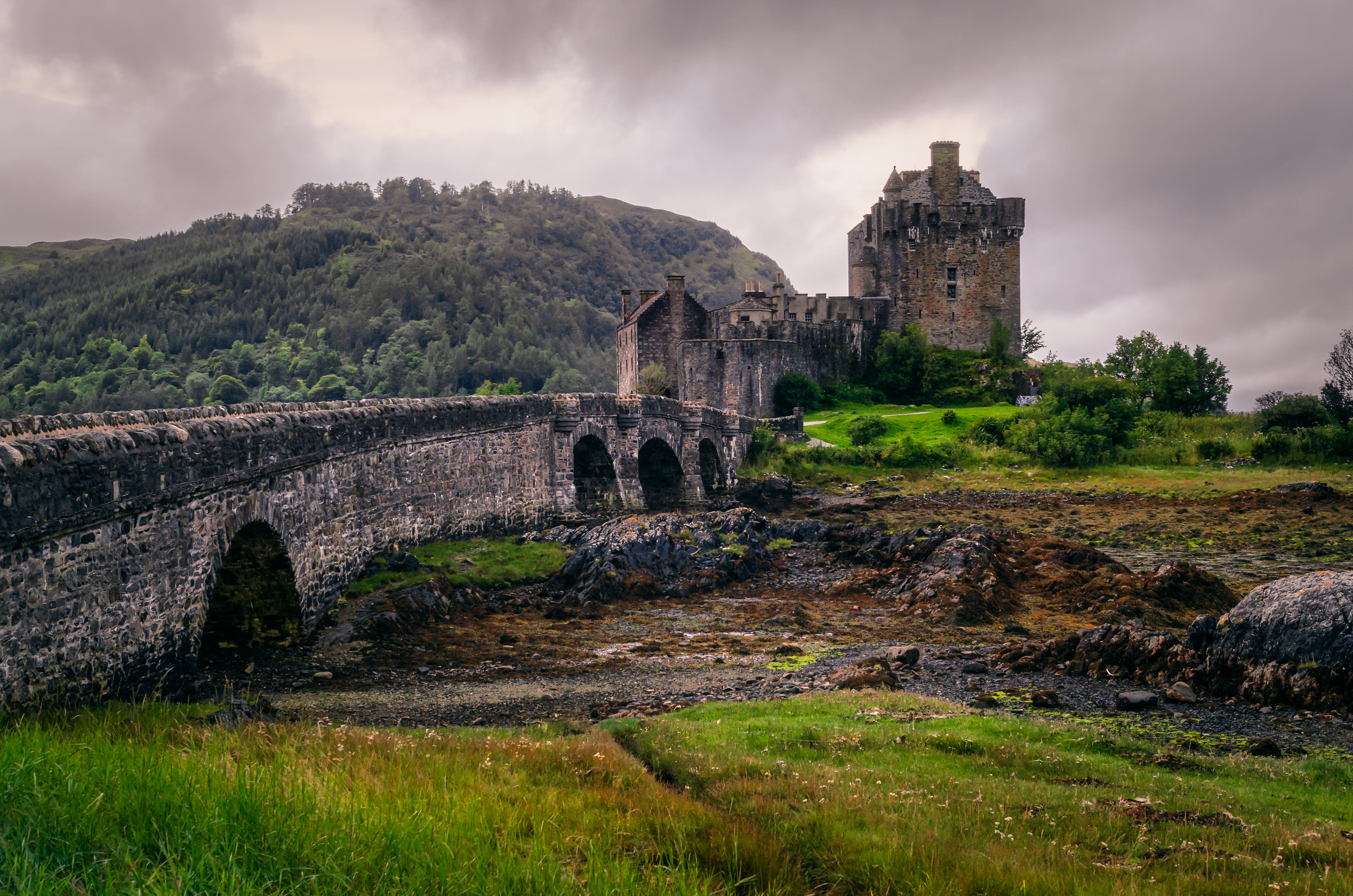
Eilean Donan Castle: Technically just off Skye on the mainland at Dornie — but almost always visited as part of a Skye trip; a 13th-century castle on a small island at the junction of three sea lochs, rebuilt in the early 20th century; one of Scotland’s most photographed castles and the backdrop for the 1986 film Highlander

Getting to Skye: Drive or take the Kyle Line train to Kyle of Lochalsh (2.5 hours from Inverness) then cross the Skye Bridge. Or take the West Highland Line from Glasgow to Mallaig and ferry to Armadale on Skye.
The North Coast 500
The North Coast 500 (NC500) is a 500-mile circular driving route around the northern coast of Scotland — starting and ending in Inverness and taking in some of the most remote, dramatic and barely-visited landscapes in Europe.

The route: Inverness → Black Isle → Easter Ross → Caithness (Duncansby Head, John o’Groats) → north coast (Tongue, Durness) → northwest Highlands (Assynt, Torridon) → Applecross → back to Inverness.
Time required: Minimum 5 days; 7-10 days to do it justice with stops.
What you find: Stacks of Duncansby (sea stacks more dramatic than Land’s End), the white sand beaches of the far north coast, the mountains of Assynt (Suilven, Quinag), the peninsula of Applecross with its sea views to Skye and Torridon, and almost no other tourists outside July and August.
Best months: May, June, September. In July and August the route is busy and campsites and accommodation fill quickly — book ahead.
Harry Potter locations in Scotland
Scotland gave the Harry Potter films their landscape — the Highland weather, the scale of the mountains, the lochs broad enough to feel mythic. Every outdoor scene filmed in Scotland was shot in the west Highlands, clustered around Fort William and Glenfinnan. Edinburgh is where J.K. Rowling wrote early parts of the series — a place of literary inspiration rather than filming locations.
The filming locations — west Highlands:
Glenfinnan Viaduct (Hogwarts Express): The 21-arch curved viaduct spanning the head of Loch Shiel — the shot everyone recognises from the films. The Jacobite steam train crosses it in peak season at approximately 10:45am and 3pm daily. Two ways to experience it: ride the Jacobite (Fort William to Mallaig return, approximately £76 in 2026 — book months ahead, sells out completely in summer) or photograph it from the free viewpoint above the Glenfinnan Visitor Centre (5-minute walk from the car park; arrive 45 minutes before the train). In summer there can be 200 people on the hillside — hike further up for solitude and a better angle.

Glencoe (Hagrid’s Hut): The dramatic U-shaped glacial valley served as the exterior setting for Hagrid’s Hut in Prisoner of Azkaban. The production built three full sets near the Clachaig Inn — Hagrid’s Hut with pumpkin patch, the Sundial Garden and the Bridge to Nowhere. The sets are long gone but the landscape remains unchanged. Signal Rock (a 45-minute walk through the forest from the Clachaig Inn) marks the approximate site of the hut — free, well-signed trail.
Loch Shiel (the Hogwarts Lake / Black Lake): The long, narrow loch behind the Glenfinnan Monument was used as the Great Lake surrounding Hogwarts. The Glenfinnan Monument itself — commemorating the 1745 Jacobite rising — provides a foreground for the classic viaduct-and-loch photograph.

Rannoch Moor: The vast, empty moorland between Glencoe and Bridge of Orchy appeared as the bleak exterior landscape in several films. On the West Highland Line — visible from the train window between Glasgow and Fort William.
Steall Falls, Glen Nevis: The dramatic 120-metre waterfall at the head of Glen Nevis (a short walk from the car park at the end of the glen) appeared in Goblet of Fire as the setting for the Triwizard Tournament second task. Free to visit; 30-minute walk on a well-marked path.
Loch Eilt: A small loch on the Road to the Isles west of Glenfinnan — used as an aerial backdrop in multiple films. Often visible from the road with a small wooded island in the foreground.
Edinburgh — the literary connection:
Nothing in Harry Potter was filmed in Edinburgh. But the city is where Rowling lived and wrote early parts of the series, and the connections are real:
The Elephant House café (George IV Bridge): Where Rowling famously wrote early chapters of the first book. Now a tourist landmark. The back room overlooked Edinburgh Castle and Greyfriars Kirkyard — both visible in the same view.
Diagon Alley: The curved shape, the layered levels and the eclectic mix of specialist shops make the resemblance striking. Walk it from the Grassmarket end and you will see it immediately. Greyfriars Kirkyard (a 17th-century graveyard adjacent to Greyfriars Kirk) contains the grave of Thomas Riddell — a name Rowling is believed to have borrowed for Lord Voldemort’s real identity, Tom Riddle. George Heriot’s School, visible from the Kirkyard, is said to have inspired Hogwarts itself.
Greyfriars Kirkyard: The old churchyard adjacent to the café contains tombstones including one belonging to Thomas Riddell — widely cited as the inspiration for Tom Riddle (Voldemort’s birth name). The connection is plausible but unconfirmed by Rowling.
Victoria Street: A curved, cobbled, colourful street in the Old Town — widely described as a visual inspiration for Diagon Alley. The resemblance is genuine.
George Heriot’s School: A turreted 17th-century school near Greyfriars with a courtyard layout and house system resembling Hogwarts. Not open to the public, but visible from the street.
Practical tips for Harry Potter visitors:
- Ride the Jacobite steam train: book at westcoastrailways.co.uk — opens for the following summer season in January; sells out by March for peak weeks
- Day tours from Edinburgh to Glenfinnan, Glencoe and Loch Shiel: 12-14 hours, good value if you don’t have a hire car; Rabbie’s and Timberbush Tours are the most reliable operators
- The viewpoint at Glenfinnan is free but the car park charges £5; arrive early in summer
- Glencoe locations are all free and accessible by hire car on the A82
Scottish food — what to eat
Scottish food has a reputation that does it a disservice. Beyond the deep-fried Mars Bar (a real thing, mostly eaten by tourists) Scotland produces exceptional seafood, world-class beef, outstanding game and a handful of national dishes that are genuinely worth seeking out.
Haggis: Scotland’s national dish — and the one that confuses most visitors. Haggis is a savoury pudding made from sheep’s offal (heart, liver and lungs) mixed with oatmeal, onions, suet and spices, traditionally cooked in a sheep’s stomach. The stomach casing is rarely used today; most haggis is sold in a synthetic casing or as a loose mince.

It sounds alarming. It tastes — genuinely — like a rich, peppery, earthy mince with the texture of a coarse stuffing. Served with neeps and tatties (mashed turnip/swede and mashed potato) and a whisky sauce, it is one of Scotland’s most warming and satisfying meals. Almost every pub in Scotland serves it. The best haggis is at a good Scottish pub or a traditional restaurant; the worst is vacuum-packed at a petrol station.
Burns Night (25 January) is the annual celebration of poet Robert Burns — haggis is ceremonially piped into the dining room, addressed with Burns’ poem “Address to a Haggis,” then cut open and served. If you are in Scotland in January, a Burns Night supper is one of the great Scottish cultural experiences.
Cullen skink: A thick, creamy soup made from smoked haddock, potatoes and onions — named after the coastal village of Cullen in Moray. One of Scotland’s finest dishes; warming, smoky and deeply satisfying. Found in most Scottish restaurants.

Scotch pie: A double-crust meat pie with a distinctive straight-sided pastry case, filled with minced mutton or beef — a Scottish institution; sold at football grounds, bakeries and chip shops across the country.
Scottish seafood: Scotland produces some of the finest seafood in the world — langoustines (Dublin Bay prawns), scallops, hand-dived from the clear cold waters of the west coast; wild Atlantic salmon; mussels and oysters from the sea lochs of the Highlands and islands. The best place to eat it is close to where it was caught — Oban, Tobermory, Plockton, Portree.
Cranachan: A traditional Scottish dessert — toasted oatmeal, whipped cream, whisky, honey and raspberries layered together. Simple and excellent. Often served at Burns Night.

Whisky — Scotland’s liquid identity
Scotch whisky is one of Scotland’s defining cultural exports — and experiencing it in context is one of the genuine pleasures of visiting Scotland. The whisky regions each produce a distinct style:

- Speyside (northeast Highlands): The most concentrated whisky region in the world — over 50 distilleries along the River Spey; fruity, elegant, less smoky; Glenfiddich, The Macallan, Glenlivet
- Islay (island, off southwest Scotland): The most distinctive regional style — heavily peated, smoky, coastal; Laphroaig, Ardbeg, Bowmore; ferry from Kennacraig
- Highlands: Diverse — from light and floral (Dalmore, Glenmorangie, Oban) to full-bodied
- Lowlands: Lighter, unpeated; Auchentoshan, Glenkinchie
- Campbeltown: One remaining major distillery (Springbank); maritime character
Distillery visits: Most Scottish distilleries welcome visitors for tours and tastings; booking ahead is recommended for the most popular (Glenfiddich, The Macallan, Laphroaig). Many smaller distilleries require advance booking.
Money and costs
Currency: British Pound Sterling (GBP) — same as England. Scotland issues its own banknotes (Bank of Scotland, Royal Bank of Scotland, Clydesdale Bank) — legal currency throughout Scotland but not technically legal tender in England; most English businesses accept Scottish notes in practice.
Daily budgets:
| Budget level | Daily spend | What you get |
|---|---|---|
| Budget | AUD $120-180 | Hostel, self-catering, free museums, pub meals |
| Mid-range | AUD $220-380 | B&B or hotel, restaurants, day trips |
| Luxury | AUD $500+ | Highland lodge, fine dining, private guides |
Edinburgh is significantly cheaper than London; Highland accommodation varies from basic hostels (bothy-style) to very expensive lodge hotels.
What it means for your transfers
Scotland is home to a significant Australian and New Zealand diaspora — particularly in Edinburgh and Glasgow. AUD to GBP and NZD to GBP transfers are completely fee-free with OrbitRemit from Australia and New Zealand, with the rate locked at confirmation.
FAQs (frequently asked questions)
Do Australians and New Zealanders need a separate visa for Scotland?
No — Scotland is part of the United Kingdom. The same UK ETA that covers England covers Scotland. One ETA covers all four UK nations.
What is the best base for exploring the Scottish Highlands?
Inverness for the east Highlands, Loch Ness and the Kyle Line to Skye. Fort William for Ben Nevis, Glencoe and the western Highlands. Portree (Isle of Skye) for Skye itself.
How long do I need for Scotland?
Edinburgh alone: 3 days minimum. Edinburgh plus a Highland road trip: 7-10 days. The full North Coast 500 plus Edinburgh: 12-14 days.
Is Scotland worth visiting in winter?
Yes — for different reasons. Edinburgh is atmospheric in winter; Hogmanay (New Year) is one of Europe’s great street parties. The Highlands in snow are extraordinary. Northern Lights are visible from October to March.
What are Scottish midges?
Small biting insects found throughout the Highlands from June to September — worst in still, humid conditions in the early morning and evening. They are not dangerous but can be extremely irritating. Carry midge repellent (DEET-based) and a midge head net for wild camping.
Related guides
- England travel guide 2026 →
- The 5 best eSIMs for international travel from Australia →
- The 5 best travel money cards in Australia 2026 →
- The 5 best travel money cards in New Zealand 2026 →
- European currencies: a complete guide →
Visa and ETA requirements are subject to change — always verify at gov.uk and Smartraveller (smartraveller.gov.au) or Safetravel (safetravel.govt.nz) before travel. Last updated September 2026.
Sources: livebreathescotland.com — Do I Need a Visa to Visit Scotland? (April 7, 2026) | schengentraveler.com — UK ETA for Australians 2026 (July 29, 2026) | myscottishpass.com — Electronic Travel Authorisations for Edinburgh (March 3, 2026) | scotlandtourism.org — Best Things to Do in Scotland 2026 (4 days ago) | scotlandtourism.org — Isle of Skye Complete Travel Guide 2026 (4 days ago) | scotlandtourism.org — Scottish Highlands Complete Travel Guide 2026 (4 days ago) | bestvaluetours.co.uk — Scotland Travel Guide 2026 (August 3, 2026)


