Today is 1 September 2026. In Australia and New Zealand, it is the first day of spring. In most of the world, Christmas is still three and a half months away.
In the Philippines, Pasko Philippines Christmas just started.
Not metaphorically. Not commercially. Actually started. Somewhere right now, in a mall in Manila, a jeepney in Cebu or a house in Pampanga, Jose Mari Chan’s “Christmas in Our Hearts” is playing. And every Filipino who hears it knows exactly what it means: Pasko has begun.
The world’s longest Christmas
The Philippines has the world’s longest Christmas season — a fact confirmed by CNBC and acknowledged with great national pride. The season starts on 1 September — the first of the four “Ber months” (September, October, November, December) — and does not end until 6 January, the Feast of the Three Kings (Epiphany).
That is more than four months. One third of the entire year. Christmas in the Philippines is not a day, not a week, not even a month. It is a season.
And it is not begrudging, commercial or performative. It is deeply, genuinely, joyfully felt.
As a beloved Filipino Christmas song puts it: “Pasko sa Pinas, walang katulad sa buong mundo” — Christmas in the Philippines is like no other in the world.
Why does Christmas start in September?
The Philippines is the largest Catholic country in Asia — approximately 93% of the population is Christian and about 79% is Roman Catholic, a faith introduced through Spanish colonisation over 500 years ago. Christmas is not a holiday in the Philippines. It is the holiest, most joyful, most anticipated time of the year.
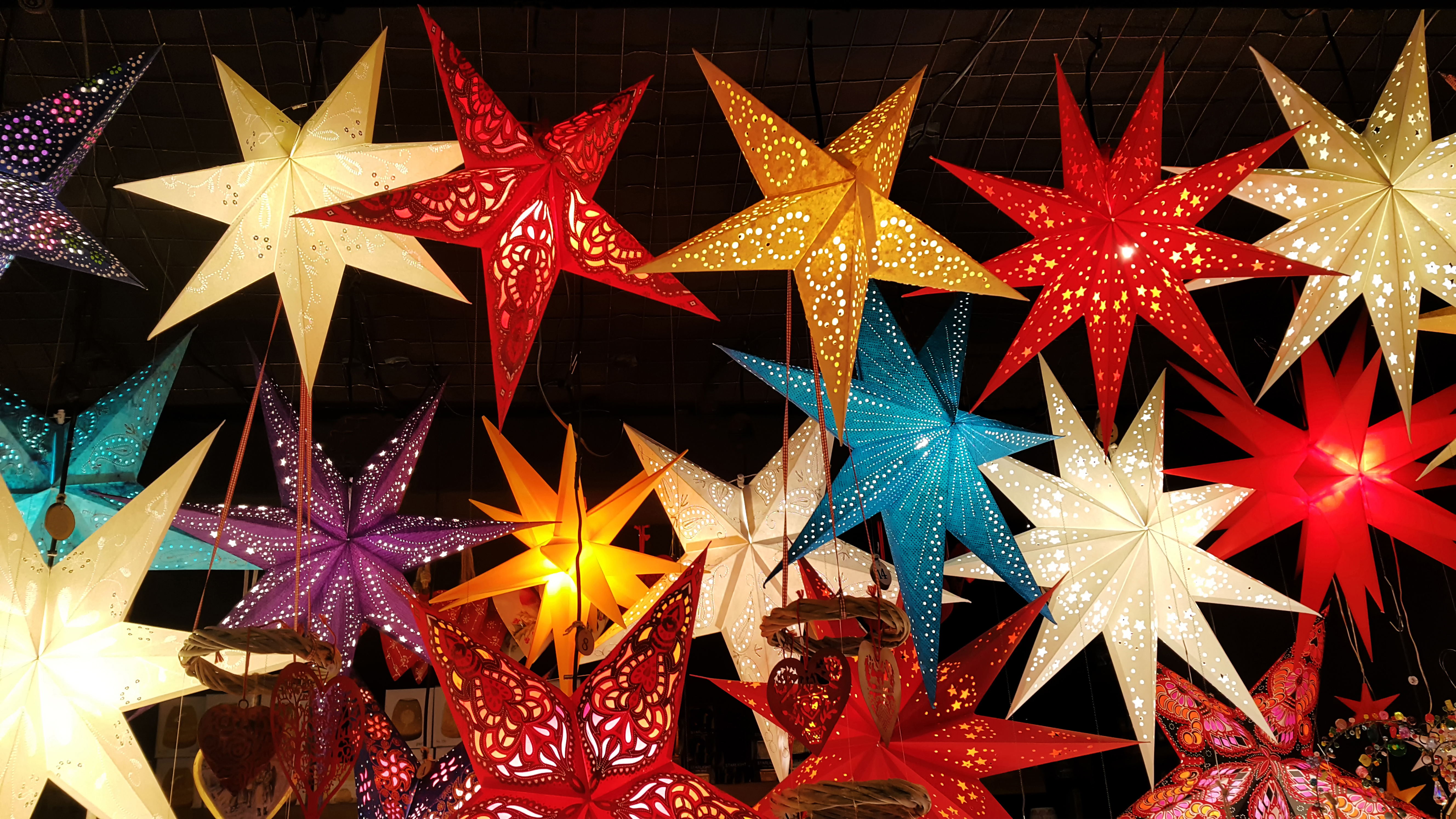
The “Ber months” tradition — September, October, November, December — has become a cultural institution. The moment September 1 arrives, Christmas music starts. Malls put up trees and lights. Families begin planning. The parol (the star-shaped Christmas lantern) reappears on balconies and in windows.
The logic is simple: if Christmas is the most important celebration of the year, why would you wait until the last few weeks to enjoy it?
The man whose voice starts Christmas
Ask any Filipino when Christmas begins and many will answer: when Jose Mari Chan comes on.
Jose Mari Chan is a Filipino singer whose 1990 song “Christmas in Our Hearts” has become the unofficial signal that Pasko has begun. The moment radio stations, mall speakers and family living rooms play its opening notes on 1 September — a gentle piano intro followed by Chan’s warm baritone — something shifts in the Filipino psyche.
It is, by general consensus, the most played Christmas song in Philippine history. By December, most Filipinos will have heard it so many times they can sing every word without thinking. By January, they are quietly ready for it to stop. By September 1 of the following year, they are genuinely happy to hear it again.
The traditions of Pasko
Parol — the star lantern
The parol (from the Spanish farol, meaning lantern) is the most recognisable symbol of Philippine Christmas. A five-pointed star lantern representing the Star of Bethlehem, it hangs outside nearly every home, school and church in the Philippines from September onward.
Originally made from bamboo and Japanese paper in the 1930s — the craft originated in Pampanga province, which remains the parol capital of the Philippines — modern parols now come in every size imaginable, from small battery-operated versions for apartment windows to enormous LED-lit constructions the size of a room. The Giant Lantern Festival in San Fernando, Pampanga, held every December, is one of the most spectacular light festivals in Asia.
Belen — the nativity scene
Belen (from Bethlehem) — the nativity scene — appears in Filipino homes, churches, schools and public spaces throughout the season. Unlike the modest single shelf nativity of many Western homes, Filipino belens can be elaborate constructions taking up an entire room, complete with mountains, rivers, animals and a cast of dozens. The belen is the centrepiece of the Filipino Christmas aesthetic — a reminder, amid all the music and food and gifts, of what the season is actually about.
Simbang Gabi — nine dawn masses
Simbang Gabi (Night Mass) — also called Misa de Gallo (Mass of the Rooster) — is a series of nine pre-dawn masses held from 16 to 24 December. The tradition dates to the Spanish colonial era, when masses were scheduled before dawn so that farmers could attend before going to the fields.
Today, millions of Filipinos attend Simbang Gabi — setting alarms for 4am, wrapping in jackets against the early morning chill, lining up outside churches in the dark. Completing all nine masses is considered a sign of devotion, and tradition holds that a wish made while completing the novena will be granted.
Outside churches after each mass, the sidewalks come alive with vendors selling bibingka (rice cake cooked in banana leaves) and puto bumbong (purple sticky rice steamed in bamboo tubes) — two foods so inseparable from Simbang Gabi that they are essentially the taste of the season.
Noche Buena — the midnight feast
Christmas Eve culminates in Noche Buena — a midnight feast after the Christmas Eve mass. Families gather around tables laden with food: lechon (whole roasted pig), queso de bola (Edam cheese, one of the most iconic Filipino Christmas foods), ham, fruit salad, pancit, lumpia and whatever each family has made special for the occasion.
The Noche Buena table is abundant by design — it is the expression of gratitude and celebration that the entire season has been building toward.
Caroling — a different kind
Filipino Christmas caroling is its own institution. Groups of children — and sometimes adults — go door to door singing carols and collecting small amounts of money or snacks. The carol of choice is often “Ang Pasko ay Sumapit” (Christmas Has Arrived) or “Sa Maybahay ang Aming Bati” (Greetings to the Homeowner). Turning carolers away is considered bad luck. Welcoming them, even briefly, is part of the season.
Monito-Monita — secret Santa, Filipino style
The Filipino version of Secret Santa — each person draws a name and secretly buys gifts for that person throughout the season, revealing themselves at a final party. Office Monito-Monita exchanges are a fixture of Filipino workplace culture from October onward.
Pasko for Filipinos in Australia and New Zealand
The Filipino community in Australia numbers over 412,000 people. In New Zealand, over 65,000 Filipinos call the country home. For these communities, Pasko does not shrink just because they are thousands of kilometres from the Philippines. If anything, it grows more tender — the distance making the traditions feel more precious.
Filipino community organisations across Sydney, Melbourne, Auckland and Wellington host Pasko events throughout the Ber months — Christmas bazaars, caroling events, community masses and potluck Noche Buena gatherings that recreate the warmth of home in a new country.
And every year, Filipino-Australians and Filipino-New Zealanders send money home to family in the Philippines — for Christmas food, for gifts, for family gatherings they cannot attend in person. It is one of the most significant transfer periods of the year.
Sending money home for Pasko
AUD to PHP transfers via GCash and supported mobile wallets are fee-free with OrbitRemit from Australia. Bank deposit and cash pickup from Australia carries a flat AUD $4 fee. From New Zealand, GCash and mobile wallet transfers carry a flat NZD $4 fee; bank deposit and cash pickup is NZD $6. All transfers of AUD or NZD $10,000 or more are completely fee-free. Over 85% of transfers arrive within 2 hours.
Whether you are sending money home for the Noche Buena table, for gifts for the kids, or just because it is Pasko and family is family — OrbitRemit makes it fast and free.
Maligayang Pasko sa inyong lahat. Merry Christmas to all of you.
Sources: peopleplacesplates.ph — The World’s Longest Christmas is in the Philippines (September 2025) | grokipedia.com — Christmas in the Philippines (January 2026) | asiamediacentre.org.nz — Top 10 Unique Filipino Christmas Traditions | sendvalu.com — Philippines Ber Months: The World’s Longest Christmas | balikbayanmagazine.com — Pinoy Christmas: The World’s Longest, Loudest, and Most Loving Celebration (December 2024) | gulfnews.com — Philippine Christmas: A tropical wonderland of cheer


