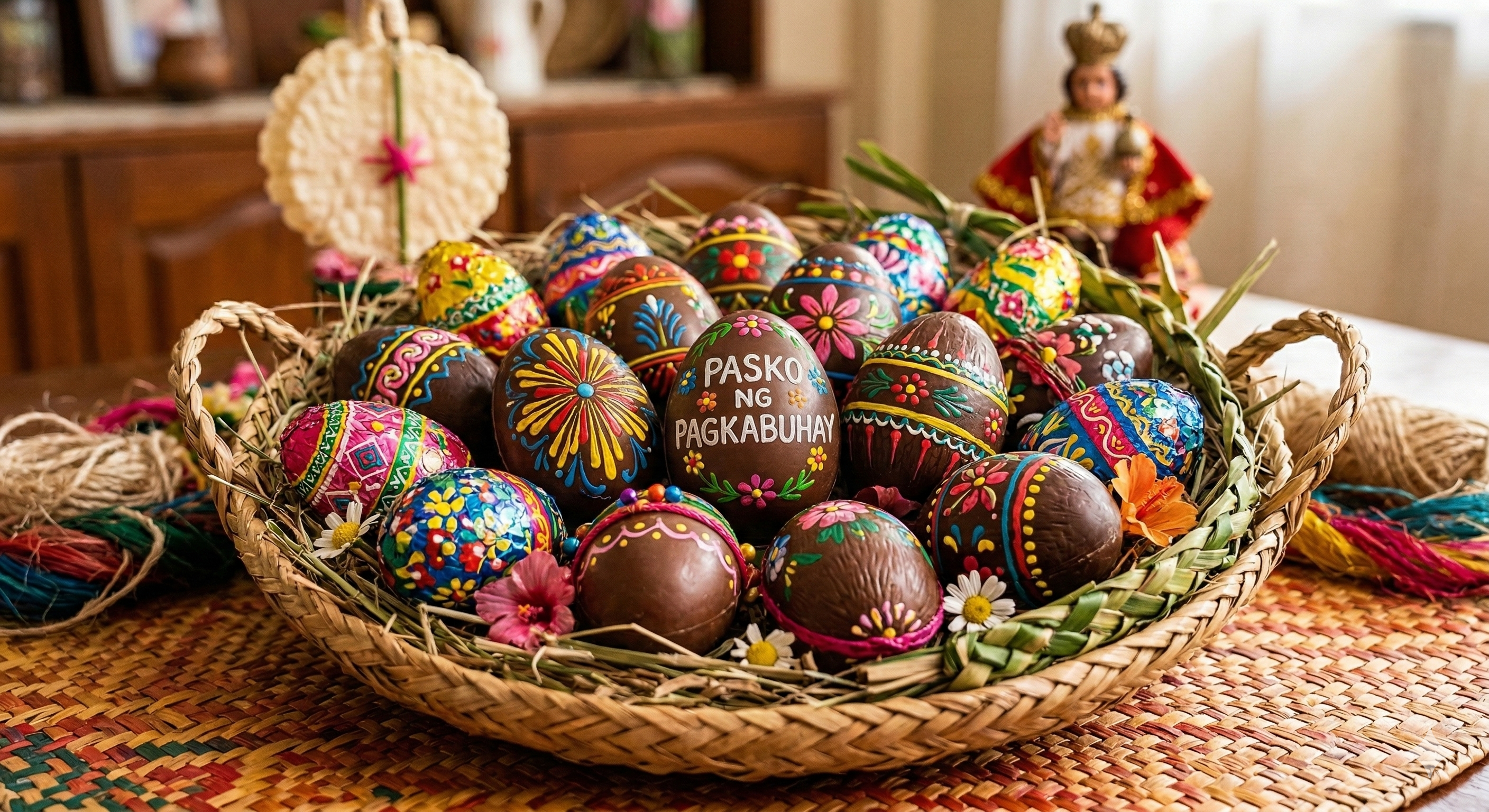
Easter is one of the most deeply felt celebrations on the Filipino calendar. While much of the world marks the occasion with chocolate eggs and spring picnics, Easter in the Philippines is something altogether more profound — a week-long immersion in faith, community, and centuries-old tradition that touches every corner of the archipelago’s 7,641 islands.
For the millions of Filipinos living and working abroad in Australia and New Zealand, it’s also one of those times of year when the pull of home is strongest — and when sending money to the Philippines to support loved ones matters most.
Why Is Easter So Important in the Philippines?
The Philippines is one of the only majority-Christian countries in Asia, with Catholics making up nearly 79% of the population — around 85 million people. When Easter arrives, it doesn’t just belong to individuals or families: it belongs to entire communities, neighbourhoods, and barangays.
Known locally as Pasko ng Pagkabuhay (“Christmas of the Resurrection”), Easter Sunday marks the culmination of Semana Santa — Holy Week — a period of intense spiritual reflection, communal ritual, and ultimately, joyous celebration. For Filipino Catholics, this is a lived experience woven into the fabric of everyday life, not just a date on the liturgical calendar.

Holy Week in the Philippines: A Day-by-Day Guide
Palm Sunday — Linggo ng Palaspas
Holy Week opens with families gathering at churches across the country waving palm fronds to commemorate Jesus’ triumphant entry into Jerusalem. These blessed palms are often brought home and displayed throughout the year as symbols of protection and blessing. During Mass, Catholics chant the Pasyong Mahal — a long narrative poem illustrating the life, passion, death, and resurrection of Jesus Christ.
Maundy Thursday — Huwebes Santo
On Maundy Thursday, the beloved Visita Iglesia (Church Visit) unfolds. Devotees visit at least seven different churches in a single day, praying the Stations of the Cross at each one. This act of pilgrimage often stretches late into the night, with families travelling together across towns and cities in a shared act of devotion.
Good Friday — Biyernes Santo
Good Friday is the most solemn day of the Filipino year. The Senákulo — a Passion play reenacting Christ’s suffering and crucifixion — is performed in communities across the country. In the province of Pampanga, most famously in San Pedro Cutud, San Fernando, some male devotees voluntarily walk barefoot while performing acts of penance, and in some cases are nailed to wooden crosses — a deeply personal expression of faith unlike anything else in the world.
The Santo Entierro (Holy Burial) procession also takes place, with the image of Christ carried through the streets in an ornate, flower-decked bier, followed by the Mater Dolorosa — the sorrowful Virgin Mary — draped in black.
Black Saturday — Sabado de Gloria
Black Saturday is a time of quiet mourning and anticipation. Many businesses remain closed and households observe traditional taboos — no meat, no merrymaking. As evening falls, churches hold the Easter Vigil, where the Paschal candle is lit and the faithful gather in preparation for the dawn.
Easter Sunday — Linggo ng Pagkabuhay
And then — everything changes.
The Salubong: The Philippines’ Most Iconic Easter Tradition
If there is one Filipino Easter tradition that captures the entire nation’s heart, it is the Salubong — meaning “to welcome” or “meeting.”
This pre-dawn ritual on Easter Sunday is one of the most moving religious ceremonies in the world. Two separate processions set out before sunrise: one carrying the image of the Risen Christ, the other carrying the veiled and sorrowful Virgin Mary. They wind through the streets by candlelight before meeting at a designated point, where a young girl dressed as an angel dramatically lifts the black mourning veil from Mary’s face — transforming her into Nuestra Señora de Alegría, Our Lady of Joy.
At that moment: church bells peal, brass bands strike up, fireworks light the sky, and flower petals rain down like confetti. The congregation erupts in joy before gathering inside for the first Mass of Easter Day.
In the Visayas, the same ceremony is called the Sugat, but the spirit is identical — a whole community united in the shared joy of resurrection.
Other Beloved Filipino Easter Traditions
The Pabasa is a continuous devotional chant telling the story of Jesus’ life, passion, death, and resurrection. Families and communities take turns singing these verses — a tradition that can last hours or even days — fostering deep spiritual unity.
The Senákulo brings biblical drama to life through community theatre, with local Filipino groups performing an emotional reenactment of Christ’s passion. In some provinces, these performances run across the entire week.
Easter Vigil on Saturday night sees churches light the Paschal candle and welcome the faithful back in preparation for Easter Sunday — a moment of transition from mourning to celebration.
Easter egg hunts, while not originally Filipino, have grown in popularity in recent years, bringing an added element of fun for children alongside the traditional religious observances.
Traditional Filipino Easter Foods
Filipino families celebrate Easter with a sumptuous feast. Here’s what typically graces the table:
- 🐷 Lechon — whole roast pig, the centrepiece of any major Filipino celebration
- 🍲 Kare-kare — a rich oxtail stew in peanut sauce, typically served with bagoong (shrimp paste)
- 🍗 Chicken adobo — the quintessential Filipino dish of slow-braised chicken
- 🍜 Pancit — traditional noodle dishes in a variety of styles
- 🥣 Binignit — a warm, sweet coconut-milk dessert made with glutinous rice, root crops, and tropical fruits; a beloved Easter staple
- 🍰 Kakanin — a variety of rice cakes enjoyed throughout the celebrations
- 🍫 Bibingka and puto — enjoyed at the post-Salubong breakfast alongside hot tsokolate

Easter and the Filipino Diaspora
Easter in the Philippines is, at its core, about togetherness — whole villages gathering before dawn, families crowding around a table laden with lechon, stories and prayers shared across generations.
For the many Filipinos living in Australia and New Zealand, that sense of connection doesn’t disappear with distance. According to the Philippine Statistics Authority, overseas Filipinos sent over $38 billion USD in remittances in 2024, with Australia and New Zealand among the most active sending corridors. The Easter period is one of the busiest times of the year for transfers, as families abroad ensure their loved ones can celebrate fully.
Whether it’s contributing to the family feast, covering new Easter clothes for the kids, or simply making sure parents can celebrate without financial stress — sending money home is one of the most tangible expressions of love.
How to Send Money to the Philippines for Easter with OrbitRemit
OrbitRemit makes it fast, affordable, and straightforward to send money to the Philippines from Australia and New Zealand, with multiple delivery options to suit every family’s needs.
Delivery options:
| Method | Speed | Best for |
|---|---|---|
| Mobile Wallet (GCash, Maya, GrabPay, Coins.ph) | Often within minutes | Fast, flexible access — $0 fees for AUD to GCash |
| Cash Pickup | ~1 hour after payment | Recipients without bank accounts — 5,000+ locations |
| Bank Deposit | Same business day | Direct transfers to any Philippine bank account |
How to get started:
- Create a free account at orbitremit.com or download the OrbitRemit app
- Use the currency calculator to see exactly how much your recipient will receive in PHP before you confirm
- Choose your delivery method — bank deposit, mobile wallet, or cash pickup
- Pay via bank transfer, PayID, credit or debit card
- Track your transfer in real time through the app
What Does It Cost?
From Australia (AUD → PHP)
- Transfers under $10,000 AUD: $4 AUD flat fee
- Transfers of $10,000 AUD or more: fee-free
- AUD to GCash: always fee-free
From New Zealand (NZD → PHP)
- Transfers under $10,000 NZD: $6 NZD flat fee
- Transfers of $10,000 NZD or more: fee-free
Why Filipinos in Australia and New Zealand trust OrbitRemit:
- ✅ Competitive exchange rates on AUD to PHP and NZD to PHP — up to 75% cheaper than the banks*
- ✅ Low, transparent fees — no hidden charges, see everything before you confirm
- ✅ Multiple payout options including GCash, Maya, GrabPay, and 5,000+ cash pickup locations
- ✅ Regulated and secure — licensed by ASIC and registered with AUSTRAC (Australia); supervised by the DIA (New Zealand)
- ✅ Rated Excellent on Trustpilot from over 33,000 reviews
*Based on internal research conducted in December 2024.
New Customer Offer
Sending money to the Philippines for the first time? This Easter is the perfect moment to start. New customers get a special promo rate plus $0 fees.*
More pesos reach your family — and it costs nothing extra to get started.
*New customers only. Limited time offer. Rate subject to change. $500 AUD/NZD limit applies. Terms and conditions apply. Not available in conjunction with any other offer.
Refer a Friend & Earn Rewards
Already an OrbitRemit customer? Share the love this Easter — and get rewarded for it. Invite friends using your unique referral link or QR code, and when they complete their first transfer of $100 or more (AUD/NZD):
- You receive $20 off your next transfer
- Your friend receives the new customer promo rate on their first transfer, plus $10 off their second transfer
- After 5 successful referrals, you’ll receive a $100 bonus*
*Only referrals completed on or after December 8 are eligible for the $100 bonus.
Frequently Asked Questions About Easter in the Philippines
What is Easter called in the Philippines?
Easter Sunday is known as Linggo ng Pagkabuhay or Pasko ng Pagkabuhay in Filipino, which translates to “Sunday of Resurrection” or “Christmas of the Resurrection.” The entire Holy Week period is called Semana Santa or Mahal na Araw.
What is the most important Easter tradition in the Philippines?
The Salubong is widely regarded as the most iconic and emotionally significant Easter tradition in the Philippines. This pre-dawn ceremony on Easter Sunday reenacts the meeting of the Risen Christ and the Virgin Mary, culminating in the dramatic removal of her black mourning veil — a moment celebrated with fireworks, bell-ringing, and flower petals.
Is Holy Week a public holiday in the Philippines?
Yes. Maundy Thursday and Good Friday are both national public holidays in the Philippines, and many businesses and government offices also close on Black Saturday. Easter Sunday is widely observed, with most commercial activity pausing throughout Holy Week.
What is the Visita Iglesia in the Philippines?
Visita Iglesia is a Maundy Thursday tradition where Filipino Catholics visit at least seven churches in a single day to pray the Stations of the Cross. It is one of the most widely observed Holy Week practices in the country and can involve entire families travelling across cities and towns.
What food do Filipinos eat at Easter?
Easter Sunday in the Philippines typically features a large family feast. Traditional dishes include lechon (whole roast pig), kare-kare (oxtail stew), chicken adobo, pancit (noodle dishes), and sweet treats such as binignit (coconut milk and glutinous rice dessert) and kakanin (rice cakes). After the Salubong, families often share an early breakfast of bibingka, puto, and hot tsokolate.
How can I send money to the Philippines for Easter from Australia?
The fastest and most cost-effective way to send money to the Philippines from Australia is through an online remittance service like OrbitRemit. OrbitRemit offers bank deposits, cash pickup from 5,000+ locations, and mobile wallet transfers to GCash, Maya, and GrabPay — with many transfers arriving within minutes.
New customers sending from Australia get a special promo exchange rate plus $0 fees on their first transfer. Standard transfers cost just $4 AUD for amounts under $10,000, and are free for $10,000 and over. GCash transfers are always fee-free.
How can I send money to the Philippines for Easter from New Zealand?
Filipinos in New Zealand can use OrbitRemit to send NZD to PHP quickly and securely via bank deposit, cash pickup, or mobile wallet. Payments can be made by bank transfer or POLi, and mobile wallet transfers often arrive within minutes.
New customers from New Zealand also receive a special promo rate and $0 fees on their first transfer. Standard transfers cost just $6 NZD for amounts under $10,000, and are free for $10,000 and over.
How long does it take to send money to the Philippines with OrbitRemit?
Transfer times with OrbitRemit vary by delivery method: mobile wallet transfers (GCash, Maya, GrabPay) often arrive within minutes; cash pickup is typically available within about an hour of payment being received; and bank deposits are usually completed within the same business day. First-time transfers may take slightly longer while identity verification is completed.
Is OrbitRemit safe for sending money to the Philippines?
Yes. OrbitRemit is a regulated money remittance service, licensed by the Australian Securities and Investments Commission (ASIC) and registered with AUSTRAC in Australia, and supervised by the Department of Internal Affairs (DIA) in New Zealand. All transfers are secure and compliant with anti-money-laundering obligations.
Will my transfer to the Philippines be delayed over Easter?
It’s worth planning ahead. Easter falls over a four-day public holiday period in both Australia and New Zealand — from Good Friday through to Easter Monday. In 2026, that’s Friday 3 April to Monday 6 April. During this period, bank processing times may be slower and some payment methods can experience delays, particularly bank transfers that rely on local clearing networks. To avoid any hold-ups, we recommend sending your transfer before Good Friday (i.e. by Thursday 2 April at the latest) to ensure funds arrive in time for the Easter celebrations. Mobile wallet transfers to GCash, Maya, and GrabPay tend to be the fastest option and are less affected by public holiday banking delays.
What are the Easter public holidays in Australia in 2026?
In 2026, Easter public holidays in Australia fall on:
Good Friday – Friday 3 April (national public holiday in all states and territories)
Easter Saturday – Saturday 4 April (public holiday in most states)
Easter Sunday – Sunday 5 April (public holiday in most states)
Easter Monday – Monday 6 April (national public holiday in all states and territories)
This creates a four-day long weekend for most Australians. Note that Easter Saturday and Sunday trading restrictions and public holiday status vary slightly by state — check your state’s Fair Work or government website for specifics.
What are the Easter public holidays in New Zealand in 2026?
In New Zealand in 2026, the Easter public holidays are:
Good Friday – Friday 3 April (national public holiday)
Easter Monday – Monday 6 April (national public holiday)
Easter Sunday (5 April) is not a national public holiday in New Zealand, though trading restrictions apply in many areas. This gives most New Zealanders a four-day weekend from Friday 3 April through Monday 6 April. Note that most shops are required to be closed on Good Friday and Easter Sunday under New Zealand trading laws.
Maligayang Pasko ng Pagkabuhay — Happy Easter from all of us at OrbitRemit! 🐣
All dates are confirmed accurate for 2026 based on the Fair Work Ombudsman and New Zealand government sources. Fees, exchange rates, and transfer limits are subject to change. Visit orbitremit.com for current rates, terms, and conditions. OrbitRemit is regulated in Australia (ASIC/AUSTRAC) and New Zealand (DIA).


