Summary
Uluṟu-Kata Tjuṯa National Park was named by National Geographic as one of the best places to visit in the world in 2026 — the only Australian destination on their annual Best of the World list; the Red Centre’s most sacred site has undergone significant upgrades including a new cultural immersion centre
Australia has over 500 national parks covering approximately 28 million hectares — from tropical rainforest in North Queensland to the red rock desert of the Northern Territory, the alpine snowfields of the Snowy Mountains and the ancient gorges of Western Australia; no other country packs such diversity into a single landmass
Many of Australia’s best national parks are within easy reach of major cities — the Blue Mountains are 90 minutes from Sydney, the Grampians are 2.5 hours from Melbourne, and D’Aguilar National Park is less than an hour from Brisbane
Australia is one of the most biologically diverse countries on Earth. Its national parks protect everything from the world’s oldest tropical rainforest to vast red desert, from ancient Aboriginal rock art to alpine snowfields, from sea turtle nesting beaches to the most pristine coral reef on the planet.
Here is the guide to the parks worth making the trip for — organised by region, with getting-there details and what not to miss.
Northern Territory
Uluṟu-Kata Tjuṯa National Park ⭐ National Geographic Best of the World 2026

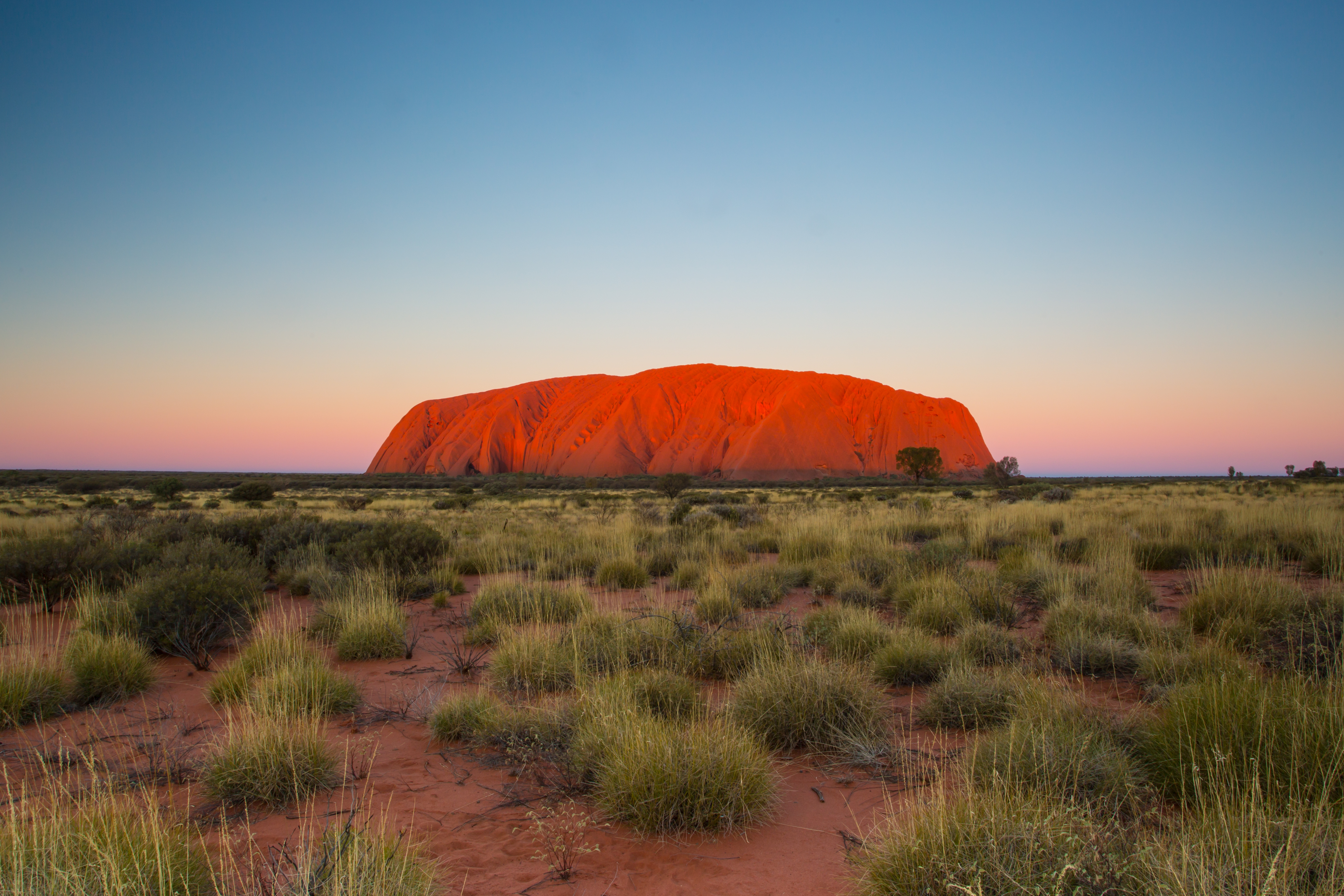
Why go: Uluṟu (Ayers Rock) is Australia’s most iconic natural landmark — a massive sandstone monolith rising 348 metres from the desert floor, sacred to the Aṉangu people who have called this land home for at least 30,000 years. At sunrise and sunset, the rock shifts through extraordinary colours — burgundy, orange, gold, deep red, purple. No photograph does it justice. You have to be there.
2026 update: Uluṟu-Kata Tjuṯa was named by National Geographic as one of the best places to visit in the world in 2026 — the only Australian destination on their annual Best of the World list. A new cultural immersion centre opened in 2025, offering deeper engagement with Aṉangu culture, stories and traditions.
Note: Climbing Uluṟu was permanently closed in October 2019 out of respect for its deep spiritual significance to the Aṉangu people. The park remains fully open for walking, guided tours and cultural experiences.
Don’t miss: The 10.6km base walk around Uluṟu (3-4 hours), the Valley of the Winds walk through Kata Tjuṯa (5.4km), sunrise and sunset viewing areas, guided Aṉangu cultural tours.
When to visit: May to September (dry season, comfortable temperatures 20-25°C). Avoid November to March — temperatures can exceed 45°C.
How to get there: Fly to Ayers Rock Airport (AYQ) from Sydney, Melbourne or Brisbane. The park is 20km from Yulara township.
Kakadu National Park
Why go: Australia’s largest national park at approximately 19,800 km² — a UNESCO World Heritage Site for both its natural and cultural values. Kakadu contains some of the world’s most significant Aboriginal rock art sites (some over 20,000 years old), extraordinary wetlands teeming with crocodiles and migratory birds, and dramatic sandstone escarpments dropping to lush floodplains.
2026 highlights: Jim Jim Falls and Twin Falls reopened in July 2025 after infrastructure upgrades. Maguk (Barramundi Gorge) and Gunlom Falls are now accessible with upgraded boardwalks — two of the park’s most spectacular swimming holes.
Don’t miss: Ubirr and Nourlangie rock art sites, Yellow Water wetlands cruise (saltwater crocodiles, jabiru, magpie geese), Gunlom Falls plunge pool, Twin Falls boat tour (dry season only).
When to visit: May to October (dry season). The park is partially closed in the wet season (November to April) due to flooding.
How to get there: Fly to Darwin, then drive approximately 150km east on the Arnhem Highway (2.5 hours).
Queensland
Daintree National Park
Why go: The Daintree is the world’s oldest tropical rainforest — approximately 180 million years old, predating the Amazon by 10 million years. It is the only place in the world where two UNESCO World Heritage Sites meet: the Daintree Rainforest and the Great Barrier Reef. Ancient ferns, rare birds of paradise, Bennett’s tree-kangaroos and the Victoria’s riflebird inhabit its dense canopy. The air is extraordinarily humid and alive.

Don’t miss: Mossman Gorge (swimming in the crystal-clear Mossman River), Cape Tribulation (where the rainforest meets the reef), Daintree River night cruise (spotting crocodiles, tree frogs and pythons), Blue Quandong berries trail.
When to visit: June to October (dry season). Wet season (November to April) brings extraordinary waterfalls but also road closures, stinger warnings and intense humidity.
How to get there: Fly to Cairns, then drive approximately 2 hours north. A car ferry crosses the Daintree River — cash only, no credit cards.
Whitsunday Islands National Park

Why go: Seventy-four tropical islands in the Coral Sea, most of them protected national park. The jewel is Whitsunday Island itself — home to Whitehaven Beach with its 98.9% pure silica sand, ranked in the world’s top beaches year after year. The tidal inlet at Hill Inlet, where white sand meets teal water in ever-changing swirling patterns, is one of Australia’s most photographed natural phenomena.
Don’t miss: Whitehaven Beach, Hill Inlet lookout, snorkelling at Hardy Reef and Heart Reef, sailing the Whitsundays overnight.
When to visit: April to October (cooler, drier). July to August are the busiest months.
How to get there: Fly to Proserpine (PPP) or Hamilton Island (HTI). Day trips by boat from Airlie Beach or Hamilton Island.
K’gari (Fraser Island) — Great Sandy National Park

Why go: K’gari is the world’s largest sand island — a UNESCO World Heritage Site stretching 123km with freshwater lakes perched in sand dunes, ancient rainforest growing from sand (an ecological impossibility that exists nowhere else on Earth), 75 Mile Beach (an active aircraft runway), and the famous Lake McKenzie (crystal-clear perched dune lake). Dingoes here are among the purest remaining populations in eastern Australia.
Don’t miss: Lake McKenzie, Eli Creek, the Maheno shipwreck, Central Station rainforest, 75 Mile Beach drive (4WD essential).
When to visit: Year-round; September to November is ideal (warm, fewer storms). A permit is required to visit K’gari — book online at parks.des.qld.gov.au.
How to get there: Ferry from Hervey Bay (2.5 hours from Brisbane by car). A 4WD vehicle is required on the island.
New South Wales
Blue Mountains National Park
Why go: Australia’s most visited national park — 6.4 million visits in 2022. Just 90 minutes from Sydney, the Blue Mountains offer dramatic sandstone cliffs, deep eucalyptus valleys, waterfalls and world-famous rock formations. The Three Sisters at Echo Point are Australia’s most photographed rock formation outside Uluṟu. The blue haze that gives the mountains their name comes from fine droplets of eucalyptus oil released by the dense forest canopy.
Don’t miss: Three Sisters lookout at Echo Point (Katoomba), the Giant Stairway (800 steps down into the Jamison Valley), Scenic World (cable car and walkway), Wentworth Falls, Govetts Leap lookout (Blackheath).
When to visit: Year-round. Autumn (March to May) brings spectacular colour. Winter mornings can be cold and misty — atmospheric rather than prohibitive.
How to get there: Train from Sydney Central to Katoomba (2 hours, covered by Opal card Sunday cap of AUD $9.65).

Kosciuszko National Park

Why go: Home to Australia’s highest peak — Mount Kosciuszko (2,228m) — and the country’s only significant alpine ecosystem. In winter (June to September), Thredbo and Perisher are Australia’s premier ski resorts. In summer, the alpine meadows bloom with wildflowers and the walking tracks to the summit are genuinely spectacular.
Don’t miss: Summit walk to Mount Kosciuszko (13km return from Thredbo chairlift), Snowy Mountains Hydro scheme visitor experience, Yarrangobilly Caves.
When to visit: Winter for skiing (June to September); summer for wildflowers and hiking (December to March).
How to get there: Drive from Canberra (2 hours) or Sydney (5 hours) to Thredbo or Perisher.
Royal National Park

Why go: The second oldest national park in the world — established in 1879, just seven years after Yellowstone. Royal National Park sits just 30km south of Sydney CBD, making it one of the most accessible wilderness escapes of any major city on Earth. Dramatic coastal cliffs, secluded beaches, heathlands and the famous Royal Coast Track draw over 5 million visitors a year.
Don’t miss: Royal Coast Track (2-day coastal walk from Otford to Bundeena, camping at Era Beach), Wattamolla Beach and lagoon, Providential Point lookout, Bundeena village (accessible by ferry from Cronulla).
When to visit: Year-round. Spring wildflowers (August to October) are spectacular.
How to get there: Train from Sydney to Otford or Engadine, or ferry from Cronulla to Bundeena. All accessible on the Opal card.
Jervis Bay National Park

Why go: Hyams Beach in Jervis Bay is regularly cited as having the whitest sand in the world — fine, squeaky, powder-white quartz sand that sets off the impossibly clear aquamarine water of Jervis Bay. The bay itself is also a marine park, home to dolphins, Australian fur seals and whale migration (May to November). One of the best snorkelling spots on the NSW coast.
Don’t miss: Hyams Beach, White Sands Walk (Hyams Beach to Greenfield Beach, 5km return), whale watching from Governors Head, dolphin spotting at Huskisson, snorkelling at Steamers Beach.
When to visit: Year-round; October to May for whale watching and warmer water.
How to get there: Drive from Sydney — approximately 2.5 hours south via the Princes Highway to Nowra, then to Huskisson.
Kosciuszko National Park

Why go: Home to Australia’s highest peak — Mount Kosciuszko (2,228m) — and the country’s only significant alpine ecosystem. In winter (June to September), Thredbo and Perisher are Australia’s premier ski resorts, with the longest ski season and most reliable snowfall on the continent. In summer, alpine meadows bloom with wildflowers and the summit walk offers views over the Snowy Mountains that stretch to the horizon.
Don’t miss: Summit walk to Mount Kosciuszko (13km return from Thredbo chairlift — take the chairlift up, walk the ridge to the summit and back), Yarrangobilly Caves thermal pool (a natural 27°C pool open year-round), Snowy River and Tumut River gorges, Dead Horse Gap lookout.
When to visit: Winter (June to September) for skiing; summer (December to March) for summit walks and wildflowers.
How to get there: Drive from Canberra (2 hours to Thredbo) or Sydney (5 hours). Thredbo and Perisher are the main access points.
Warrumbungle National Park

Why go: Australia’s only International Dark Sky Park — the darkest skies of any national park in the country, designated by the International Dark-Sky Association. The Warrumbungles sit in NSW’s central west, far from city light pollution, where the Milky Way is so bright it casts shadows on clear nights. By day, the park features dramatic volcanic rock formations — particularly the Breadknife, a razor-thin volcanic dyke rising 90 metres from the ground — and a transition zone between eastern forests and western plains supporting extraordinary biodiversity.
Don’t miss: Grand High Tops Walk (14km circuit through the volcanic formations, past the Breadknife — the signature walk of the park), Siding Spring Observatory (an Australian astronomical research facility open to visitors), kangaroo and eastern grey spotting at dawn and dusk.
When to visit: Autumn and winter (March to August) for clearest skies and comfortable walking temperatures. Avoid December to February — very hot.
How to get there: Drive from Sydney — approximately 5 hours (550km) northwest to Coonabarabran, the gateway town.
Dorrigo National Park
Why go: A World Heritage-listed Gondwana rainforest — ancient, misty and extraordinarily rich in wildlife. Dorrigo is part of the Gondwana Rainforests of Australia World Heritage Area, one of the most significant concentrations of subtropical rainforest on Earth. The elevated Skywalk boardwalk extends over the forest canopy with views stretching from the rainforest all the way to the coast — one of the most dramatic park lookouts in NSW.
Don’t miss: Skywalk lookout (above the canopy, views to the coast), Wonga Walk (rainforest circuit, passes 600-year-old trees), Crystal Shower Falls, Casuarina Falls circuit, birdwatching for regent bowerbird, satin bowerbird and wompoo fruit-dove.
When to visit: Year-round; spring and summer bring lush growth and full waterfalls.
How to get there: Drive from Sydney — approximately 5.5 hours north (430km via the Pacific Highway to Coffs Harbour, then 1 hour inland). A 1-hour day trip from Coffs Harbour.
Victoria
Grampians (Gariwerd) National Park
Why go: Ancient sandstone mountain ranges rising from the Western District plains — Aboriginal rock art sites, extraordinary spring wildflower blooms (one of the richest wildflower areas in Australia), dramatic cliff-top walks and kangaroos so accustomed to people they walk through the main town of Halls Gap.
2026 note: Parts of the Grampians were affected by bushfires in 2024-25. Recovery works are ongoing and some tracks remain closed — check Parks Victoria for current conditions before visiting.
Don’t miss: MacKenzie Falls (Victoria’s most impressive waterfall), Pinnacle Lookout, Boroka Lookout, Brambuk Cultural Centre (Aboriginal culture and rock art).
When to visit: Spring (September to November) for wildflowers; autumn (March to May) for cooler walking temperatures.
How to get there: Drive from Melbourne — approximately 2.5 hours.
Wilsons Promontory National Park
Why go: “The Prom” — Victoria’s most beloved national park, a granite peninsula jutting into Bass Strait as the southernmost point of mainland Australia. White sand beaches, granite boulder scrambles, wombats wandering through campsites at dusk and the clearest night skies in Victoria. The 100km+ trail network includes the famous Wilsons Promontory Coastal Walk (3-5 days).
Don’t miss: Squeaky Beach (the squeaking quartz sand is real), Tidal River (the main visitor hub), Mount Oberon Summit walk (1.5 hours return, views over Bass Strait), lighthouse walk.
When to visit: Year-round. Summer school holidays are extremely busy — book accommodation months in advance.
How to get there: Drive from Melbourne — approximately 2.5 hours to Tidal River.
Western Australia
Karijini National Park

Why go: Western Australia’s answer to the American Southwest — deep gorges of vivid red rock carved over three billion years, crystal-blue swimming holes fed by waterfalls, and a landscape so ancient it predates multicellular life on Earth. Karijini’s gorges — Hancock, Weano, Red, Dales — offer everything from easy flat walks to adrenaline-filled slot canyon scrambles through icy water.
Don’t miss: Fern Pool (Dales Gorge) — one of Australia’s most beautiful natural swimming pools; Hancock Gorge (swimming through the Spider Walk, a narrow slot canyon); Oxer Lookout (four gorges converging); the Fortescue Falls.
When to visit: April to September (dry season, temperatures 20-30°C). The park gets extremely hot from October to March (often above 40°C).
How to get there: Fly to Newman or drive 1,400km from Perth (approximately 15 hours — a serious road trip).
Shark Bay World Heritage Area
Why go: A UNESCO World Heritage Site covering a vast marine bay on Western Australia’s coast, home to the stromatolites at Hamelin Pool — living rocks built by microorganisms that are among the oldest life forms on Earth (approximately 3 billion years old). Also home to Monkey Mia, where wild bottlenose dolphins have been coming to the beach to interact with people since the 1960s.
Don’t miss: Monkey Mia dolphin interaction, Hamelin Pool stromatolites, Shell Beach (beach made entirely of shells), Francois Peron National Park (red cliffs, blue bays, dugongs).
When to visit: April to October.
How to get there: Drive from Perth — approximately 900km (10 hours) on the North West Coastal Highway.
Tasmania
Cradle Mountain-Lake St Clair National Park

Why go: The crown jewel of Tasmania’s wilderness — a UNESCO World Heritage wilderness area containing ancient pencil pines, glacial lakes, dramatic dolerite peaks and the famous Overland Track (Australia’s most celebrated multi-day walk, 65km from Cradle Mountain to Lake St Clair, 6-8 days). The Dove Lake Circuit (6km, 2.5 hours) is one of Australia’s most beautiful easy walks.
Don’t miss: Dove Lake Circuit, Ronny’s Creek wombat spotting (3-4pm), Crater Lake (add-on from the Dove Lake Circuit), the Overland Track for serious walkers.
2026 visitor tip: Arrive by 8:30am to make the most of the day. The shuttle bus from the visitor centre to Dove Lake takes 20 minutes with several stops. Do not miss the last return service. Wombats are reliably spotted at Ronny’s Creek between 3pm and 4pm.
When to visit: December to March (summer). The park is open year-round but alpine conditions apply in winter — snow and high winds are possible any month.
How to get there: Fly to Launceston or Hobart, then drive approximately 1.5-2 hours.
Freycinet National Park
Why go: The Freycinet Peninsula on Tasmania’s east coast — pink granite peaks, white sand beaches and the extraordinary Wineglass Bay, consistently ranked one of Australia’s most beautiful beaches. The walk to the Wineglass Bay Lookout is 45 minutes return from the car park; the full Wineglass Bay circuit (11km, 4-5 hours) takes you down to the beach itself.
Don’t miss: Wineglass Bay Lookout (45 minutes from car park), Wineglass Bay to Hazards Beach full circuit (recommended), Cape Tourville Lighthouse walk (flat, 1.2km, spectacular coastal views).
When to visit: December to April (warmest months, calmest seas). The park is open year-round.
How to get there: Fly to Hobart, then drive approximately 2.5 hours north on the Tasman Highway.
Summary table
| Park | State | UNESCO? | Best for | Best time to visit | Distance from capital |
|---|---|---|---|---|---|
| Uluṟu-Kata Tjuṯa | NT | ✅ | Culture, landscape | May-Sep | Fly to Ayers Rock Airport |
| Kakadu | NT | ✅ | Wildlife, rock art | May-Oct | 2.5hr from Darwin |
| Daintree | QLD | ✅ | Rainforest | Jun-Oct | 2hr from Cairns |
| Whitsunday Islands | QLD | — | Beaches, sailing | Apr-Oct | Fly to Hamilton Island |
| K’gari (Fraser Island) | QLD | ✅ | 4WD, lakes | Sep-Nov | 2.5hr from Brisbane by car + ferry |
| Blue Mountains | NSW | ✅ | Day trip from Sydney | Year-round | 90min from Sydney |
| Royal National Park | NSW | — | Coastal walk, beaches | Year-round | 30min from Sydney |
| Jervis Bay | NSW | — | Whitest sand, dolphins, whales | Year-round | 2.5hr from Sydney |
| Kosciuszko | NSW | — | Skiing, alpine | Jun-Sep (ski); Dec-Mar (walks) | 2hr from Canberra |
| Warrumbungle | NSW | — | Dark skies, volcanic formations | Mar-Aug | 5hr from Sydney |
| Dorrigo | NSW | ✅ | Gondwana rainforest, Skywalk | Year-round | 1hr from Coffs Harbour |
| Grampians | VIC | — | Wildflowers, walks | Sep-Nov | 2.5hr from Melbourne |
| Wilsons Promontory | VIC | — | Camping, beaches | Year-round | 2.5hr from Melbourne |
| Karijini | WA | — | Gorges, swimming holes | Apr-Sep | Fly to Newman |
| Shark Bay | WA | ✅ | Dolphins, stromatolites | Apr-Oct | 10hr drive from Perth |
| Cradle Mountain | TAS | ✅ | Hiking, wildlife | Dec-Mar | 1.5hr from Launceston |
| Freycinet | TAS | — | Wineglass Bay, beaches | Dec-Apr | 2.5hr from Hobart |
Practical tips for visiting Australian national parks
Entry fees: Most national parks charge an entry fee — typically AUD $8-$20 per vehicle per day. Annual passes (National Parks Pass) are excellent value at AUD $65 for unlimited entry to NSW national parks for 12 months. Each state has its own pass system.
Booking: Camping and some park entry requires advance booking — especially Wilsons Promontory, Cradle Mountain, the Overland Track and K’gari. Book at the relevant state parks website.
Safety: Tell someone where you are going and when you expect to return. Carry more water than you think you need (minimum 3 litres per person per day in hot conditions). Download offline maps — mobile coverage is non-existent in most parks. Check conditions before visiting after recent bushfires or heavy rain.
Wildlife: Never feed wildlife. Maintain a safe distance from kangaroos, wombats and snakes. Saltwater crocodiles are present in any body of water in the Northern Territory and northern Queensland — never swim in unfenced water in these regions without checking with local rangers first.
Leave No Trace: Pack out everything you pack in. Stay on marked trails. Do not remove rocks, plants or animals.
FAQs (frequently asked questions)
What is the best national park in Australia?
National Geographic named Uluṟu-Kata Tjuṯa as one of the best places in the world to visit in 2026 — the only Australian destination on their list. For most visitors, the combination of Uluru, Kakadu and the Blue Mountains represents the best introduction to Australia’s national parks.
Which national parks are closest to Sydney?
Blue Mountains National Park (90 minutes), Royal National Park (1 hour south), Ku-ring-gai Chase National Park (45 minutes north). All accessible by train using an Opal card.
Which national parks are closest to Melbourne?
Grampians National Park (2.5 hours west), Wilsons Promontory (2.5 hours south-east), Dandenong Ranges National Park (45 minutes east).
Are Australia’s national parks free to enter?
Most charge an entry fee — typically AUD $8-$20 per vehicle per day. Annual passes offer better value for frequent visitors. The Blue Mountains, Royal National Park and most Sydney-region parks are free to enter.
Can I visit Australian national parks without a car?
Yes for some — the Blue Mountains are accessible by train from Sydney (Opal card accepted), and Cradle Mountain has a shuttle bus system. Most remote parks (Kakadu, Karijini, Uluṟu) require a car or organised tour.
Is Uluru open to climb?
No — climbing Uluṟu was permanently closed in October 2019 out of respect for its deep spiritual significance to the Aṉangu traditional owners. The base walk, guided cultural tours and all other park experiences remain open.
This guide is for general information only. Park conditions, entry fees, track closures and booking requirements change regularly — always verify at the relevant state or territory parks website before visiting. Last updated August 2026.
Sources: National Geographic — Best of the World 2026 (November 2025) | Timeout Australia — National Geographic names Uluṟu best place to visit 2026 | Alton Goods — Australia’s Top 10 National Parks as voted by 2,700+ Aussies (April 2025) | Australia Backpackers Guide — Top 20 National Parks in Australia 2026 (July 2025) | Travel Australia Today — Best National Parks in Australia 2026 (September 2025) | NSW Environment — Top 10 visited national parks in NSW | Tripadvisor — 15 Best Australia National Parks 2026


