When is Dashain in 2026?
Dashain 2026 begins on Sunday 11 October (Ghatasthapana) and reaches its main Tika day on Wednesday 21 October 2026 (Vijaya Dashami).
The full 15-day festival concludes with Kojagrat Purnima on Sunday 25 October 2026.
Key dates for Dashain 2026:
| Day | Date | Significance |
|---|---|---|
| Ghatasthapana | Sunday 11 October | First day — sowing of Jamara; beginning of Navratri |
| Phulpati | Saturday 17 October | Seventh day — flowers and plants brought to palace |
| Maha Ashtami | Sunday 18 October | Eighth day — worship of Goddess Kali; animal sacrifice at Taleju temples |
| Maha Navami | Monday 19 October | Ninth day — Nawami Puja; Vishwakarma Puja; Kal Ratri (Black Night) |
| Vijaya Dashami (Tika day) | Wednesday 21 October | Tenth day — Tika and Jamara; main day of Dashain |
| Ekadashi | Thursday 22 October | Eleventh day — family visits continue |
| Dwadashi | Friday 23 October | Twelfth day — family visits continue |
| Kojagrat Purnima | Sunday 25 October | Final day — full moon; conclusion of Dashain |
Note on timing: Dashain follows the Bikram Sambat (BS) lunar calendar — Nepal’s official calendar. The Nepal Panchang Nirnayak Samiti (the official government body for calendar calculations) announces the exact auspicious tika time each year. The tika muhurat for Vijaya Dashami 2026 is expected to fall around late morning on 21 October — check the official Nepal Panchang announcement for the confirmed time.
What is Dashain?
Dashain — also known as Vijaya Dashami, Bijaya Dashami and Bada Dashain — is the most important and the longest national holiday in Nepal. A 15-day Hindu festival celebrated primarily in Nepal and by Nepali communities worldwide, it is the single most culturally unifying event in Nepali society.
The name Dashain comes from the Nepali word dush, meaning ten — a reference to the ten main days of the festival. Vijaya Dashami means “victorious tenth day” — with vijaya meaning victory and dashami meaning the tenth day of the lunar calendar.
Hinduism is practised by approximately 81% of Nepal’s population, making Dashain a truly national festival — observed by households across caste, class and region. Government offices, schools, colleges and most businesses close for the duration of the main Dashain period. It is the longest public holiday in Nepal.
The story behind Dashain
Dashain celebrates Goddess Durga’s victory over the demon Mahishasura — one of the central stories of Hindu tradition.
Mahishasura, a shape-shifting demon king of extraordinary power, had received a boon of near-invincibility and conquered both the earthly and heavenly realms. Unable to defeat him individually, the gods combined their divine energies to create Goddess Durga — a warrior goddess of supreme power. For nine days and nights, Durga fought Mahishasura and his armies across a fierce battle. On the tenth day, she slew Mahishasura — a moment of cosmic victory celebrated as Vijaya Dashami.
The ten days of Dashain’s main observance correspond directly to these ten days of battle — each day of Navratri honouring Durga in one of her powerful forms, culminating in the victory of the tenth day.
The festival carries the central message of Dashain: that good ultimately triumphs over evil, that righteousness prevails over injustice, and that divine grace blesses those who live with purity and devotion.
The royal tradition
Dashain has a deep connection to Nepal’s royal history. Under the Shah and Rana dynasties, the Royal Army received tika from the king himself on Vijaya Dashami — a symbol of royal blessing before battle campaigns. This royal blessing gave Dashain its national character and explains why it remains a formal state holiday in modern Nepal.
The tradition of receiving tika from one’s eldest family member — the defining social ritual of the festival — directly mirrors this royal blessing tradition, extended into the life of every Nepali family.
The key rituals of Dashain
Ghatasthapana — the first day
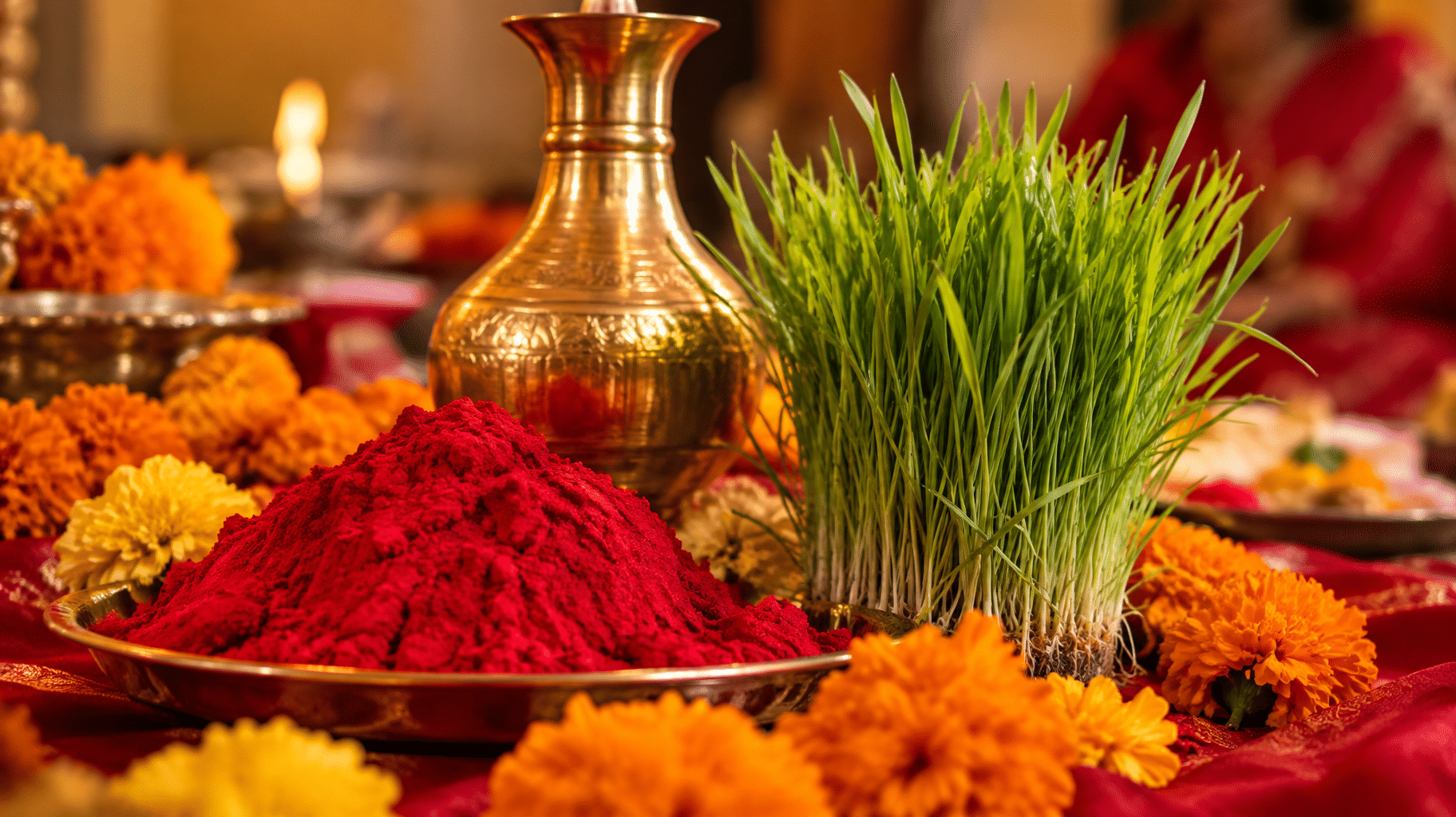
Dashain begins with Ghatasthapana — literally “the planting of the sacred pot.” On the first day of the bright fortnight of Ashwin, a clay pot (kalash) filled with holy water is placed in the prayer room (puja kotha) of the family home, representing Goddess Durga. Alongside it, barley seeds are sown in sand — the sprouting of these seeds over the next ten days produces Jamara, the yellow-green barley grass that is one of the most sacred symbols of Dashain.
Navratri — nine days of devotion
The nine days between Ghatasthapana and Vijaya Dashami are the Navratri — nine nights of devotion to Goddess Durga in her various forms. Each day carries its own significance, worship rituals and observances:
Phulpati (seventh day): Sacred plants — nine varieties of leaves and flowers — are collected from the Gorkha district (the ancestral home of the Shah dynasty) and carried in a formal procession to Kathmandu. The procession arrives at Tundikhel parade ground, where a military ceremony including weapons fire and a parade is held. Since Nepal became a republic in 2008, the Phulpati is now received at the President’s residence (Rastrapati Bhawan) rather than the royal palace at Hanuman Dhoka — though the parade route still passes through Hanuman Dhoka Durbar Square as part of the ceremonial tradition.
Maha Ashtami (eighth day): One of the most important days of Navratri — the worship of Goddess Durga intensifies; animal sacrifice at Taleju temples in Kathmandu occurs in the early hours; Goddess Durga’s fiercest form, Kali, is worshipped.
Maha Navami (ninth day): Nawami Puja — the final day of Navratri; animal sacrifice continues at temples and in many households; Vishwakarma Puja (worship of the tools and machinery through which one earns a livelihood — vehicles, machinery, agricultural equipment) is also observed; a major military display takes place at Tundikhel parade ground in Kathmandu; the night of Maha Navami is called Kal Ratri (the Black Night) — the Basantapur Durbar area remains alive through the night with the sacrifice of 54 buffaloes and 54 goats in the Dashain Ghar by tradition.
Vijaya Dashami — Tika day
The tenth day is the heart of Dashain — the day families gather and elders bestow tika and Jamara on younger members.
Tika: A sacred red mark made from a mixture of rice, curd (yogurt) and vermilion powder — applied to the forehead by the eldest available family member. The red tika symbolises the blood that ties the family together; the blessing of Goddess Durga; and the prayer for prosperity, good health and success.
Jamara: The yellow-green barley grass grown from the seeds planted on Ghatasthapana — placed behind the ear or on the head at the time of receiving tika. The Jamara represents the blessings of Goddess Durga and the renewal of life.
Dakshina: Elders traditionally give dakshina — a gift of money — to younger family members when bestowing the tika. For children, Dashain dakshina is one of the most anticipated parts of the festival.
The tika queue: On Vijaya Dashami, families gather at the home of the most senior family member — grandparents, uncles and aunts — and queue to receive tika in order of age. The eldest gives tika first; the younger family members receive it. Extended families travel significant distances — including from abroad — to be present for this ceremony.
The five days after Vijaya Dashami
Dashain does not end on the tenth day. For the five days following Vijaya Dashami (Ekadashi through Purnima), families continue visiting relatives and receiving tika from older members of their extended network. The social obligation to visit all senior relatives within the extended family is a central feature of Dashain — for many Nepali families, this means a week of travel and visits.
Kojagrat Purnima (the full moon — 25 October 2026): The final day of Dashain — a full moon night when Goddess Lakshmi is believed to visit those who are awake, bestowing wealth and good fortune on households that keep their lights burning through the night.
Dashain across Nepal — regional celebrations
Kathmandu Valley
The Kathmandu Valley — home to the Hanuman Dhoka Durbar Square, the Taleju Bhawani temple complex and the Kumari (the Living Goddess) — is the ceremonial centre of Dashain. The Phulpati procession, military ceremony at Tundikhel, Maha Ashtami and Maha Navami rituals at the ancient Durbar temples and the formal royal-era protocols of the festival are most completely observed in Kathmandu.
Outside Kathmandu
Across Nepal’s hills, mountains and Terai plains, Dashain takes a more intimate family form — the core rituals of Ghatasthapana, Navratri puja and Vijaya Dashami tika are observed in every household; animal sacrifice varies by family and region; the gathering of extended family is the central social event.
Roads, buses and airports across Nepal are packed in the days before Vijaya Dashami — workers, students and migrants return from Kathmandu, India, the Gulf and further afield to be with their families. Dashain is the festival that brings Nepal home to itself.
Dashain in Australia and New Zealand
Nepal is a growing source country of migrants to both Australia and New Zealand — with significant Nepali communities in Melbourne, Sydney, Brisbane, Auckland and Wellington. Dashain is the most important event in the Nepali-Australian and Nepali-New Zealand community calendar.
Community Dashain celebrations typically include:
- Temple pujas and Durga worship
- Tika ceremonies at community gatherings
- Cultural performances — traditional Nepali music, dance and dress
- Community feasts with traditional Nepali food
- Family gatherings for tika among extended community networks
For Nepali migrants in Australia and New Zealand who cannot return home for Dashain, community celebrations provide a vital connection to family, culture and identity. Many also send money home so that family in Nepal can celebrate fully — covering costs of new clothes, feasting, dakshina gifts and travel.
Sending money home for Dashain
Dashain is one of the most significant gifting and spending periods in the Nepali calendar — families buy new clothes, prepare feasts, give dakshina to children and relatives, and spend on travel. For Nepali-Australians and Nepali-New Zealanders sending money home, timing transfers ahead of Vijaya Dashami (21 October) allows family to prepare fully for the celebrations.
AUD to NPR is fee-free; NZD to NPR is NZD $4 flat fee.
Key dates — Nepal festive season 2026
| Festival | Date |
|---|---|
| Ghatasthapana (Dashain begins) | 11 October 2026 |
| Vijaya Dashami (Tika day) | 21 October 2026 |
| Kojagrat Purnima (Dashain ends) | 25 October 2026 |
| Tihar (Nepal’s festival of lights) | ~8-12 November 2026 |
FAQs (frequently asked questions)
When is Dashain Tika in 2026?
Wednesday 21 October 2026 — Vijaya Dashami. The Nepal Panchang Nirnayak Samiti will announce the exact auspicious tika time; it is expected to fall around late morning.
What is Dashain?
Nepal’s most important Hindu festival — a 15-day celebration of Goddess Durga’s victory over the demon Mahishasura; marked by tika blessings, family reunions, Jamara, Navratri puja, Phulpati and Kojagrat Purnima.
What is Tika?
A sacred red mark made from rice, curd and vermilion powder — applied to the forehead by elders as a blessing of prosperity, health and success; the central ritual of Vijaya Dashami.
What is Jamara?
Barley grass grown from seeds sown on the first day of Dashain (Ghatasthapana) — placed on the head or behind the ear at the time of receiving tika; a symbol of Goddess Durga’s blessing and the renewal of life.
What is Dakshina?
A gift of money given by elders to younger family members when bestowing tika — one of the most anticipated Dashain traditions for children.
Is Dashain a public holiday in Nepal?
Yes — Dashain is the longest public holiday in Nepal; government offices, schools and most businesses close for the main festival period.
Related guides
- Dussehra 2026 →
- Send money to Nepal from Australia and New Zealand →
- How to send to Nepal cash pickup →
- What is eSewa guide →
Festival dates follow the Bikram Sambat lunar calendar — always verify exact tika muhurat with the Nepal Panchang Nirnayak Samiti or a local panchang. Last updated September 2026.
Sources: nepalhikingteam.com — Dashain Festival 2026: Dates, Tika Time & Celebration (2 weeks ago) | hopnepal.com — Dashain Festival 2026 Date, Tika Time, Meaning, Rituals (April 16, 2026) | magicalnepal.com — Dashain Festival in Nepal, 2026 (May 21, 2026) | nepalintrepidtreks.com — Dashain Festival 2026: Nepal’s Most Celebrated Tradition (June 19, 2026) | himalayandream.team — Dashain Festival 2026, 2027 and 2028 in Nepal (October 26, 2025) | Wikipedia — Public holidays in Nepal


