Summary
Australian and New Zealand passport holders need an Electronic Travel Authorisation (ETA) to enter Sri Lanka — and since 25 May 2026, it is completely free — apply online at eta.gov.lk before departure; ETAs cannot be obtained on arrival; the tourist ETA allows a 30-day stay with double entry and is approved within 24-72 hours; it can be extended once for another 30 days at the Department of Immigration in Colombo; children under 12 are free for all nationalities
The Kandy to Ella train is widely regarded as one of the most scenic rail journeys in the world — a 7-hour ride through mist-covered tea plantations, cascading waterfalls, mountain villages and the dramatic highlands of central Sri Lanka; book second class observation car seats as far in advance as possible (reservations open 30 days ahead); for the best views from Kandy to Ella, sit on the right side of the train
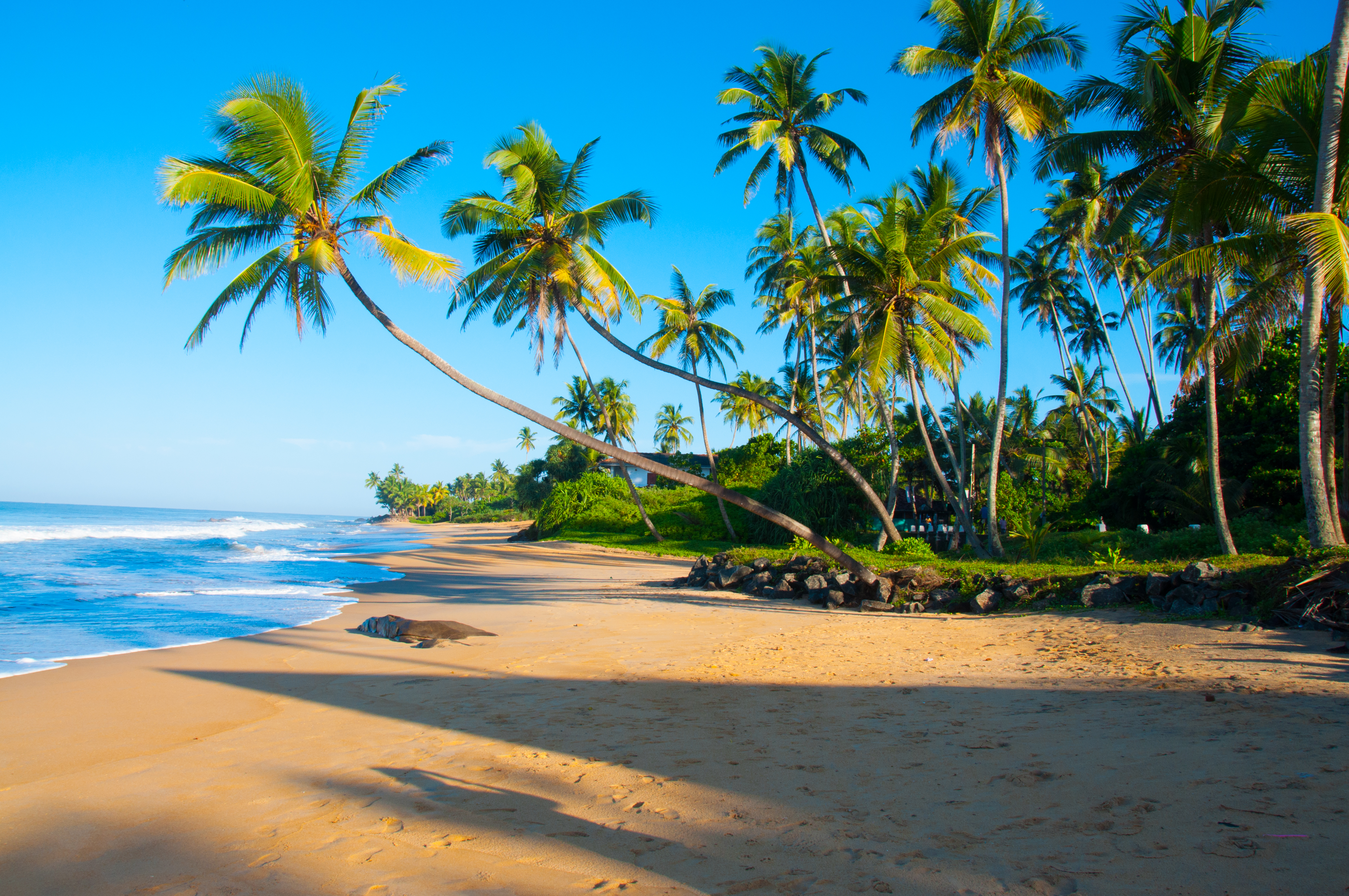
Sri Lanka is one of the most diverse and rewarding short-haul destinations available to Australians and New Zealanders — ancient Buddhist temples, the Lion Rock fortress at Sigiriya, Galle’s Dutch colonial fort, leopard safaris at Yala, world-class surf at Weligama, whale watching at Mirissa and some of the most affordable and flavoursome food in Asia — all within a country roughly the size of Tasmania
Sri Lanka spent several years in the shadow of a severe economic crisis. It has emerged — cautiously, imperfectly, but genuinely. Tourism has recovered strongly since 2024, infrastructure has stabilised and the extraordinary things that made Sri Lanka one of the most beloved destinations in Asia — the warmth of its people, its ancient sites, its coastal beauty and its food — never went away. For Australians and New Zealanders, it offers a deeply rewarding destination that remains remarkably affordable and, thanks to the free ETA introduced in May 2026, easier to enter than ever.
Visa and entry requirements — ETA required, now free
ETA mandatory — cannot get on arrival
Both Australian and New Zealand passport holders require an Electronic Travel Authorisation (ETA) to enter Sri Lanka. Since 13 May 2025, ETAs can no longer be obtained on arrival at Colombo’s Bandaranaike International Airport — you must apply online before departure.
Since 25 May 2026, the tourist ETA is completely free for Australian and New Zealand passport holders — part of Sri Lanka’s post-crisis tourism recovery initiative covering 40 countries.
ETA details:
| Cost | Free for Australian and New Zealand passport holders (since 25 May 2026) |
| Validity | 30 days from date of arrival |
| Entries | Double entry |
| Extension | Once, for another 30 days — apply at Department of Immigration, Colombo |
| Processing | 24-72 hours |
| Apply at | eta.gov.lk — the only official portal |
| Children under 12 | Free for all nationalities |
Apply at least 7 days before travel — not because it takes that long, but because having the approval ready eliminates last-minute stress. Airlines in Australia and New Zealand may check your ETA at check-in.
Scam warning: Multiple third-party websites charge AUD $50-$100+ to process Sri Lanka ETAs. The official portal is eta.gov.lk only — the application is free and takes approximately 10 minutes.
Passport validity: At least 6 months beyond your planned departure from Sri Lanka.
Best time to visit
Sri Lanka has two distinct monsoon seasons affecting different regions at different times — understanding this is essential for planning.
West and south coast (Colombo, Galle, Mirissa, Weligama, Bentota)
Best: December to April — dry season; calm seas; warm and sunny; peak tourist season for beaches and south coast travel.
Wetter: May to September — the southwest monsoon brings rain to the west and south coast; beaches can be rough; some areas closed.
East coast (Trincomalee, Arugam Bay, Pasikuda)
Best: May to September — sheltered from the southwest monsoon; Arugam Bay is one of Asia’s best surf breaks from May to October.
Wetter: October to February — northeast monsoon affects the east coast.
Hill country (Kandy, Ella, Nuwara Eliya) and cultural triangle (Sigiriya, Dambulla, Anuradhapura)
Best: January to April — clearest skies and most comfortable temperatures for climbing Sigiriya and hiking.
The Kandy to Ella train can be done year-round — rain actually makes the scenery greener and more atmospheric, though it can cause delays.
Safaris (Yala, Udawalawe)
Best: January to April and October — wildlife is most concentrated around water sources during dry periods; parks partially close during the monsoon season.
Getting there
From Australia
Direct flights: No direct flights from Australia to Colombo — all routes connect through Singapore, Kuala Lumpur, Dubai or other hubs.
| City | Airlines | Approx flight time |
|---|---|---|
| Sydney to Colombo (CMB) | SriLankan Airlines, Singapore Airlines, Malaysia Airlines | ~12-14 hours |
| Melbourne to Colombo | SriLankan Airlines, Malaysia Airlines | ~12-14 hours |
| Perth to Colombo | SriLankan Airlines, Malaysia Airlines | ~9-10 hours |
Cost: Return flights from Australia typically range from AUD $700-$1,400 booked ahead. Perth is significantly cheaper than east coast cities.
From New Zealand
All routes connect via Australian cities or Asian hubs.
Cost: Return flights from Auckland to Colombo typically range from NZD $1,000-$1,800.
Getting around Sri Lanka
The train network — a highlight in itself
Sri Lanka’s railway network was built by the British in 1864 to transport tea and coffee from the hill country plantations to Colombo port for export. Today it is one of the country’s top tourist attractions — the trains run through scenery that roads rarely match.
The Kandy to Ella train (the iconic route): The 7-hour journey from Kandy to Ella through the central highlands is widely regarded as one of the world’s most scenic rail journeys — through mist-covered tea plantations, past waterfalls, across the Demodara Loop and over the Nine Arch Bridge. Most travellers break the journey with a night in Nuwara Eliya.

- Book second class observation car — not first class (air-conditioned, no open windows or doors); the observation car lets you lean out and feel the air
- Sit on the right side of the train from Kandy to Ella for the best views
- Book 30 days in advance — tickets open exactly 30 days before departure at bookings.railway.gov.lk; popular trains sell out quickly; arrive early if booking at the station
- Tickets start from LKR 100 for unreserved seats; reserved observation car seats cost more but are worth it
The coastal train (Colombo to Galle): Parts of the coastal line run so close to the Indian Ocean that spray hits the windows during storms — one of the most dramatic rail experiences in Asia. The 2.5-hour journey from Colombo Fort station to Galle also stops at Hikkaduwa, Ambalangoda and other coastal towns. For the best views and photographs, travel at sunrise or sunset.
Tuk-tuks and rideshares
Tuk-tuks (three-wheeled motorised rickshaws) are the standard short-distance transport across Sri Lanka — always agree on the price before getting in, or use PickMe (Sri Lanka’s equivalent of Grab) for metered, app-based tuk-tuk and car rides. PickMe is available in Colombo, Kandy, Galle and other major cities.
Private drivers
For the cultural triangle (Sigiriya, Dambulla, Anuradhapura) and safari circuits, hiring a private driver with a van is the most practical option — flexible, relatively affordable and your driver becomes an invaluable guide to less-visited sites. Most guesthouses can recommend trusted drivers.
Hire cars
Drive on the left — the same as Australia and New Zealand. Traffic in Colombo is heavy and road conditions outside the main highways are variable. A hire car is an option for confident drivers; a private driver is more practical for most visitors.
Top destinations
Colombo — the capital
Colombo is a city that rewards those who slow down and look past the traffic — a sprawling, chaotic and increasingly vibrant capital where colonial architecture, Buddhist temples, rooftop bars and one of Asia’s best street food scenes exist in close proximity.

Galle Face Green: The long seaside esplanade facing the Indian Ocean — the gathering place of Colombo at dusk; street food vendors, kite flyers, families and couples watch the sun set over the water. The Galle Face Hotel (established 1864, a national landmark) overlooks the green.
Pettah Market: The historic bazaar district east of the Fort — a dense, sensory chaos of textiles, electronics, spices, fresh produce and street food across a warren of covered market streets. The best place in Colombo to understand how the city actually works.
Colombo Fort and the Dutch Hospital: The colonial heart of the city — the Dutch Hospital (17th century) has been restored as a premium shopping and dining precinct; surrounded by colonial-era government buildings and the Colombo Fort railway station.
Gangaramaya Temple: One of Colombo’s most important Buddhist temples — an eclectic mix of Sri Lankan, Thai, Indian and Chinese architectural styles; home to an extraordinary museum of donated objects including vintage vehicles, Buddha statues and curiosities from around the world.

National Museum: Sri Lanka’s primary museum — covering the island’s history from ancient kingdoms through the colonial period; the Tooth Relic throne and royal regalia are among the highlights.
Sigiriya and the Cultural Triangle
The cultural triangle — roughly the area between Colombo, Kandy and Anuradhapura — contains the greatest concentration of UNESCO World Heritage Sites in Sri Lanka.
Sigiriya Rock Fortress (UNESCO World Heritage Site): An extraordinary 5th-century rock fortress rising 180-200 metres above the surrounding jungle plains — one of the most remarkable archaeological sites in Asia. King Kashyapa I built his palace on the summit between 477 and 495 CE, accessible via a staircase cut into the rock face. At the base: the ancient water gardens (among the oldest landscaped gardens in the world). Halfway up: the Sigiriya frescoes — vivid paintings of celestial maidens from the 5th century. At the top: the ruined palace and extraordinary views across the jungle plains of the north central province.

Climb early morning to avoid the heat and crowds — the summit is reached via exposed staircases with significant exposure; not suitable for those with severe vertigo or mobility issues.
Dambulla Cave Temple (UNESCO World Heritage Site): A series of five cave temples carved into a massive granite outcrop — containing 157 statues of the Buddha and intricate ceiling frescoes dating from the 1st century BCE through the 18th century. Often combined with Sigiriya in a single day.

Anuradhapura (UNESCO World Heritage Site): Sri Lanka’s first ancient capital — a city of enormous Buddhist dagobas (stupas), sacred Bo trees and ruins stretching across the plains of the north central province; continuously inhabited for over 2,000 years. The Sri Maha Bodhi — a sacred fig tree grown from a cutting of the original Bodhi Tree under which the Buddha attained enlightenment — is one of the most sacred sites in the Buddhist world.

Polonnaruwa (UNESCO World Heritage Site): Sri Lanka’s medieval capital from the 11th to 13th centuries — ruined palace complexes, a circular relic house (the Vatadage), enormous Buddha statues and the Gal Vihara (four monolithic Buddha figures carved from a single granite face). One of the finest archaeological sites in South Asia.

Kandy — the hill capital
Kandy is Sri Lanka’s second city and the cultural capital — a lake-ringed city in the central highlands, at a comfortable altitude (approximately 500 metres) that brings cooler temperatures and dramatic cloud-shrouded hills.

Temple of the Tooth Relic (Sri Dalada Maligawa): Sri Lanka’s most sacred Buddhist site — housing the left canine tooth of the Buddha, brought to Sri Lanka from India in the 4th century CE. The evening puja (religious ceremony) at 6:30pm fills the temple with drumming, chanting and incense — one of the most atmospheric religious experiences in Asia. Dress modestly; remove shoes.
Kandy Lake: The artificial lake at the centre of the city — created by the last king of Kandy, Sri Vikrama Rajasinha, in 1807. The lakeside path is the finest evening walk in the city.

Royal Botanic Gardens, Peradeniya: Six kilometres from the city centre — 147 acres of tropical gardens including a 65-metre Java fig tree, a double coconut palm, an avenue of royal palms and a remarkable collection of orchids. One of the finest botanic gardens in Asia.
Kandy Esala Perahera (July/August): The most spectacular Buddhist festival in Sri Lanka — a 10-day procession of elaborately decorated elephants, Kandyan dancers, fire jugglers and drummers through the streets of Kandy. The 2026 dates are approximately 20-29 July. Book accommodation and tickets months ahead.
Ella and the hill country
Ella is a small hill town that has become one of Sri Lanka’s most popular destinations — the centre of a cluster of hiking trails, waterfalls and viewpoints, and the arrival point for those completing the Kandy to Ella train journey.
Nine Arch Bridge: A 91-metre-long, nine-arch viaduct built from stone and brick (no steel or iron) during the British colonial era — one of the finest examples of colonial-era railway construction in Asia; photographed from the valley below with a train crossing; best at sunrise before the crowds arrive. A 20-minute walk from Ella town.

Little Adam’s Peak: A 90-minute return hike from Ella town through tea plantation terraces to a viewpoint ridge at approximately 1,141 metres — panoramic views across the surrounding valleys and highlands. One of the most accessible and rewarding hikes in Sri Lanka.
Ella Rock: A more challenging 4-hour return hike from Ella town — following the railway tracks before ascending through jungle and tea estates to the rocky summit at approximately 1,400 metres; the best views in the Ella area.
Ravana Falls: A dramatic 25-metre waterfall on the road between Ella and Wellawaya — named for the demon king Ravana of the Hindu epic Ramayana, who is said to have hidden Sita here; a short walk from the roadside.

Galle — the colonial fort city
Galle is a UNESCO World Heritage Site — a remarkably intact Dutch colonial fort built on a headland on the southwest coast, 120km south of Colombo. Within the fort walls: cobbled streets, colonial churches, boutique hotels, excellent restaurants and independent shops in 17th-century buildings that have been meticulously restored.

Galle Fort: Built by the Portuguese in 1588 and massively expanded by the Dutch from 1649 — the finest example of a fortified colonial city in South and Southeast Asia. Walk the ramparts at sunset for views over the Indian Ocean. The Galle Lighthouse (1939) is at the southernmost point of the fort.
Flag Rock and the ramparts: The most dramatic section of the fort walls — the rocky point where local boys dive into the sea below; a gathering spot at dusk.
Church Street and the Dutch Reformed Church (1755): The main street of the fort — lined with boutique guesthouses, restaurants and galleries in restored Dutch buildings; the Dutch Reformed Church (1755) is the oldest Protestant church in Sri Lanka.
Day trip from Colombo: The coastal train from Colombo Fort station reaches Galle in approximately 2.5 hours — one of the finest rail journeys in Asia, with the track running along the oceanfront for much of the route. Alternatively, 2 hours by road.

Yala National Park — wildlife safaris
Yala is Sri Lanka’s most visited national park and one of the best places in the world to see leopards — the highest leopard density of any protected area globally. It also supports large populations of elephants, sloth bears, crocodiles, water buffalo, spotted deer and an extraordinary diversity of bird life.

Safaris: Morning and afternoon jeep safaris are the standard format — 3-4 hours through the park’s blocks with a guide and driver. Block 1 is the most visited and has the highest wildlife density. Book through your guesthouse or a reputable operator in Tissamaharama (the nearest town) or in advance from Colombo.

Best season: January to April and October — during the dry season, wildlife concentrates around shrinking water sources, making sightings more reliable.
Udawalawe National Park — 4 hours from Colombo — is smaller and less dramatic than Yala but offers almost guaranteed elephant sightings, a large population of wild buffalo and a more relaxed safari atmosphere.
The south coast — beaches and surf
Mirissa: A curved bay on the southwest coast — one of Sri Lanka’s most beautiful beaches; great for swimming and body surfing in season; the main departure point for blue whale watching from November to April, when blue and sperm whales migrate through the Mirissa waters.

Weligama: The best place in Sri Lanka to learn to surf — a wide, sheltered bay with gentle waves; dozens of surf schools along the beach; both beginners and intermediate surfers well catered for. Also famous for the image of stilt fishermen on poles in the ocean.
Unawatuna: A small sheltered bay east of Galle — calm, clear water; good for snorkelling; popular with families. More developed than some south coast beaches but the water quality is excellent.
Hiriketiya: A small horseshoe bay between Weligama and Matara — discovered by the surf community in recent years; a relaxed mix of surf, swimming and yoga retreat atmosphere.
Sri Lankan food — what to eat
Sri Lankan cuisine is one of the great underrated food traditions of Asia — bold, coconut-rich, spiced with cinnamon, cardamom, curry leaf and black pepper grown on the island itself, and available at extraordinary quality and affordability everywhere from beach shacks to Colombo’s best restaurants.
Rice and curry: The cornerstone of Sri Lankan dining — a mound of red or white rice surrounded by five or more small curries (a fish curry, a dhal, a pol sambol, a vegetable and perhaps a meat or egg dish); eaten for lunch and dinner at any local restaurant (sehay) for approximately LKR 300-600 (AUD $1.50-$3).

Hoppers (Appa): A thin, bowl-shaped pancake made from a fermented rice and coconut milk batter — crispy at the edges, soft in the centre; eaten for breakfast with coconut sambol and seeni sambol (a caramelised onion relish); egg hoppers have a whole egg cracked into the bowl as it cooks; string hoppers (Indi Appa) are delicate steamed rice noodle cakes.

Kottu roti: Chopped roti bread stir-fried on a flat iron griddle with vegetables, egg and your choice of protein — the rhythmic clank of the metal blades chopping the roti is one of Sri Lanka’s defining street sounds; available at any roadside stall after dark for approximately LKR 300-500.
Pol sambol: Fresh grated coconut mixed with dried chilli, Maldive fish (dried tuna), lime juice and onion — the essential condiment of Sri Lankan dining; appears with almost every meal.

Lamprais: A Dutch Burgher legacy dish — a package of rice, three or four curries, a frikkadel (Dutch meatball) and sambols baked together in a banana leaf parcel; a uniquely Sri Lankan fusion of Dutch colonial and Sinhala cuisine.
Ceylon tea: Sri Lanka produces some of the world’s finest tea — grown in the central highlands around Nuwara Eliya, Dimbula and Ella at elevations that produce the distinctive bright, brisk character of Ceylon tea. Visit a tea factory in the hill country (most offer free tours) and drink it here, where it was grown.

Money and costs
Currency: Sri Lankan Rupee (LKR). As of September 2026, approximately AUD $1 = LKR 200; NZD $1 = LKR 174.
Daily budgets:
| Budget level | Daily spend | What you get |
|---|---|---|
| Budget | AUD $25-40 | Guesthouse, local restaurants, tuk-tuks |
| Mid-range | AUD $60-100 | Boutique hotel, good restaurants, safaris |
| Luxury | AUD $200+ | Design hotel, fine dining, private tours |
Sri Lanka is one of the most affordable quality destinations available to Australians and New Zealanders. A full rice and curry lunch costs under AUD $2. A comfortable guesthouse room in Ella or Galle costs AUD $30-60. A jeep safari at Yala costs approximately AUD $40-60 per person.
Cash: Sri Lanka remains predominantly cash-based outside of upscale hotels and restaurants. ATMs are available in Colombo, Kandy, Galle, Ella and other tourist areas — withdraw sufficient LKR before heading to remote areas or national parks.
What it means for your transfers
Sri Lanka is home to a significant Sri Lankan diaspora community in Australia and New Zealand — particularly in Melbourne and Sydney — many of whom send money home regularly.
AUD to LKR and NZD to LKR transfers with OrbitRemit — check current fees and rates at orbitremit.com before sending.
FAQs (frequently asked questions)
Do Australians need a visa for Sri Lanka?
Yes — an Electronic Travel Authorisation (ETA) is required. Since 25 May 2026, the tourist ETA is free for Australian passport holders. Apply at eta.gov.lk before departure — ETAs cannot be obtained on arrival. Allows a 30-day stay, double entry.
Do New Zealanders need a visa for Sri Lanka?
Yes — same as Australians. The tourist ETA is free for New Zealand passport holders since 25 May 2026. Apply at eta.gov.lk before departure.
How long does the Sri Lanka ETA take?
24-72 hours. Apply at least 7 days before departure. Airlines may check your ETA at check-in.
What is the best time to visit Sri Lanka?
December to April for the west and south coast (Galle, Mirissa, Weligama, Colombo). May to September for the east coast (Arugam Bay, Trincomalee). January to April for the cultural triangle (Sigiriya, Dambulla, Anuradhapura) and safaris.
How long do I need for Sri Lanka?
Seven days covers the essential highlights — Colombo, Sigiriya, Kandy, the Ella train, Galle. Ten to fourteen days allows a more relaxed pace with beach time and a safari. Three weeks covers the whole island.
Is Sri Lanka safe for Australian and New Zealand travellers?
The Australian Government’s Smartraveller advisory is Exercise a High Degree of Caution — noting the risk of public demonstrations and security risks from the economic crisis period. Tourist areas are generally safe; avoid political demonstrations. Check smartraveller.gov.au before departure for the latest advice.
What is the Kandy to Ella train?
A 7-hour train journey through the central highlands — widely regarded as one of the world’s most scenic rail journeys; through tea plantations, over the Nine Arch Bridge and across the central mountains. Book second class observation car seats 30 days in advance at bookings.railway.gov.lk.
Related guides
- India travel guide 2026 →
- Thailand travel guide 2026 →
- Asian currencies: a complete guide →
- The 5 best travel money cards in Australia 2026 →
- The 5 best travel money cards in New Zealand 2026 →
Visa and entry requirements are subject to change — always verify at eta.gov.lk, Smartraveller (smartraveller.gov.au) or Safetravel (safetravel.govt.nz) before travel. Last updated September 2026.
Sources: Smartraveller — Sri Lanka travel advice (smartraveller.gov.au, August 14, 2026) | visitsrilanka.asia — Sri Lanka ETA Visa Information 2026 | holidaysg.com — Sri Lanka Visa Guide 2026 (August 20, 2026) | srilankaunpacked.com — Everything you need to know before travelling to Sri Lanka in 2026 (January 23, 2026) | thesrilankanguideline.com — Sri Lanka Visa Guide 2026 | srilankatravelhub.com — Sri Lanka Train Travel Guide 2026 | travelnania.com — Kandy to Ella Train Guide | colomboshoreexcursions.com — Complete Sri Lanka Travel Guide 2026 (March 9, 2026) | tourismattractions.net — Ireland Travel Guide 2026: Dublin, Galway, Ring of Kerry & Beyond (March 25, 2026) | tripcabinet.com — Sri Lanka Travel Guide 2026 (May 7, 2026) | inbetweentravels.com — 10 Best Things to Do in Ireland (July 7, 2026)


